














The Rebrand Wave: Why Indian brands are refreshing logos and identity systems

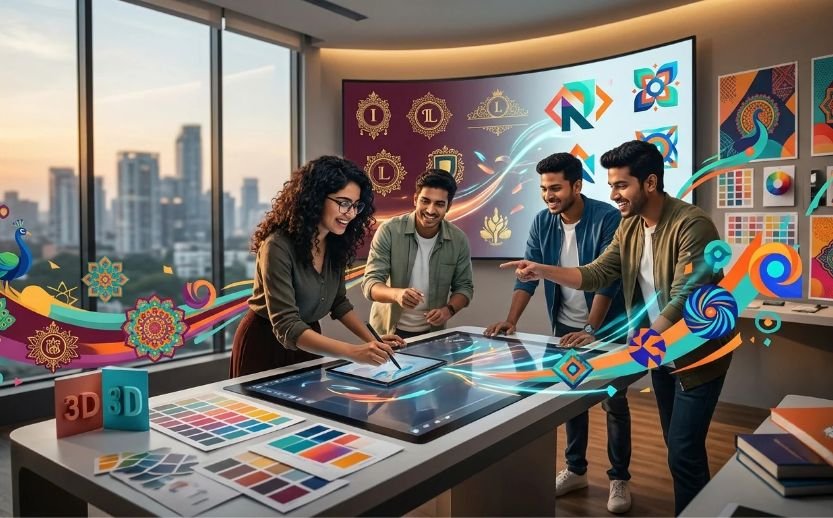
A brand’s identity is often the first thing consumers recognise and the last thing businesses want to get wrong. A logo can carry decades of familiarity, a colour palette can become synonymous with a category, and a distinctive visual system can hold together everything from packaging and advertising to digital experiences. Yet, across India’s evolving business landscape, an increasing number of brands are revisiting these familiar assets. Logos are being simplified, typography is being modernised, colour systems are being refreshed and long-established identities are being reinterpreted for a new generation of consumers.
The growing interest in rebranding is not simply about keeping up with design trends. It reflects a broader shift in how businesses view their identities and the role branding plays in a competitive market. Companies are expanding into new categories, targeting younger audiences, entering digital-first environments and repositioning themselves for changing consumer expectations. In many cases, the identity that once represented the business accurately no longer captures what it has become or where it intends to go.
For Indian brands, this presents an interesting challenge. Many have built recognition over several decades, often through distinctive visual assets that consumers associate with trust and familiarity. Changing these elements requires more than a creative exercise. It involves balancing heritage with contemporary relevance, ensuring that an updated identity communicates progress without losing the recognition that made the brand valuable in the first place.
“A successful rebrand is not about making a brand look different. It is about making its identity reflect what the business has become.”
As the rebrand wave gathers attention, the more important question is not why brands are changing their logos, but what they are trying to change in the minds of consumers.
When a logo starts feeling smaller than the business
One of the most common reasons behind a rebrand is the gap between a company’s current identity and its evolving business ambitions. A brand that began with a single product or service may eventually operate across multiple categories, markets and consumer segments. Its original identity, designed for a much narrower business proposition, may no longer reflect the scale or diversity of its operations.
This is particularly relevant in India’s expanding consumer and technology markets, where businesses are moving beyond their original categories. A company known primarily for one product may enter adjacent segments, develop new services or build an ecosystem of offerings. Its identity needs to accommodate these changes without creating confusion about what the business represents.
In such situations, rebranding becomes a strategic exercise in repositioning. The objective is to create an identity that can support future growth rather than simply describe the company’s existing operations. This may involve developing a more flexible logo, introducing a broader visual language or changing the way the brand communicates its purpose.
The distinction between a logo refresh and a complete rebrand is important here. A refresh may involve refining existing design elements while retaining the brand’s core recognition. A rebrand, on the other hand, can involve changes to positioning, personality, messaging, architecture and the overall experience. The scale of the intervention should depend on the business challenge, not the desire to introduce something new.
The digital-first pressure on brand identities
The shift towards digital consumption has fundamentally changed the environments in which brand identities need to function. A logo once designed primarily for packaging, print advertisements, outdoor displays and television commercials must now work across mobile screens, social media profiles, websites, applications, connected television and multiple digital interfaces.
This has made adaptability a critical consideration in identity design. Intricate logos may lose clarity when reduced to the size of a social media profile picture. Detailed typography may become difficult to read on smaller screens, while visual systems developed for traditional advertising may not translate naturally into short-form video, interactive formats or digital commerce environments.
As a result, many brands are moving towards cleaner, more flexible identity systems. Simplified symbols, responsive logo variations, accessible typography and adaptable colour palettes can help maintain consistency across different platforms and screen sizes.
However, simplification comes with its own risks. In an attempt to appear contemporary, brands can sometimes remove the distinctive details that made their identities recognisable. The result may be visually cleaner but strategically weaker. When several companies within the same category adopt similar minimalist aesthetics, differentiation becomes harder rather than easier.
“Digital adaptability may make a logo easier to use, but distinctiveness is what makes it worth remembering.”
The challenge, therefore, is not to make every brand look digital-first. It is to ensure that its identity works naturally in digital environments while retaining a recognisable character.
A younger consumer is changing the visual conversation
India’s changing consumer demographics are also influencing how brands approach identity. Younger audiences interact with businesses through a wider range of digital touchpoints and are exposed to an enormous volume of visual communication every day. Their expectations around design, language, accessibility and brand personality may differ from those of earlier consumer generations.
For established brands, this creates a delicate balancing act. They need to remain relevant to younger consumers without alienating the audiences that have supported them for years. A complete departure from familiar visual assets may attract attention in the short term but can also weaken long-standing associations.
Brands are therefore increasingly required to think about identity as a broader experience rather than a static visual signature. Typography, photography, packaging, social media behaviour, tone of voice and campaign aesthetics all contribute to how a brand is perceived.
A younger audience may respond to more contemporary visual storytelling, but that does not mean every brand needs brighter colours, unconventional fonts or an informal personality. Relevance comes from understanding the audience and the brand’s place in its life, not from borrowing the visual language of whichever category appears fashionable.
For legacy businesses, the more sustainable approach may be to modernise how their existing identity is expressed rather than abandon the recognition they have accumulated. Familiar symbols can be retained while their applications, supporting graphics and communication styles evolve.
Heritage versus modernity: The Indian branding dilemma
Indian brands face a particularly interesting identity challenge because many operate within a market where cultural memory carries considerable commercial value. Familiar packaging, symbols, colours and brand characters can hold emotional associations that extend across generations. For some businesses, these assets are as important as the products themselves.
At the same time, India is a rapidly changing consumer market. Urbanisation, digital adoption, evolving lifestyles and greater exposure to global brands are influencing how people evaluate products and experiences. Businesses must remain connected to their cultural roots while communicating with consumers whose expectations are constantly changing.
This is where the idea of contemporary heritage becomes relevant. A brand does not necessarily need to abandon its past to appear modern. Instead, it can reinterpret familiar elements through updated typography, refined design systems, contemporary photography and more consistent communication.
There is also an opportunity to revisit how Indian cultural references are represented. Traditional motifs, regional influences and local design languages can become meaningful sources of differentiation when used thoughtfully. The objective should be to create an identity that feels rooted in its context without appearing dated or overly dependent on nostalgia.
For businesses with a long history, the question is not whether their identity should change, but which elements are worth protecting. A well-recognised colour, symbol or visual cue may have accumulated years of consumer familiarity. Removing it without a compelling reason could mean giving up an advantage that competitors would spend considerable time and money trying to build.
“The strongest modern identities do not erase heritage. They find a way to make it relevant to the next generation.”
Rebranding as a signal of business transformation
Sometimes, a new identity is less about consumers and more about communicating a fundamental change within the business. Mergers, acquisitions, leadership transitions, portfolio expansion and changes in ownership can create the need for a unified brand identity.
When two businesses come together, for instance, their existing identities may represent different organisational cultures, histories and market positions. A new identity can help communicate a shared direction to employees, customers, investors and other stakeholders. Similarly, a company moving from a traditional business model towards a technology-led or service-oriented proposition may require an identity that reflects this shift.
In such cases, the logo is only one part of a larger organisational transition. The rebrand must be supported by changes in the company’s positioning, customer experience and internal culture. Otherwise, the new visual identity risks becoming a promise that the business is not equipped to fulfil.
This is particularly important for companies operating across multiple business verticals. A consistent brand architecture can help consumers understand the relationship between different offerings while giving each category enough flexibility to communicate its individual proposition.
For businesses with ambitions to expand internationally, identity systems may also need to work across different languages, cultural contexts and markets. What feels familiar and distinctive in India may not communicate the same meaning elsewhere. A rebrand can provide an opportunity to build a more adaptable identity without losing the company’s underlying character.
The rise of identity systems over standalone logos
Perhaps the biggest change in contemporary branding is the growing recognition that a logo alone cannot carry an entire brand identity. Consumers encounter businesses through multiple interactions, and each one contributes to the overall impression.
This has encouraged brands to invest in more comprehensive identity systems. These include typography, colour principles, graphic elements, iconography, photography styles, motion design, sound, packaging and guidelines for digital communication. Together, these elements create a recognisable visual and sensory language that can operate across different environments.
Motion identity, in particular, is becoming more relevant as video-led platforms and digital interfaces occupy a larger share of brand communication. A static logo may be instantly recognisable, but how it moves, transitions or interacts with other visual elements can create another layer of distinction.
Similarly, sound can strengthen brand recognition in environments where audiences may not always be looking at a screen. A distinctive audio signature, when used consistently, can become an important part of the brand experience.
Packaging also remains central to identity, particularly in India’s highly competitive consumer goods market. The design must work on a retail shelf, communicate product information clearly and remain recognisable in online marketplaces where consumers may encounter only a small product image.
“A logo may introduce a brand, but an identity system is what makes it recognisable across every consumer interaction.”
These developments suggest that the modern rebrand is increasingly about creating a connected system rather than introducing a redesigned symbol. Consistency across touchpoints is what allows an identity to become familiar over time.
The danger of rebranding for the sake of relevance
Not every brand needs a new identity. Yet, the pressure to appear contemporary can make rebranding an attractive proposition, particularly when competitors are updating their visual language or gaining attention through bold design changes.
This is where the process can become counterproductive. A company may replace a distinctive logo with a more fashionable design without identifying any underlying business or consumer problem. The new identity may receive initial attention, but that does not necessarily translate into stronger brand recognition, consideration or preference.
Minimalism is one example of a design direction that has influenced several categories. While simplified identities can improve digital adaptability, excessive reliance on similar design principles can make brands increasingly difficult to distinguish. When individual character is sacrificed for a generic contemporary appearance, the result may be a visual system that looks current but lacks ownership.
There is also the issue of consumer familiarity. A recognisable identity carries memory structures that influence how quickly people identify a brand. Changing too many elements simultaneously can disrupt these associations, particularly when the brand has a substantial customer base built over several decades.
Rebranding also comes with significant implementation costs. Packaging needs to be updated, retail assets replaced, digital platforms redesigned, internal communication revised and marketing materials brought into alignment. For businesses operating across large distribution networks, the transition can be complex and expensive.
Without a clear strategic reason, these costs may deliver limited returns. A rebrand should solve a defined problem, not create the appearance of progress while leaving the actual business proposition unchanged.
What makes a rebrand successful?
A successful rebrand begins with understanding what needs to change and what should remain untouched. This requires more than an internal design brief. Businesses need to examine consumer perceptions, competitive positioning, category expectations and the strength of their existing brand assets.
Research plays an important role in identifying the gap between how a brand sees itself and how consumers experience it. Customer interviews, market studies, brand audits and competitive assessments can help determine whether the problem lies in visual identity, positioning, communication or the product experience itself.
The next step is establishing a clear strategic direction. A design team cannot create an effective identity without understanding the brand’s purpose, audience, personality and long-term ambitions. The visual system must emerge from this thinking rather than operate independently of it.
Testing is equally important. New identities should be evaluated across different formats, audiences and real-world applications. A logo that looks impressive in a presentation may not work on a small mobile screen, a product label or an outdoor display. Brands should assess how the complete system performs before committing to a large-scale rollout.
Finally, implementation needs to be consistent. Employees, distributors, partners and customers should understand what the change represents. Internal communication is particularly important because employees are often the first people expected to explain and embody the new brand direction.
A well-managed launch should also provide enough context for consumers to understand the change. Simply revealing a new logo may generate curiosity, but explaining the thinking behind the evolution can help audiences connect it with the business’s larger journey.
“A rebrand is only as strong as the experience that follows it. The identity can change overnight; consumer perception cannot.”
The agency opportunity: Branding beyond design execution
The growing interest in rebranding also creates an opportunity for creative agencies, design studios and brand consultancies. As businesses recognise that identity changes have implications beyond visual aesthetics, the demand for strategic brand thinking is likely to become more important.
Agencies will need to demonstrate their ability to connect business objectives with consumer understanding and design execution. This involves examining brand architecture, positioning, audience behaviour, competitive differentiation and the practical requirements of implementation.
It also requires a closer relationship between strategy, design, digital experience and communication teams. A new identity cannot remain confined to a brand guidelines document. It must translate into advertising, social media, websites, packaging, retail environments and customer interactions.
For agencies, the opportunity is to move beyond presenting a collection of logo options and instead build identity systems that can support a brand’s future. The strongest work will not necessarily be the most visually dramatic. It will be the work that solves a genuine business problem while creating a recognisable and durable expression of the brand.
A new look is easy. A new perception takes time.
India’s rebrand wave reflects a market in which businesses are reassessing how they present themselves to consumers, employees and competitors. Digital transformation, category expansion, younger audiences and changing business ambitions are all creating reasons to revisit established identities.
But the success of a rebrand cannot be judged by the launch campaign, social media reactions or immediate attention generated by a new logo. Its real value emerges over time, through stronger recognition, clearer positioning and a more consistent relationship between what a brand promises and what it delivers.
For established businesses, the challenge is to evolve without erasing the familiarity that consumers already trust. For newer brands, it is to build identities that can grow without becoming disconnected from their original proposition. For both, the objective remains the same: to create a brand that feels relevant today and has enough character to remain recognisable tomorrow.
Ultimately, a rebrand should not be about looking different simply because the market is changing. It should be about understanding how the business itself is changing and ensuring that its identity tells that story. Because while a new logo can introduce a brand to the world again, only a meaningful shift in experience and perception can make that change last.
