













2026 Is the Year Influencer Marketing Gets “Institutionalised” — What That Actually Looks Like


Influencer marketing has spent much of the last decade trying to prove that it belongs in the same conversation as mainstream advertising. In 2026, that debate is beginning to feel outdated.
The bigger story now is not whether brands will work with creators, but how systematically they will do it.
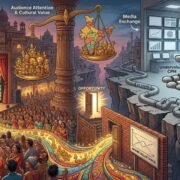
Influencer marketing is moving from a campaign-by-campaign activity into something far more structured: a repeatable business function with budgets, governance, measurement frameworks, specialised teams, contracts, compliance processes and increasingly clear commercial expectations. In other words, the industry is becoming institutionalised.
That shift matters because institutionalisation changes the role of almost everyone involved. Brands can no longer treat creators as a media line item that appears whenever a campaign needs a burst of engagement. Agencies are being pushed to build creator capabilities that resemble their media, strategy and production practices. And creators themselves are increasingly operating less like occasional endorsers and more like independent media businesses.
India offers a particularly interesting view of this transition. The country’s influencer marketing industry is estimated to have been worth around ₹3,000–3,500 crore in 2025, with projections suggesting it could approach ₹4,500–5,000 crore by 2027. The growth is being accompanied by greater creator professionalisation, stronger brand accountability, AI-enabled workflows and tighter expectations around transparency.
From “influencer campaign” to operating system
The early influencer model was relatively simple. A brand found someone with a large following, negotiated a fee, sent over a product and waited for the post to go live.
That model increasingly looks inadequate.
Brands now want creators to solve different problems at different stages of the consumer journey. One creator might build awareness, another might demonstrate product utility, another might generate performance-oriented content, while a community of smaller creators might provide local relevance and social proof.
The creator is therefore no longer necessarily a single media placement. The creator ecosystem itself is becoming a distributed media layer.
This is why the language around influencer marketing is changing. Terms such as creator strategy, creator intelligence, creator commerce, creator licensing, whitelisting, content amplification and creator-led performance are becoming part of the marketing vocabulary.
The institutionalisation of influencer marketing essentially means that brands are building systems around influence rather than simply buying influence.
The biggest change: creators are entering the planning conversation earlier
One of the clearest signals of maturity is where creators enter the marketing process.
Historically, creators often appeared near the end of a campaign workflow. The strategy was developed internally or by an agency, the creative idea was approved and creators were then brought in to execute it.
That sequence is beginning to reverse.
Creators increasingly bring something that traditional research cannot always capture: an intimate understanding of how specific communities speak, what they care about, which cultural references travel and which ones fail, and what kind of content feels native to a platform.
At Cannes Lions 2026, the changing role of creators was particularly visible, with influencers participating not merely as campaign talent but increasingly as strategic partners, consultants and contributors to product and marketing decisions.
That development points to a larger shift. The creator is no longer simply the person delivering the brand’s message. In some cases, the creator is helping shape the message itself.
For brands, this requires a different kind of briefing. Instead of handing creators a rigid script, marketers will increasingly need to provide the business objective, audience context, product truth and guardrails — and then allow creators enough room to translate those inputs into culturally relevant content.
Budgets are becoming less experimental
Institutionalisation becomes real when money moves from experimentation to planning.
Influencer budgets are increasingly being incorporated into annual marketing plans rather than being treated exclusively as tactical campaign spends. This does not mean every brand will create a separate influencer department. It means creator activity will increasingly have defined ownership, processes and expectations.
Research from the Indian influencer ecosystem points in this direction. A 2025 industry report found that 70% of surveyed brands had increased their influencer spending, while longer-term creator partnerships were becoming more common.
The implications are significant.
When a channel receives a permanent place in the marketing plan, the questions become more demanding. How much should be invested? Which creators should be retained? What is the incremental value? Which audiences are being reached? What content can be reused? Which partnerships deserve renewal?
Influencer marketing is therefore moving closer to the logic of media planning.
Measurement will separate the mature market from the crowded one
For years, influencer marketing has lived with an uncomfortable measurement problem. Views, likes and comments were easy to report but difficult to translate into business value.
That is changing.
Brands are becoming more interested in metrics that connect creator activity to actual marketing outcomes: traffic, conversions, qualified leads, sales, app installs, content engagement, branded search, incremental reach and customer acquisition.
This does not mean engagement is becoming irrelevant. Rather, it is becoming one layer of a broader measurement framework.
A beauty creator demonstrating a product, for example, may generate thousands of comments that reveal consumer objections and purchase intent. A finance creator may drive fewer views but influence a high-value audience. A regional-language creator may deliver lower reach than a celebrity but create considerably stronger relevance in a specific market.
The institutionalised model therefore cannot rely on a single creator score.
Brands will increasingly evaluate creators across dimensions such as audience quality, content quality, brand fit, historical performance, community behaviour, credibility, geographic relevance and commercial outcomes.
That also makes creator selection less about “Who has the biggest following?” and more about “Who can move the right audience for this particular objective?”
The rise of the creator portfolio
The future of influencer marketing may look less like hiring one famous personality and more like building an investment portfolio.
A brand might maintain a small group of high-reach creators for cultural visibility, a network of mid-tier creators for category credibility, micro-creators for community influence and a long tail of creators producing performance-oriented content at scale.
This portfolio approach makes sense because influence is fragmented.
India’s enormous linguistic, cultural and regional diversity makes a single national creator strategy increasingly difficult to justify. A campaign that works in Mumbai may need a completely different cultural translation in Lucknow, Jaipur, Guwahati or Kochi.
The rise of regional and niche creators is therefore not simply a diversification story. It is a media efficiency story.
Smaller communities can provide deeper relevance, while creator networks allow brands to scale that relevance across multiple audience clusters.
Creators are becoming businesses
Perhaps the most important part of institutionalisation is happening on the creator side.
The professional creator is no longer necessarily operating as an individual with a phone and a social account. Increasingly, creators have managers, editors, producers, accountants, legal advisors, agencies and commercial teams. Some are building production studios, launching products, developing intellectual property or creating businesses around their personal brands.
Recent industry research suggests that a growing share of India’s active creators are beginning to formalise themselves as business entities or registered individuals, reinforcing the idea that creator work is becoming an organised commercial activity rather than an informal side hustle.
This changes negotiations.
Creators will increasingly expect clearer scopes of work, usage rights, exclusivity clauses, payment timelines, cancellation terms and content ownership provisions. Brands, meanwhile, will demand greater consistency, compliance and accountability.
The informal “one reel for a fee” economy will not disappear. But at the upper and middle ends of the market, the relationship is becoming considerably more sophisticated.
Compliance is becoming part of creativity
As influencer marketing becomes a serious commercial channel, regulatory and ethical expectations naturally become more important.
India’s Advertising Standards Council of India (ASCI) guidelines already require influencer advertising with a material connection to carry clear disclosure. That connection can extend beyond direct payment to free products, discounts, gifts, trips and other benefits. Both advertisers and influencers carry responsibility for appropriate disclosure and advertising compliance.
For an industry built around authenticity, this is more than a legal checkbox.
Disclosure is becoming part of brand trust.
The challenge for marketers will be to make compliance visible without making creator content feel mechanical. The best creator campaigns will have disclosures that are clear, but the content itself will still feel native to the creator and platform.
That is another reason institutionalisation matters: compliance is moving upstream. It increasingly has to be considered during creator selection, contracting, briefing, approval and measurement rather than after a post has already gone live.
AI will make the system faster — not necessarily more human
AI is likely to become one of the most important infrastructure layers in creator marketing.
It can already assist with creator discovery, audience analysis, content categorisation, campaign reporting, sentiment analysis, trend identification, briefing and optimisation. Industry research indicates that a significant share of creators are already using AI tools in their workflows.
But AI will not eliminate the central reason influencer marketing works: human connection.
The risk is that brands use AI to manufacture too much content and end up creating an ecosystem filled with technically efficient but culturally interchangeable posts.
The value of creators lies precisely in the things that are harder to automate — taste, lived experience, humour, timing, community credibility and cultural intuition.
The winning model will therefore be AI-assisted rather than AI-led: technology handling scale and intelligence while creators retain authorship, personality and cultural judgement.
Agencies will have to change too
Institutionalisation also creates pressure on agencies.
Influencer marketing can no longer sit neatly inside a social media department if brands expect it to influence awareness, consideration and conversion simultaneously.
Agencies will need stronger integration between creator strategy, media, creative, commerce, data and technology. The creator brief may increasingly need to connect directly with media amplification plans. Content created by an influencer could live organically on their page, become paid media, appear on a brand’s channels and eventually become part of a retail or commerce journey.
That creates a more complex value chain — and more opportunities for agencies that can manage it.
The agencies that win will not necessarily be the ones with the largest creator databases. They will be the ones that can explain why a particular creator matters, how that creator fits into the consumer journey and what business outcome the partnership is designed to influence.
The creator economy will become more selective
There is, however, a less comfortable consequence to all this professionalism.
Institutionalisation creates standards. And standards create winners and losers.
As brands become more sophisticated, follower count alone will lose further importance. Creators with weak audience quality, repetitive content, poor brand behaviour or inflated engagement will find it harder to command premium rates.
At the same time, creators who can demonstrate trust, consistency, cultural relevance and commercial effectiveness will gain negotiating power.
This could also lead to a widening gap between professional creators and the broader creator population. The ecosystem may become more competitive precisely because brands have more tools to evaluate it.
In that sense, institutionalisation is both an opportunity and a filter.
What 2026 really represents
The significance of 2026 is not that influencer marketing suddenly became professional this year. The foundations were built over several years through platform growth, agency investment, creator management, measurement technology, disclosure standards and increasingly sophisticated brand demand.
What is changing now is the scale and permanence of those systems.
Influencer marketing is beginning to resemble an industry rather than a tactic.
Its future will be defined by operating models, not just personalities; by data, not just reach; by long-term partnerships, not just one-off posts; and by business outcomes, not just engagement screenshots.
For creators, that means treating influence as intellectual and commercial property. For brands, it means treating creators as strategic partners rather than rented audiences. For agencies, it means building infrastructure that can connect creator culture with media performance.
And for the industry as a whole, it means accepting a simple reality: once influence becomes institutionalised, the bar rises.
The next phase of influencer marketing will not be defined by who can generate the loudest post. It will be defined by who can build the most credible, measurable and repeatable connection between a creator, a community and a business.
That is what institutionalisation actually looks like.
