














Cross-Border Creators — How Indian Influencers Are Building NRI and Global Diaspora Audiences

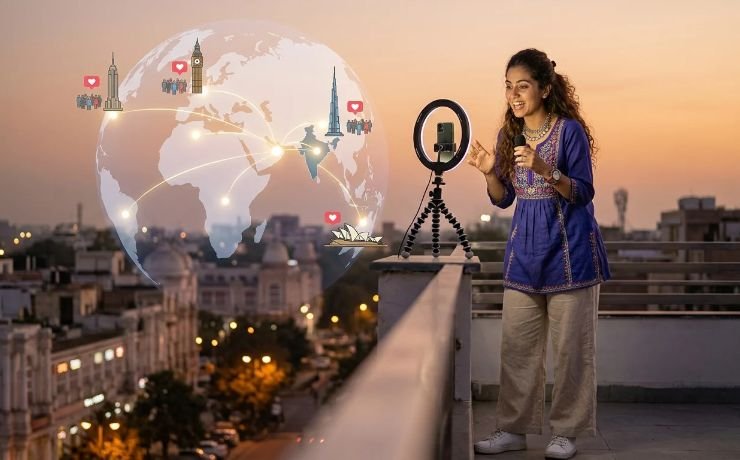
A few years ago, an Indian creator with a million followers was assumed to be talking to India. The audience was in Lucknow, Pune and Coimbatore, the brands that paid were Indian, and the currency of success was a domestic rupee deal. That assumption is quietly breaking down. Open the analytics dashboard of a growing number of Indian creators and a different map appears: a large cluster of viewers in Toronto, London, Dubai, Singapore and New Jersey, watching late at night, commenting in a mix of Hindi, Tamil, Punjabi and English, and coming back for more.
The diaspora has always consumed Indian content, from Bollywood on VHS to serials on satellite channels. What is new is that the audience is no longer passive, and the content is no longer made only for the homeland. A new generation of creators is building direct, deliberate relationships with Indians abroad, and in doing so is changing how influencer marketing is priced, planned and understood.
The Audience Nobody Had to Build
The Indian diaspora is among the largest and most economically significant in the world, spread across North America, the Gulf, the United Kingdom, Australia and Southeast Asia. It is also unusually engaged with home. Festivals, weddings, regional cooking, film releases and family news remain powerful emotional anchors, and social platforms have made it easy to stay close to them.
For creators, this is an audience that arrives with intent already in place. A viewer in Sydney who searches for a Gujarati snack recipe or a bridal lehenga walkthrough is not casually browsing. She is trying to recreate a feeling, source an ingredient or plan a trip. That specificity of need makes the diaspora a high-value viewer, and it explains why creators who once chased reach at any cost are now thinking carefully about who is actually watching.
There is also a language dimension. Regional creators, in particular, have discovered that their audiences abroad are often larger and more loyal than they expected. A Malayalam food channel or a Telugu comedy account can find that a meaningful share of its viewers sits in the Gulf or the United States, where a community longs for content in a mother tongue it rarely hears outside the family home.
What Creators Are Doing Differently
The most successful cross-border creators do not simply wait for the diaspora to find them. They shape content with that viewer in mind, and the changes are often subtle rather than dramatic.
Some adjust timing, posting when evening arrives in London or morning begins in California. Others reframe familiar subjects with explanatory context, adding a line about why a festival is celebrated a certain way or where a particular ingredient can be found abroad. Subtitles, bilingual captions and a slower, clearer delivery help second-generation viewers who understand a language but do not speak it fluently.
The best of them avoid the trap of performing Indianness for outsiders. The diaspora audience is sharp and quick to spot content that flattens a rich culture into a handful of clichés. What resonates is specificity: the regional dish a grandmother actually made, the local festival rarely explained in English, the small domestic rituals that make a place feel like home.
A different kind of creator has emerged from the other side of the migration story. Indians who live abroad, whether students, professionals or long-term settlers, now document life overseas for audiences back home. Their content about moving, working, studying and adapting travels in both directions. It informs aspiring migrants in India while giving homesick viewers abroad a sense of shared experience. The audience on each side is often the same set of people at different stages of the journey.
Nostalgia as a Content Engine
It would be reductive to describe the diaspora appeal as nostalgia alone, but nostalgia is undeniably part of the engine. Food is the clearest example. Cooking content that reproduces a childhood dish, explains a regional technique or shows a street food classic taps into memory as much as appetite. For a viewer thousands of miles away, a ten-minute video can be a small act of return.
Festivals follow the same pattern. Diwali, Eid, Onam, Pongal, Durga Puja and Baisakhi all generate spikes of engagement from diaspora viewers who want to feel connected on the day itself. Creators who cover these moments with warmth and detail, rather than as a rushed seasonal trend, tend to build lasting loyalty.
Music, comedy and commentary also travel well. Humour rooted in family dynamics, workplace quirks or the experience of being caught between two cultures finds an audience precisely because it is relatable to people living that tension. The result is a content category that did not exist in a distinct form a decade ago: creators speaking to a global Indian identity rather than a purely national one.
The Brand Opportunity
For marketers, the rise of the cross-border creator opens a door that has been difficult to push open through traditional means. Reaching the diaspora with paid media is expensive and scattered across markets. A creator who already holds that audience’s trust offers a more efficient and more credible route.
The categories with the most obvious fit are those where Indian provenance is itself the selling point. Packaged foods, spices, ethnic fashion, jewellery, beauty and wellness brands rooted in Ayurveda, and regional entertainment all benefit from a messenger who understands the cultural context. Travel and hospitality brands marketing India to the diaspora, including wedding destinations and heritage journeys, have an equally natural case.
Financial services are another area drawing attention. Remittances, NRI banking, property investment and insurance products aimed at Indians abroad all depend on trust, and creators who explain such products in familiar language can lower the barrier considerably. Education and migration services, too, have found that peer-led content from someone who has made the journey is far more persuasive than a polished advertisement.
International brands are watching as well. A global consumer company seeking to reach Indian-origin customers in the United Kingdom or Canada may find that an Indian creator speaks to those households more convincingly than a local influencer who lacks the cultural reference points. The creator becomes a bridge between a brand and a community that mainstream marketing often struggles to read.
The Complications of Crossing Borders
None of this is straightforward, and creators who have made the leap are candid about the friction.
Monetisation is the first hurdle. Advertising rates vary sharply by geography, and a view from North America or the Gulf is generally worth considerably more to advertisers than one from India. That makes diaspora audiences financially attractive, but it also means creators must understand how their platforms report and pay out revenue across markets. Brand deals, meanwhile, are often still negotiated on the basis of follower counts, with little recognition that a smaller audience in a high-spending market may deliver more value.
Measurement is the second. Many brands lack a reliable way to verify the geographic composition of a creator’s audience, relying on screenshots of analytics that are easy to misread. Agencies with good creator data have a clear advantage here, and those that can break down an audience by country, age and language will command greater trust.
Regulation and compliance add a further layer. Advertising disclosure rules differ across jurisdictions, and a creator promoting a product to viewers in the United Kingdom or the United States may be bound by standards stricter than those at home. Promotions touching finance, health or supplements are especially sensitive. Creators who ignore these differences risk penalties and damaged credibility, which is why professional management has become more important as audiences become more international.
There is also the creative tension of speaking to two audiences at once. A joke that works in Delhi may confuse a viewer in Houston, and an explanation designed for a second-generation Indian American may feel patronising to a viewer in Mumbai. Creators must decide whether to serve one audience deeply or both reasonably well, and the answer shapes their entire content strategy.
Platforms, Policies and the Role of Agencies
The platforms themselves have noticed. Global video and social networks have expanded creator tools for multilingual content, automatic dubbing, translated captions and region-specific discovery. These features lower the cost of reaching viewers beyond a creator’s home market, and they make the diaspora strategy more feasible for those without large production teams.
Agencies and talent management firms are adapting too. Some are building dedicated diaspora practices, pairing Indian creators with brands in markets such as the Gulf, the UK and North America, and structuring campaigns that run across both geographies. The more sophisticated ones look beyond a single post to long-term partnerships, recognising that diaspora trust is built slowly and rewards consistency.
The Indian government’s growing emphasis on engagement with its overseas community, along with the visibility of Indian-origin business leaders and cultural figures abroad, has also lent the trend a degree of momentum. The diaspora is increasingly seen as an economic and cultural asset, and creators sit at the point where those two forces meet.
What the Smartest Brands Are Asking
As the category matures, the questions brands are asking have become more precise. They want to know where a creator’s audience actually lives, not merely how large it is. They ask whether the connection is rooted in genuine community or in a passing viral moment. They look at how a creator handles cultural nuance, because a misstep with a diaspora audience, which tends to be protective of its heritage, can be costly.
They are also thinking harder about fit. A creator who explains heritage recipes to Indians in the United States may be a superb partner for a spice brand and a poor one for a fintech product, and the reverse may be true for a creator who documents life as a young professional abroad. Matching the right voice to the right proposition matters more than the headline number.
The most forward-looking marketers are treating these creators not as a one-off media buy but as a long-term channel into a community. That means investing in relationships, giving creators creative freedom, and measuring success over quarters rather than days.
A Quieter Kind of Global Influence
The rise of the cross-border creator is part of a wider shift in how Indian culture travels. For decades, its global reach depended on cinema, cuisine and a handful of famous exports. Today, it is carried by individuals with a camera and a point of view, speaking directly to viewers who share a background but live a continent apart.
For creators, the opportunity is real but demands discipline. The diaspora rewards authenticity, consistency and cultural fluency, and it punishes shortcuts. For brands, it offers a route into a valuable community that is difficult to reach any other way, provided they are willing to learn who these audiences really are.
What is emerging is not simply a bigger audience, but a different kind of one: connected by memory, language and a longing for home, and increasingly willing to reward the creators who understand it. In an industry still measuring influence in followers, the creators building bridges across borders are quietly redefining what an audience is worth.
