











Programmatic Asia Symposium Delhi 2026 Explores What’s Next for Programmatic, Performance and the Media Landscape

Over six editions, the Programmatic Asia Symposium has followed the evolution of a discipline that has steadily moved from the margins of media planning towards a more central role in how marketers approach audience engagement, media buying and campaign performance.
As programmatic has matured, so has the conversation around it. The industry is no longer discussing technology and automation in isolation. The questions now extend to how these capabilities influence marketing decisions, how performance should be evaluated, and whether increasingly sophisticated media systems are delivering outcomes that matter to businesses.
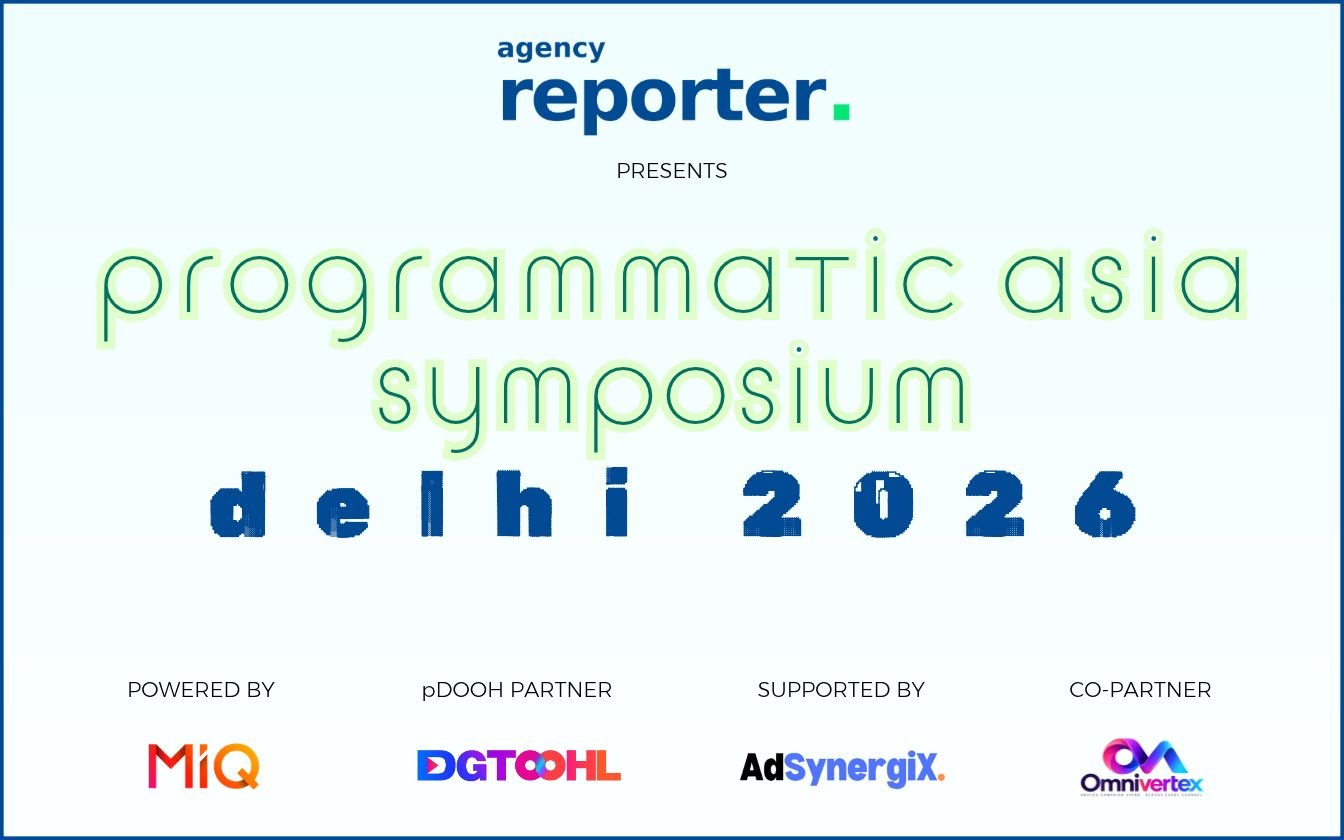
These were the questions at the heart of the 6th edition of the Programmatic Asia Symposium – Delhi 2026, held on 16 October at the Radisson Hotel, Gurugram. Bringing together leaders from brands, agencies, media and technology, the symposium took a closer look at the forces reshaping programmatic and the broader media landscape.
This year’s theme, “Programmatic, Performance & the New Media Landscape — Rethinking Media, Performance and Audience Engagement in 2026,” reflected that shift in perspective. Rather than focusing on technological advancement as an end in itself, the discussions examined what the industry needs to do with the capabilities now available to it — from navigating AI-led automation to measuring performance more meaningfully and assessing the place of emerging channels such as programmatic digital out-of-home (pDOOH).
The premise was straightforward: as the tools become more sophisticated, the questions around their use, effectiveness and accountability need to become sharper.
The symposium was made possible with the support of its partners: MiQ- Powered By; DGTOOHL- pDOOH Partner; AdSynergiX- Supported By Sponsor; and Omnivertex- Co-partner.
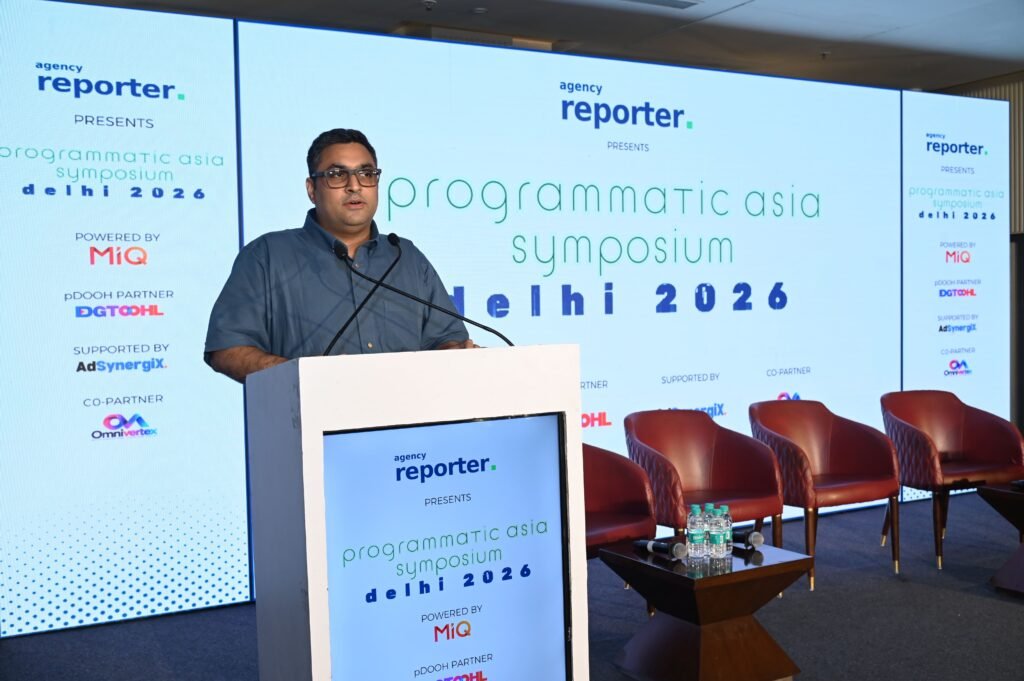
Opening the symposium, Rahul Puri, Founder & Editor, Agency Reporter, set the context for a day focused on looking beyond technological progress to the decisions and outcomes it enables.
The Automation Question: What Happens to the Marketer’s Role?
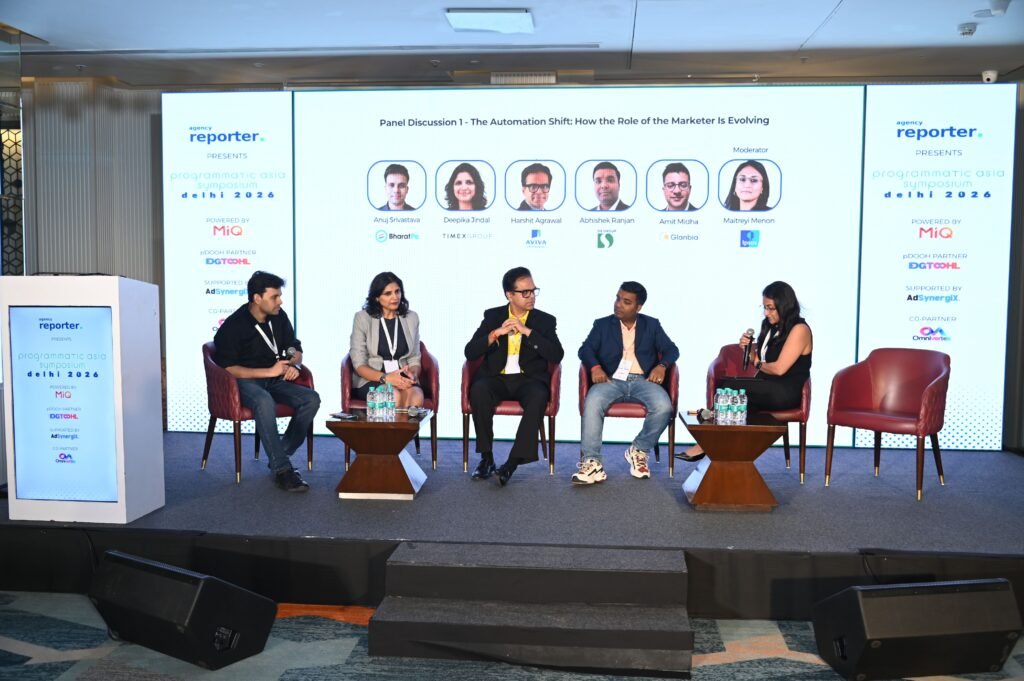
The first panel, “The Automation Shift: How the Role of the Marketer Is Evolving,” explored one of the most consequential changes underway in the industry: the growing influence of AI and automation on how marketing is planned, executed and optimised.
The discussion featured Anuj Srivastava, Head – Growth & Performance Marketing, BharatPe; Deepika Jindal, General Manager – Marketing, Strategy, Automation & Analytics, Timex; Harshit Agrawal, Head of Marketing, Aviva India; and Abhishek Ranjan, Digital Head (Catch Spices | Spiceco), DS Group.
The session was moderated by Maitreyi Menon, Executive Director, Ipsos UU India (Qualitative Research) and Ipsos India Lead, Synthesio (Social Intelligence Analytics).
The conversation moved beyond the efficiency gains associated with automation to consider the changing responsibilities of marketers themselves. As platforms take on more operational tasks and data becomes increasingly accessible, human judgment remains critical in setting objectives, interpreting signals, understanding context and deciding what success should look like.
Automation can help marketers act faster and process more information, but speed and scale do not automatically translate into better strategy. The challenge is to ensure that technology strengthens decision-making rather than simply accelerating existing processes.
Programmatic in Practice: Experience Over Easy Answers
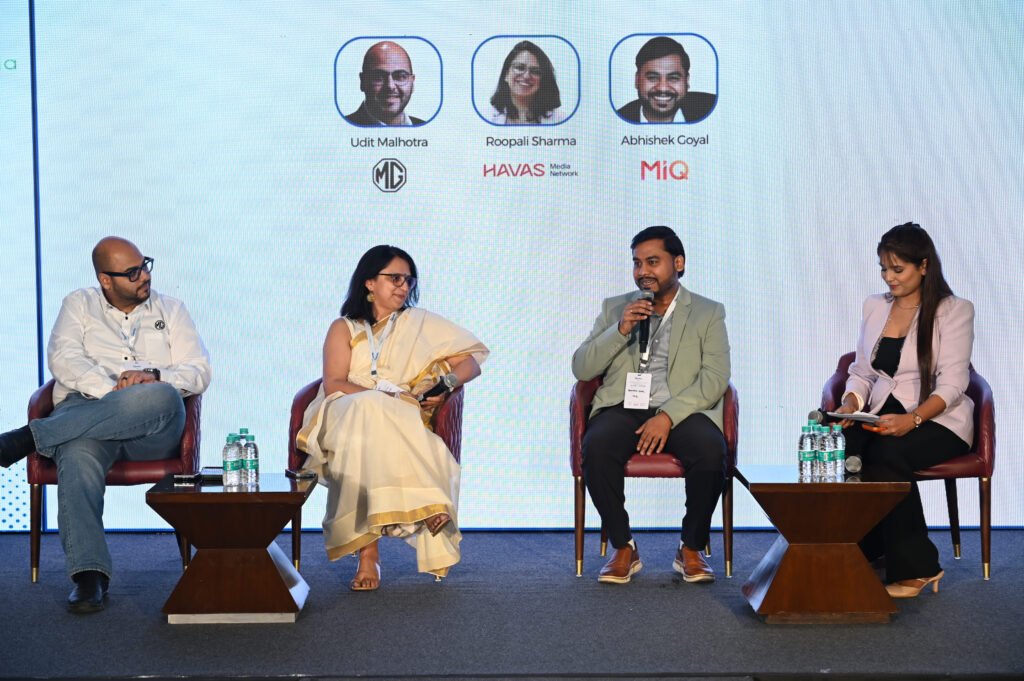
The fireside chat “Programmatic, Without the Playbook: What We Learned in Practice” brought the discussion from capability to application, examining what happens when programmatic strategies meet the realities of business objectives, campaign execution and market conditions.
The session featured Udit Malhotra, Head – Marketing, JSW MG Motor India; Roopali Sharma, President – North and East, Havas Media India; and Abhishek Goyal, Director of Solutions, MiQ.
Their discussion focused on the experiences and lessons that emerge from putting programmatic into practice- including the unexpected outcomes that challenge assumptions and the need to adapt strategies as evidence comes in.
The conversation reflected a broader reality of a maturing discipline: there is no single playbook that works across every brand, category or campaign objective. Effective programmatic strategy depends on understanding the problem to be solved, testing what works in context and using the resulting learnings to make better decisions.
As the technology becomes more established, the value lies not simply in knowing what the platforms can do, but in understanding when, why and how to use those capabilities.
Performance Marketing: Reconsidering What Success Looks Like
Few areas illustrate the industry’s changing priorities more clearly than performance marketing. Clicks, conversions and acquisition costs remain important measures, but they do not always tell the complete story of what a campaign has contributed to the business.
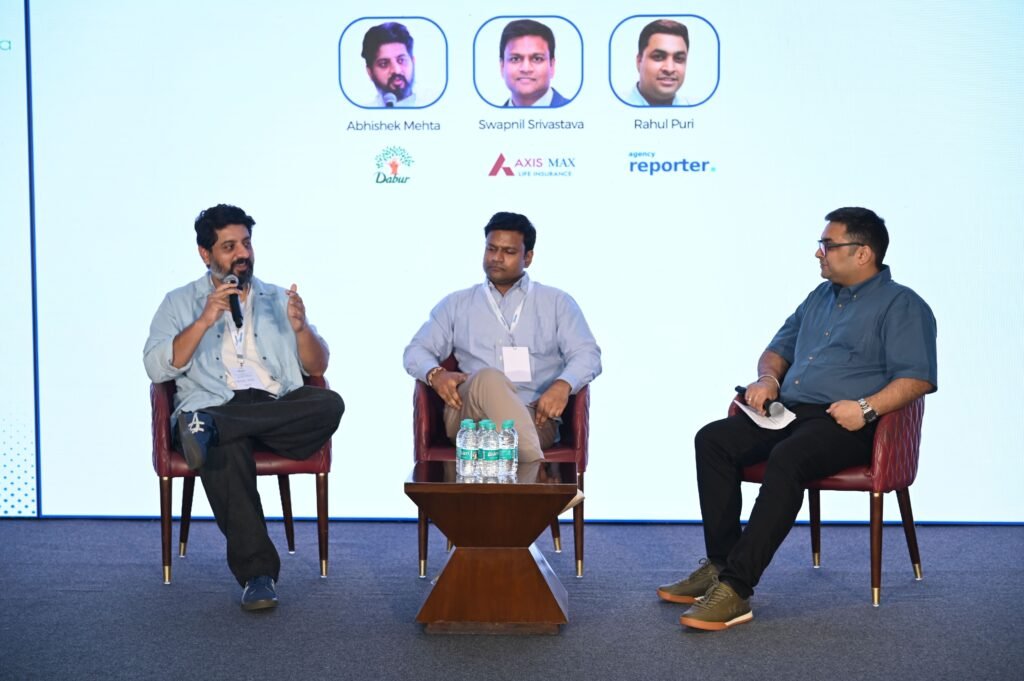
This question took centre stage in the fireside chat “Festive Season, Real Results — What Does Performance Really Mean in 2026?”
Abhishek Mehta, DGM – Digital Marketing, Dabur, and Swapnil Srivastava, Vice President of Growth, Axis Max Life Insurance, joined Rahul Puri, Founder & Editor, Agency Reporter, who moderated the discussion.
With festive-season campaigns bringing heightened competition, substantial media investments and pressure to deliver results, the conversation examined the relationship between immediate campaign metrics and longer-term business objectives.
An important consideration was the context in which performance is measured. Different categories operate with different purchase journeys, decision cycles and business priorities. A metric that signals success in one situation may offer an incomplete picture in another.
Measurement must go beyond reporting activity or optimising towards a readily available number. It must help establish whether media investments are contributing to the outcomes they were intended to deliver. In an environment where optimisation is increasingly automated, defining the right measures of success becomes even more consequential.
Programmatic DOOH: Moving from Possibility to Practical Relevance
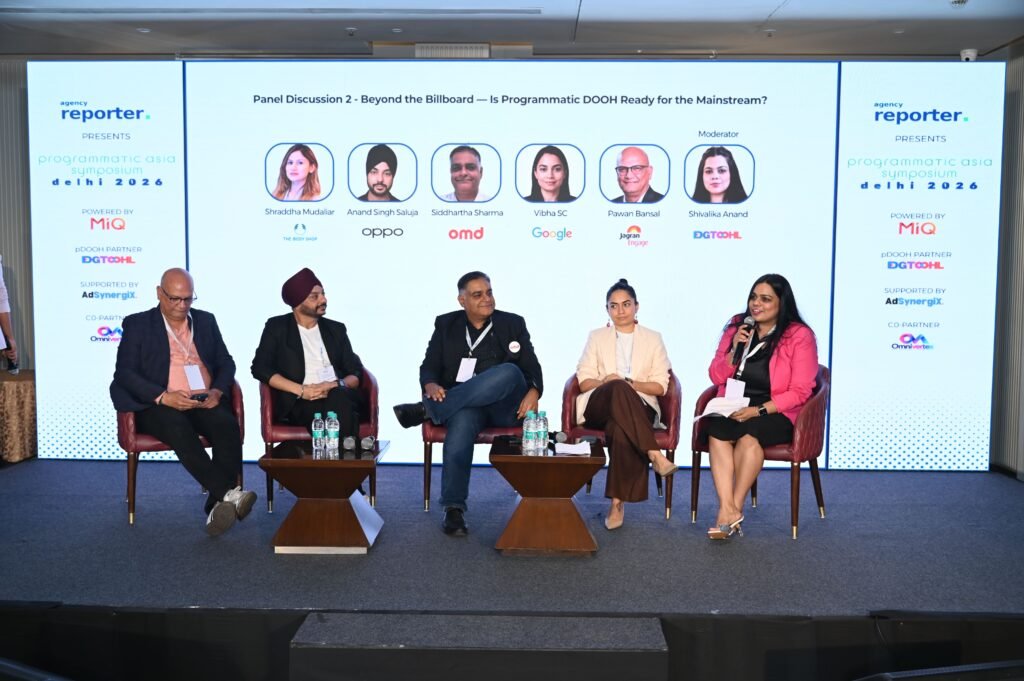
The final panel, “Beyond the Billboard — Is Programmatic DOOH Ready for the Mainstream?”, examined the evolving role of programmatic digital out-of-home advertising within the wider media mix.
The panel featured Siddhartha Sharma, Senior Vice President, OMD; Vibha S C, Programmatic Consultant & pDOOH Lead, Google; Pawan Bansal, Chief Operating Officer, Jagran Engage; and Anand Singh Saluja, Head of Media, OPPO India.
The discussion was moderated by Shivalika Anand, CEO, DGTOOHL.
The conversation explored how audience data, dynamic creative, real-time buying and measurement are expanding the possibilities of outdoor advertising. It also raised a more practical consideration: what will it take for these capabilities to translate into broader adoption and a stronger role for pDOOH in media planning?
The opportunity goes beyond bringing digital buying mechanisms to outdoor screens. For pDOOH to establish its place more firmly within the media mix, its value needs to be understood in relation to audience relevance, campaign objectives, measurement and the contribution it makes alongside other channels.
As with programmatic more broadly, technological capability is only part of the equation. Integration, practical utility and the ability to demonstrate value will shape how the medium develops.
The Next Phase Is About Making the Technology Count
Across the four sessions, the discussions reflected a common shift in the industry’s priorities. AI and automation are changing the mechanics of marketing; programmatic strategies are being tested against real-world business requirements; performance measurement is being reconsidered in the context of broader outcomes; and emerging channels such as pDOOH are being evaluated for their practical contribution to media plans.
Taken together, these conversations point to a more demanding phase in programmatic’s evolution. The question is no longer simply whether the technology can do more. It is whether marketers can use it with greater clarity of purpose, stronger accountability and a more considered understanding of effectiveness.
That distinction also informed the approach to this year’s symposium. In its sixth edition, the event brought the industry together not just to discuss what is changing, but to examine what those changes mean for the people responsible for making marketing work.
Agency Reporter thanks all the speakers, moderators and attendees who contributed their perspectives and experiences to the discussions.
Programmatic will continue to evolve alongside AI, data, automation and new media capabilities. The more consequential task for the industry is to ensure that this evolution is matched by better questions, more informed decisions and a clearer view of what effective marketing actually delivers.
That is the conversation the Programmatic Asia Symposium – Delhi 2026 set out to advance — and one the industry will need to keep having.
