













Can podcasts and streaming music be bought at scale in India?

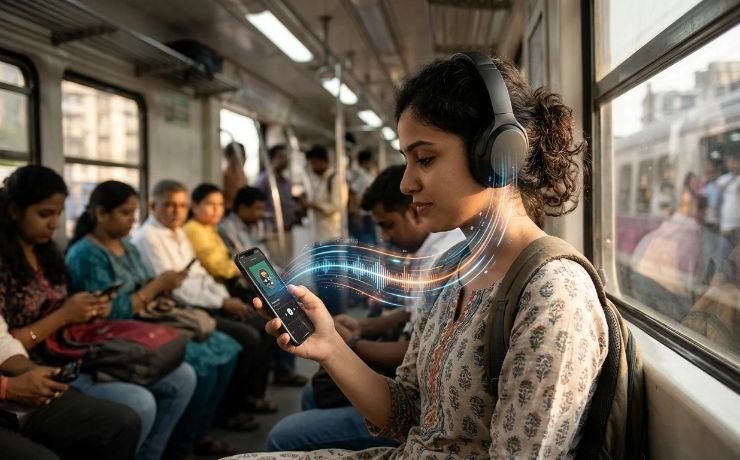
India’s audio consumption habits have undergone a quiet but significant transformation. From morning playlists and music streaming during commutes to podcasts consumed during workouts, work hours and late-night listening sessions, audio has become an increasingly embedded part of everyday digital behaviour. For advertisers, this presents an opportunity to reach audiences in moments when screens are not necessarily commanding their attention.
Yet, while digital audio has steadily expanded its audience base, its evolution as a programmatic advertising channel has been more measured. Unlike display, search or online video, where automated buying has become an established part of media planning, audio advertising in India continues to operate through a combination of direct platform partnerships, curated inventory, sponsorships and emerging programmatic integrations.
The question, therefore, is not simply whether podcasts and streaming music can be bought programmatically. It is whether India’s audio ecosystem has the inventory depth, technological infrastructure, audience data, measurement standards and advertiser confidence required to make programmatic audio a scalable part of media investment.
The opportunity is certainly there. But the road to scale involves more than putting audio inventory on an automated exchange.
The changing economics of listening
For a long time, audio advertising in India was largely associated with terrestrial radio. Brands bought time bands, selected stations based on geography and audience profiles, and used frequency to build recall. The medium offered reach and familiarity, particularly in markets where radio remained an important source of entertainment and information.
Digital audio has changed that equation. Music streaming services and podcast platforms have introduced new listening environments, allowing advertisers to move beyond conventional station-based planning towards more granular audience and contextual targeting.
Platforms such as Spotify, JioSaavn and Amazon Music have helped establish streaming as a mainstream listening habit. Meanwhile, podcast consumption has opened up opportunities around specialist interests, professional communities, entertainment, business, news and lifestyle.
This shift matters because digital audio offers advertisers something that traditional radio could not always deliver with the same precision: the ability to understand who is listening, what they are listening to, when they are listening and, in some cases, the context in which the content is being consumed.
The commercial proposition is also changing. Rather than buying a fixed number of spots across a radio station’s schedule, advertisers can increasingly look at impressions, audience segments, listening environments and campaign objectives. That makes audio more compatible with the broader digital media ecosystem.
However, the existence of digital inventory does not automatically translate into programmatic maturity. For that, the market needs standardised access, transparent pricing, reliable delivery and measurable outcomes.
What programmatic audio actually brings to the table
Programmatic audio refers to the automated buying and selling of digital audio advertising inventory through technology platforms. It applies the principles of programmatic advertising to audio environments, enabling advertisers to purchase impressions across music streaming services, podcasts and other digital listening platforms.
Depending on the platform and available integrations, campaigns can be bought through private marketplaces, programmatic guaranteed deals or open exchanges. Advertisers can use demand-side platforms (DSPs) to access inventory, apply audience and contextual targeting, manage frequency and evaluate campaign delivery.
The format itself can include audio spots, companion display banners, sponsored playlists, host-read integrations and other forms of audio-led advertising. Not all these formats are necessarily available through open programmatic channels, and the distinction is important.
The real advantage lies in making audio buying more systematic. A brand targeting urban professionals, for instance, could seek relevant listeners across different digital audio environments rather than negotiate individual placements with multiple publishers. A consumer brand could use contextual signals around music genres, language preferences or listening behaviour to improve campaign relevance.
For media agencies, this introduces the possibility of integrating audio into broader cross-channel plans. Audio can become part of a connected media strategy alongside display, online video, connected TV and social media, rather than being treated as a standalone experimental format.
It also changes how campaigns can be optimised. While traditional audio planning has relied heavily on reach and frequency estimates, digital environments can offer impression-level reporting, completion metrics and other delivery indicators, subject to platform capabilities.
The promise is greater efficiency and accountability. The challenge is ensuring that the technology and measurement behind these promises are consistent across the market.
India has the audience, but does it have the inventory?
One of the strongest arguments for programmatic audio in India is the scale of its digital audience. Smartphone penetration, affordable mobile data, regional-language content and the growth of on-demand entertainment have created a substantial base of digital listeners.
But audience scale and programmatic inventory scale are two different things.
A platform may have millions of registered users, but only a portion of them may be active listeners within a particular campaign window. A further subset may be eligible to receive advertising, depending on subscription status, content format, geographical availability and platform policies. The inventory that can actually be accessed programmatically may be smaller still.
This distinction is particularly relevant in music streaming. Subscription-based users may not receive conventional audio advertisements, while free-tier listeners represent a more immediately accessible advertising audience. As platforms encourage paid subscriptions, the relationship between total listening hours and monetisable ad inventory becomes increasingly important.
Podcasts present a different challenge. Their audiences may be smaller, but they are often more defined by interests, professional identities or content preferences. A business podcast, for example, may offer an advertiser access to a highly relevant audience even if its overall reach is limited.
However, podcast inventory is fragmented across publishers, hosting platforms, distribution networks and independent creators. Some shows have established advertising arrangements, while others rely on sponsorships or direct brand partnerships. Not every podcast has the technical infrastructure or commercial volume required for programmatic trading.
The result is an uneven marketplace. There is meaningful inventory, but it is distributed across different platforms and buying models. Building scale will require bringing more of this supply into discoverable, standardised and accessible environments.
The DSP question: connecting audio to existing media infrastructure
For programmatic audio to move beyond isolated campaigns, integration with existing media-buying infrastructure will be critical.
Advertisers and agencies have already invested in DSPs, data management capabilities, verification tools and campaign measurement systems. They are unlikely to embrace audio at scale if it requires an entirely separate buying process, reporting structure or technology stack.
The ability to access audio inventory through established programmatic platforms can therefore make a considerable difference. It allows agencies to plan audio alongside other digital channels, apply existing audience strategies and potentially manage campaigns through familiar workflows.
Globally, technology providers such as The Trade Desk and Google Display & Video 360 have helped establish programmatic infrastructure for digital advertising, including audio opportunities where publisher integrations and inventory access permit.
However, access is not uniform. The availability of audio inventory through a particular DSP depends on the publisher’s integrations, geographical permissions, deal arrangements and technical capabilities. In India, this means agencies may still need to combine direct platform negotiations with programmatic transactions to achieve the desired reach.
There is also a distinction between having access to audio inventory and having sufficient liquidity to buy it efficiently. An exchange may technically offer audio impressions, but if the supply is inconsistent, narrowly distributed or limited to a small number of publishers, advertisers may struggle to achieve meaningful scale.
For the ecosystem to mature, publishers, ad exchanges, supply-side platforms (SSPs) and DSPs will need to establish stronger connections. Standardised inventory descriptions, consistent deal structures and transparent auction mechanisms will be essential.
The objective should not be to force every audio placement into an open auction. Premium podcasts, exclusive content and host-led integrations may continue to work better through direct or curated deals. Rather, programmatic infrastructure should make suitable inventory easier to discover, access and measure.
Podcasts and music streaming are not the same advertising proposition
One of the biggest mistakes in discussing programmatic audio is treating all listening environments as interchangeable.
Music streaming and podcasts offer different audience behaviours, advertising opportunities and commercial models. Their strengths are complementary, but their buying strategies cannot always be identical.
Music streaming is primarily a frequency and reach opportunity. Listeners may spend considerable time on platforms, returning repeatedly throughout the day. This creates opportunities for brands to build familiarity through repeated exposure, particularly across everyday moments such as commuting, exercising, working or relaxing.
A consumer electronics brand, for example, could target listeners interested in technology, entertainment or gaming. A food delivery platform could build campaigns around evening listening patterns, while an automobile brand could explore contextual placements around travel-related playlists.
The challenge is to ensure that frequency does not become excessive. Audio advertising interrupts an experience that users have actively chosen. Repetition without relevance can quickly turn a brand message into an irritation.
Podcasts, on the other hand, offer a different kind of relationship with audiences. Listeners often choose shows because they trust the host, value the subject matter or identify with a particular community. This creates an environment where advertising can benefit from contextual relevance and the credibility associated with the content.
A financial services brand advertising on a personal finance podcast, for instance, may find a stronger contextual connection than it would through a broad music-streaming campaign.
Podcast advertising also includes host-read integrations, sponsored episodes and branded content. These formats can be particularly effective because the communication is delivered within an established content relationship. But they are not always suitable for automated buying.
Host-read advertisements require creative coordination, approvals and sometimes a specific relationship between the brand and creator. Automated insertion may work for pre-recorded advertising, but it cannot fully replace the value of a carefully developed sponsorship.
This creates two distinct opportunities for the market: programmatic music advertising built around audience reach and repeat exposure, and podcast advertising that combines scalable inventory with contextual and creator-led relevance.
The strongest media plans will understand where these models overlap and where they need to remain separate.
Targeting without compromising privacy
One of digital audio’s biggest attractions is its potential for audience targeting.
Unlike traditional radio, where advertisers largely rely on station profiles, digital platforms can offer targeting based on geography, language, device, listening behaviour and other available audience signals.
This allows campaigns to move beyond broad demographic assumptions. A brand could potentially reach listeners based on their content preferences, interests or consumption patterns, subject to the platform’s data permissions and targeting capabilities.
Contextual targeting is particularly promising. An advertiser does not necessarily need extensive personal data to make an audio advertisement relevant. The genre of music, the subject of a podcast, the language of the content or the listening environment can offer useful signals.
For instance, a sportswear brand could advertise around fitness-related content, while a travel company could explore placements within travel podcasts or relevant playlists. Such associations can make advertising feel more natural without requiring excessive personalisation.
However, the growing importance of data privacy cannot be ignored. India’s Digital Personal Data Protection framework has brought greater attention to consent, responsible data handling and the obligations of businesses processing personal data.
Audio platforms and advertising partners will need to be clear about what data is collected, how audience segments are created and what information is shared with advertisers. Platform-level targeting does not necessarily mean that advertisers receive identifiable listener information.
There is also a practical consideration. Targeting too narrowly can reduce available inventory and increase campaign costs. In a developing market, where programmatic audio supply may already be fragmented, excessive audience restrictions could make it harder to achieve meaningful reach.
The industry will need to strike a balance between precision and scale. Contextual relevance, broad audience signals and privacy-conscious planning may prove more sustainable than trying to replicate the highly granular targeting strategies used in other digital channels.
The measurement problem: impressions are not attention
If programmatic audio is to compete for larger advertising budgets, measurement will have to become one of its strongest selling points.
Digital advertising has trained marketers to expect detailed reporting. They want to know how many impressions were delivered, how frequently audiences were exposed, how campaigns performed across segments and whether the investment contributed to business outcomes.
Audio can provide several useful delivery metrics, including impressions, listen-through or completion rates, reach and frequency, depending on the platform and format. But these numbers do not necessarily establish whether the listener was attentive or whether the advertisement influenced behaviour.
An audio advertisement may be delivered successfully while the listener is distracted, multitasking or away from the device. A completed impression is not automatically an attentive impression.
This distinction is important because audio occupies a different position in the consumer’s media experience. Unlike display advertising, it does not always depend on a visible screen. Unlike video, it does not necessarily offer a visual indicator of engagement.
Advertisers will therefore need measurement frameworks that recognise the characteristics of the medium instead of simply borrowing metrics from display and video.
Independent verification, invalid traffic detection, consistent impression definitions and transparent reporting will be important building blocks. Agencies will also need greater clarity on how different platforms calculate reach, frequency and completion.
Cross-platform measurement presents another challenge. The same listener may encounter a campaign on a music service, a podcast platform, social media and connected television. Without appropriate deduplication methods, the reported audience could exaggerate the campaign’s actual reach.
Attribution is equally complicated. Audio may influence awareness, consideration or purchase intent without producing an immediate click. This makes last-click attribution an inadequate way to judge its contribution.
Brand lift studies, search interest, website traffic patterns, controlled experiments and other outcome-based measurement approaches can help establish its effectiveness. For campaigns focused on awareness, recall and consideration may be more meaningful than direct-response metrics alone.
Ultimately, audio needs a measurement language that reflects what it does well. The industry cannot expect advertisers to invest confidently if the only evidence of success is the number of advertisements delivered.
Creative will determine whether the medium earns attention
Technology can make audio inventory accessible, but it cannot make an advertisement interesting. Creative quality will remain central to whether programmatic audio delivers meaningful results.
Audio advertising has a particular advantage: it can communicate without competing for visual attention. A well-written script, an engaging voice and an appropriate soundscape can create a memorable brand association. But the same format can become intrusive when the message feels repetitive, poorly timed or disconnected from the listening experience.
The creative approach must also reflect the environment. A 20-second advertisement on a music-streaming platform may require a different treatment from a host-read integration within a 45-minute podcast. The former needs to establish the brand and message quickly, while the latter can allow more room for explanation and storytelling.
Dynamic creative optimisation could add another dimension. Brands may be able to adapt audio messages based on language, location, time of day, audience segments or contextual signals. A food delivery advertisement, for example, could use different messaging during breakfast and evening hours.
Regionalisation is another significant opportunity in India. With listeners consuming content across multiple languages, brands can develop audio campaigns that feel closer to local audiences rather than relying on a single national-language execution.
However, personalisation should not become an excuse for producing endless variations without a clear creative strategy. The objective is to make the message more relevant, not simply to automate its production.
As programmatic capabilities expand, advertisers and agencies will need to bring creative thinking into media planning much earlier. Audio should not be treated as an additional format into which existing digital advertisements are simply converted.
What will it take to unlock scale?
For programmatic audio to become a mainstream advertising channel in India, progress will need to happen across several parts of the ecosystem.
First, publishers and streaming platforms must make more eligible inventory accessible through consistent programmatic integrations. Greater supply transparency will help agencies understand what they are buying, where advertisements will appear and which audiences they can reach.
Second, the industry needs more standardisation. Consistent definitions of impressions, completion rates, reach and frequency will make it easier for advertisers to compare performance across platforms. Independent verification and stronger brand-safety controls will further improve confidence.
Third, agencies need to develop more sophisticated audio planning capabilities. This includes understanding the differences between music streaming, podcasts and other digital audio environments, while identifying where each format fits into a brand’s broader communication strategy.
Finally, advertisers need to move beyond treating audio as an experimental line item. Its contribution should be evaluated against campaign objectives, whether that means building awareness, strengthening brand association, reaching niche communities or supporting a larger omnichannel campaign.
The opportunity will also depend on how platforms balance advertising with the listener experience. As subscription models expand and content consumption evolves, the availability of advertising-supported inventory will remain an important commercial consideration.
From experimental format to a measurable media channel
India’s programmatic audio opportunity is real, but its development is unlikely to follow the same trajectory as display or online video. The market has a substantial digital listening audience, an expanding podcast ecosystem and an established programmatic advertising infrastructure. What it still needs is a more connected supply chain, greater inventory transparency and measurement standards that advertisers can trust.
There is also no reason to expect every audio format to become fully automated. Premium podcast sponsorships, host-led integrations and branded content will continue to have a place alongside impression-based programmatic buying. In fact, the future may depend on how effectively the industry combines automated scale with the distinctiveness of individual content environments.
For advertisers, the more useful question is not whether audio can replace existing digital channels. It is what audio can contribute that those channels cannot always deliver in the same way.
Listening creates a different relationship with content. It accompanies consumers through moments when they may not be looking at a screen, offering brands an opportunity to become part of everyday routines rather than compete for another visual impression.
Programmatic technology can make that opportunity easier to access, plan and measure. But technology alone will not create demand. That will depend on relevant inventory, thoughtful targeting, engaging creative and credible evidence of effectiveness.
The next phase of programmatic audio in India will not be defined simply by how many listeners platforms can reach, but by how effectively the industry can turn listening time into meaningful advertising value.
