











AI-Generated Out-of-Home — How Dynamic Creative Is Reaching Billboards, Not Just Banners

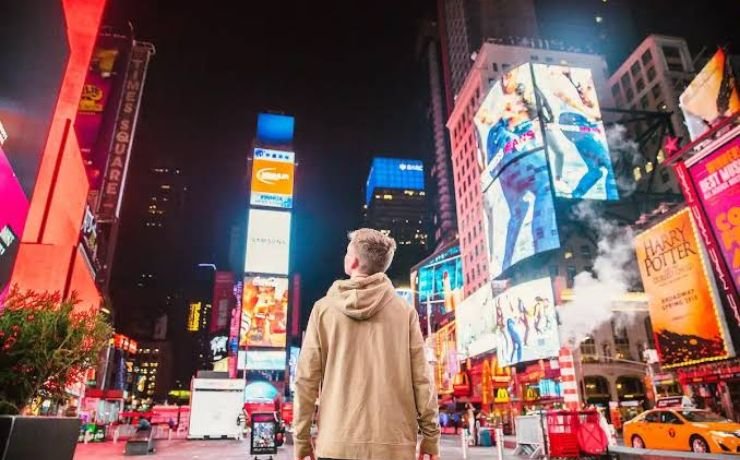
For years, the language of dynamic creative belonged largely to digital advertising. Banners changed with the weather. Product recommendations shifted according to browsing behaviour. Search ads adapted to intent. Social feeds served different messages to different audiences, often within seconds.
Out-of-home advertising, by comparison, appeared almost stubbornly static. A billboard was booked, designed, printed or uploaded, and left to do its job for days or weeks. Its strength was scale and visibility, but its creative flexibility was limited.
That distinction is becoming harder to maintain.
As digital out-of-home (DOOH) networks become more connected to data, programmatic buying and automated creative systems, billboards are beginning to behave more like digital media. Add generative AI to that infrastructure, and the possibility becomes more significant: creative can increasingly be produced, adapted and deployed for specific locations, audiences, moments and conditions rather than designed once and distributed everywhere.
The interesting shift is not simply that AI can make an image for a billboard. It is that AI is beginning to change the economics and mechanics of what a billboard can be.
A campaign can potentially respond to a cricket result, a temperature change, traffic conditions, a local event, a product’s availability or even the time of day. Instead of one master creative travelling across hundreds of screens, brands can build systems that generate multiple versions of the same campaign logic and deliver the most relevant variation to each environment.
In other words, dynamic creative is moving from the banner to the street.
From Static Posters to Responsive Media
The underlying idea is not entirely new. Dynamic DOOH has existed for years, with brands using feeds such as weather, time, location, traffic and retail inventory to alter advertising messages. What is changing is the creative layer sitting on top of that infrastructure.
Traditionally, dynamic campaigns still depended on a predefined library of assets. A brand might create ten headlines, five product images and several background variations, with rules determining which combination appeared on a particular screen.
AI introduces another layer of flexibility. Generative tools can assist in producing visual variations, resizing assets, adapting copy, creating backgrounds, localising messages and generating multiple executions from a central creative idea. The objective is not necessarily to let an algorithm invent a campaign from scratch. It is to reduce the friction between a campaign idea and the number of executions required to make that idea relevant across environments.
That distinction matters.
OOH has always been a medium of context. A coffee brand beside a metro station can speak differently during the morning commute than it does near an office district at lunchtime. A food delivery platform can communicate differently when rain begins. A fashion retailer can promote winter products when temperatures fall. A streaming platform can adapt messaging around the release of a new series.
AI makes it easier to create and manage these variations at scale.
The Billboard Becomes a Data Surface
The more important transformation may therefore be happening behind the screen rather than on it.
Modern DOOH infrastructure can connect advertising inventory with multiple data sources. Depending on the market and technology stack, those signals can include time, location, weather, traffic, audience movement, events, retail data, sports information and campaign performance.
When those signals are connected to creative decisioning, a billboard stops being merely a display. It becomes a responsive media surface.
Consider a beverage brand running a national campaign. The core creative remains consistent, but the message changes according to local conditions. In Delhi, the screen could reference the day’s heat. In Bengaluru, it could respond to rainfall. Near a cinema, the creative could promote a relevant entertainment property. Around a sporting venue, it could shift into match-related messaging.
The campaign is still one campaign. But its expression is no longer uniform.
This is where AI-generated creative becomes particularly useful. The number of possible combinations can quickly become too large for traditional production workflows. If every variation requires separate copywriting, design, approval, resizing and trafficking, dynamic advertising becomes operationally expensive.
Automation changes that equation.
The opportunity is to establish a creative system with rules, brand guardrails and approved inputs, allowing technology to produce and distribute variations without treating every version as an entirely new production project.
Why AI Matters to DOOH Now
There is a practical reason this conversation is gaining momentum now. Generative AI has dramatically reduced the cost and time associated with producing variations of creative assets.
For digital advertisers, this has already become part of the broader conversation around creative optimisation. The same principle is beginning to enter OOH, where the number of physical environments can make traditional adaptation particularly cumbersome.
A national campaign may need different aspect ratios, screen specifications, languages, product combinations and location-specific messages. The creative workload grows rapidly as the campaign becomes more granular.
AI can help address that complexity, but the bigger opportunity is not simply speed. It is creative scale.
Once the production barrier falls, agencies and brands can think about OOH in terms of hundreds or thousands of contextual moments rather than a handful of master artworks.
That creates an interesting shift in creative strategy. Instead of asking, “What should our billboard say?”, marketers can increasingly ask, “What should our billboard say here, at this moment, given what is happening around it?”
That is a very different creative brief.
Context Becomes the Creative
Some of the most effective OOH campaigns have always understood that the environment is part of the message. A billboard does not exist in isolation. It sits alongside roads, buildings, stores, stations, airports and people moving through particular moments of their day.
Dynamic creative can make that relationship more deliberate.
Imagine an automobile brand promoting a new SUV. Rather than showing the same vehicle across every screen, the campaign could adapt its messaging around traffic conditions, geography or weather. A highway environment might emphasise long-distance driving. An urban screen might focus on manoeuvrability. A rainy location could foreground safety-related product features, where appropriate and substantiated.
Similarly, an e-commerce brand could use location and inventory signals to promote products available for rapid delivery in that market. A restaurant chain could adapt offers according to the daypart. A travel company could change destination messaging according to seasonal demand.
The creative becomes less about broadcasting one message and more about making the message feel native to the moment.
This is where DOOH has an advantage over many digital formats. A phone screen competes with an enormous volume of content. A large-format billboard occupies physical space and can dominate the visual environment. When its message also reflects what is happening around the audience, the relevance can become more immediate.
From Personalisation to Situational Relevance
There is an important distinction between digital personalisation and OOH personalisation.
Online advertising can often target an individual based on behavioural or demographic signals. A billboard generally cannot, and should not necessarily attempt to replicate that model.
Its opportunity lies elsewhere: situational relevance.
The billboard knows where it is. It knows when it is running. It can potentially respond to environmental and contextual signals. That makes the medium particularly suited to messages that are relevant to a shared moment rather than a single person’s identity.
A sudden downpour can trigger a rainwear message. A major sporting event can change the tone of a campaign around a stadium. A late-night screen can promote a different service proposition from the same brand’s daytime execution.
That kind of relevance can feel less intrusive because it does not require the medium to know everything about the individual watching it.
For marketers navigating a privacy-conscious advertising ecosystem, that distinction is becoming increasingly important.
The New Creative Workflow
AI-driven DOOH also has implications for how agencies work.
The traditional workflow often moves in a linear sequence: strategy, concept, creative development, production, adaptation, media planning and trafficking. Dynamic creative introduces a more interconnected model.
Creative teams need to think about variables. Media teams need to understand what signals can trigger creative changes. Data teams need to define which inputs are meaningful. Technology partners need to translate those rules into delivery. Legal and brand teams need to approve the boundaries within which automated variation can happen.
That means the creative idea increasingly needs to be designed as a system.
A strong dynamic campaign therefore cannot simply be a beautiful master visual with automation added afterwards. The concept itself needs enough flexibility to survive multiple contexts without losing its brand identity.
This could influence the kind of ideas agencies develop for OOH. Campaigns may increasingly be built around modular headlines, adaptable visual elements, live data feeds and location-specific storytelling.
The best work will likely make the technology almost invisible. People should notice the relevance, not necessarily the machinery generating it.
The Risk of Making Everything Dynamic
But there is a danger in assuming that more variation automatically means better advertising.
Dynamic creative can quickly become a production exercise masquerading as strategy. If every possible data signal triggers a new message, campaigns can become fragmented, noisy or difficult to understand.
OOH still has a fundamental creative constraint: people often have only a few seconds to absorb the message.
A highly sophisticated system can therefore produce a very ordinary billboard if the underlying creative idea is weak.
There is also the question of brand consistency. Generative AI can produce enormous volumes of content, but scale makes governance more important, not less. Visual identity, tone of voice, product claims, cultural sensitivity and legal requirements still need human oversight.
The challenge is particularly important when campaigns operate across multiple languages and cultural contexts. Literal translation is rarely enough. A line that works in English may not carry the same rhythm, humour or meaning in another language.
AI can assist with localisation, but editorial judgement remains essential.
Measurement Gets More Interesting
Dynamic DOOH also creates a new measurement question.
If a campaign has dozens or hundreds of creative variations, brands can potentially begin examining not only where an advertisement appeared, but which contextual version appeared and how different executions performed.
This moves the conversation beyond traditional questions such as reach and impressions.
Marketers can start asking whether certain messages perform better at particular times, locations or environmental conditions. They can test creative hypotheses at a much more granular level.
However, this does not mean that every billboard should be treated like a click-through banner. The value of OOH includes awareness, memory, physical presence and brand salience, many of which require different measurement frameworks.
The opportunity is to connect contextual intelligence with broader brand and business outcomes rather than forcing OOH into a digital performance model.
India’s Opportunity
For India, the potential is particularly interesting because of the country’s scale, diversity and rapidly expanding digital infrastructure.
A campaign running across Mumbai, Delhi, Bengaluru, Hyderabad and smaller cities does not encounter one uniform audience or one uniform environment. Weather, traffic patterns, languages, cultural moments, retail behaviour and local events can vary significantly.
DOOH gives brands the physical reach of OOH with greater flexibility than traditional static formats. Programmatic infrastructure adds automation, while AI can make creative adaptation more manageable.
That combination could make dynamic OOH increasingly relevant to national campaigns that want both scale and local relevance.
There is also a broader ecosystem effect. As CTV, retail media, mobile, social and DOOH become increasingly connected through data and programmatic infrastructure, marketers are moving towards a world where the same campaign idea can travel across screens without necessarily looking identical everywhere.
The billboard is becoming part of that connected media system.
The Bigger Shift: From Creative Assets to Creative Systems
Perhaps the most important implication of AI-generated OOH is that advertising is gradually moving from asset production towards system design.
For decades, the unit of creative production was the advertisement: one film, one print execution, one billboard, one banner.
Increasingly, the unit may become the creative system: a central idea supported by rules, data, assets and variations that can respond to different circumstances.
That does not make the original idea less important. It makes it more important.
When a campaign needs to work across hundreds of contextual executions, the strategic idea has to be strong enough to hold everything together. The role of the creative team shifts from producing every individual execution to defining the framework within which those executions can exist.
AI can generate variations. Data can determine when they appear. Programmatic technology can decide where they run. But the brand still needs to determine what the campaign means.
That distinction is likely to shape the next phase of DOOH.
Billboards Are Entering the Age of Adaptive Advertising
The billboard was once defined by permanence. A message was designed, printed and placed in the physical world.
Digital screens changed that by making the surface programmable.
Data made it responsive.
AI could make it scalable.
The result is a form of outdoor advertising that can react to context without losing the physical impact that made OOH valuable in the first place.
The most interesting future for AI-generated OOH is therefore not a city filled with randomly generated advertisements. It is a city where advertising understands its surroundings well enough to become more relevant to them.
For brands, that means fewer reasons to think of OOH as a static extension of a campaign created elsewhere. For agencies, it means creative ideas may increasingly need to be built for movement, variation and context from the start.
And for the medium itself, it marks a significant evolution: the billboard is no longer simply a place where an advertisement appears. It is becoming another interface through which a campaign can respond to the world around it.
