









Personality Rights and Deepfakes: The legal shield creators now need

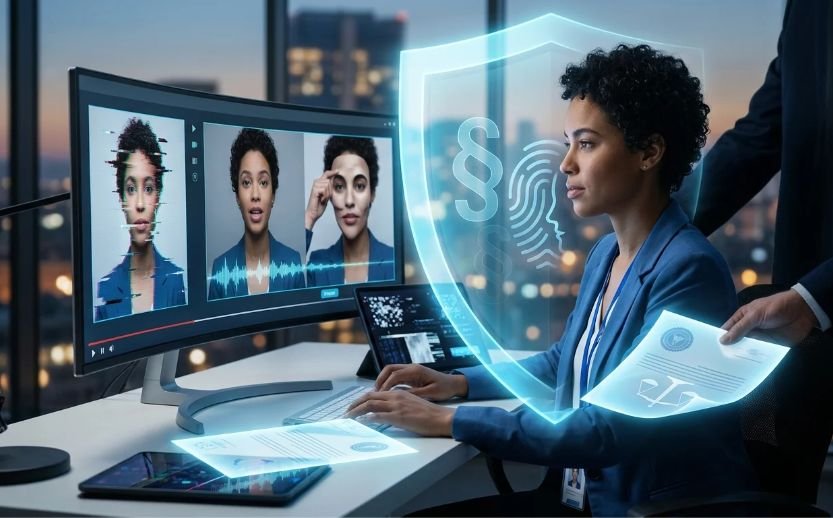
A year ago, a deepfake of a film star endorsing a dubious health supplement was a talking point at industry panels. Today it is a routine docket entry. Over the past twelve months, Indian courts have been asked, almost weekly, to decide who owns a face, a voice and a manner of speaking in an age when software can reproduce all three in minutes. For creators, influencers and the brands that work with them, the answer has stopped being academic. It has become a question of commercial survival.
The legal concept at the centre of this shift is personality rights: the idea that a person’s name, image, voice, signature style and other identifying traits belong to them, and that others cannot exploit them for profit or deceive the public with them. India has no standalone statute that spells this out. What it has instead is a steadily thickening body of judicial orders, and that gap between court-made protection and the absence of a codified law is the defining feature of the landscape creators now navigate.
From celebrity privilege to creator infrastructure
For years, personality rights were treated as the preserve of A-list celebrities. The doctrine drew on the constitutional right to privacy under Article 21, on passing off, and on the idea that a famous identity carries commercial value worth defending. The foundations were laid in earlier decades, and the Supreme Court’s privacy jurisprudence gave them fresh constitutional weight.
The turning point for the AI era came with the Delhi High Court’s 2023 order in the Anil Kapoor case, which extended protection beyond name and likeness to cover voice, mannerisms and even a signature catchphrase. That was a recognition that identity is not a single asset but a bundle, and that each strand can be cloned independently. Since then the pace has been striking. Aishwarya Rai Bachchan secured interim protection in September 2025. In early 2026 the Delhi High Court passed orders protecting Vivek Oberoi, Jubin Nautiyal, Kajol and yoga guru Ramdev, among others, while the Bombay High Court did the same for Shatrughan Sinha and later ruled in a matter involving actor Preity Zinta that points to platform accountability for hosting infringing AI content.
What matters for the marketing industry is who is now walking through the courtroom door. Content creator Raj Shamani has obtained protection over his name, image, voice and likeness. In January 2026, the Delhi High Court granted interim relief to Akira Nandan against AI-generated deepfakes, and the order clarified that people who are not conventional celebrities but have a noticeable presence in the public eye can qualify. Entrepreneur Aman Gupta and politician Shashi Tharoor have since secured takedown directions of their own. The message is plain: protection is no longer a function of box-office numbers. It is a function of whether your identity has public and commercial value, and whether someone is abusing it.
Why the creator economy is exposed
Creators are, in a sense, the most vulnerable category of public figure. Their entire business model rests on personal trust. An audience follows a creator because it believes the voice it hears is authentic, the recommendation genuine, the face on screen accountable. That is precisely the asset a deepfake counterfeits.
The harm takes several forms. The most common is the fraudulent endorsement: a synthetic clip in which a recognisable creator appears to promote a trading app, a miracle cure or a get-rich-quick scheme. Viewers who act on it lose money, and the creator absorbs the reputational damage. A second form is the unauthorised commercial clone, where a voice or face is used to power advertising, merchandise or content farms without consent or payment. A third, and the most distressing, is non-consensual obscene content, which several recent orders have specifically ordered to be removed.
There is also a newer frontier. In March 2026, actor Sonakshi Sinha went to the Delhi High Court against an AI chatbot platform over characters built on her persona, and the court directed the takedown of AI-generated content misappropriating her identity. That case signals that the threat is moving beyond static fakes towards interactive digital doubles, which can hold conversations, sell products and operate around the clock with no human behind them.
For a creator whose income depends on brand deals, each of these is a direct hit. Advertisers become wary of attaching themselves to a face that appears in scam content. Followers lose confidence. And unlike a traditional copyright dispute, there is often no single original work to point to, only a likeness that has been stolen and reassembled.
The courts’ toolkit: speed, breadth and dynamic relief
What makes the Delhi High Court’s approach notable is not only its willingness to recognise the right but its readiness to craft remedies that match the speed of the harm. Interim injunctions are frequently granted ex parte, meaning before the other side has been heard, because the damage from a viral fake compounds by the hour. Orders typically direct platforms to take down specified URLs, restrain unknown defendants, and instruct intermediaries to disclose the details of those behind infringing accounts.
Courts have also embraced what is known as dynamic relief, which allows a rights holder to flag fresh infringing links to the court or to platforms without filing an entirely new suit each time. For a creator facing a hydra-like wave of copies, that is the difference between a remedy that works and one that is obsolete by the time it is served. Courts have also been careful to carve out space for satire, parody and genuine commentary, a distinction that platforms have themselves pressed in recent hearings. The line between a protected joke and a harmful impersonation is still being drawn, case by case.
The regulatory layer: labelling and the three-hour clock
Alongside judicial activism, the government has tightened the rules for platforms. The Information Technology (Intermediary Guidelines and Digital Media Ethics Code) Amendment Rules, 2026, notified on 10 February and in force from 20 February, introduced a formal definition of “synthetically generated information”: audio, visual or audio-visual content created or altered by computer in a way that makes it appear real. Platforms that enable the creation or sharing of such material must ensure it is clearly and prominently labelled and carries embedded metadata identifying it as synthetic.
The amendment also compressed takedown timelines sharply. Where a court or government order declares content unlawful, intermediaries now have three hours to act, down from thirty-six. For certain categories such as non-consensual intimate imagery, the window is shorter still. Removal in compliance with the rules does not cost a platform its safe harbour protection, which removes one of the traditional reasons for hesitation.
For creators, this is useful but incomplete. The rules govern how platforms behave once content is identified as unlawful; they do not themselves create an individual right to your likeness. A label on a deepfake does not undo the fraud it enabled. And a three-hour clock only starts once someone with standing has obtained an order or lodged a valid complaint. The statutory framework works best when paired with the personality-rights injunction, with the court order supplying the authority and the rules supplying the speed.
The gaps that still matter
It would be a mistake to read the recent run of orders as a settled legal regime. Several uncertainties remain, and each has real commercial consequences.
The first is the absence of a codified right. Interim orders are, by definition, provisional, and they vary with the judge, the facts and the evidence placed before the court. A creator who wins relief in Delhi cannot assume identical treatment elsewhere, and the final shape of the doctrine, including how damages are calculated, is still evolving. Commentators across the legal community continue to call for dedicated legislation, and the question of whether India will legislate directly on personality rights and AI misuse remains open.
The second is enforcement. Anonymous accounts, offshore hosting and the ease of re-uploading make takedown a recurring chore rather than a one-time victory. Court orders bind those within reach of the court; the internet is rarely so accommodating.
The third is the grey zone of consent. Many creators now license their voice or likeness to AI tools, voluntarily and for payment. That is a legitimate and growing business, but it raises hard contractual questions. How long does the licence last? Can the clone be used in categories the creator would never endorse? What happens to the synthetic version after the contract ends? The law of personality rights protects against misappropriation, but it cannot rescue a creator from a poorly drafted agreement.
What brands and agencies should be doing now
This is not only a creator problem. Brands and agencies sit squarely in the blast radius. A campaign built around a creator whose likeness is being cloned for scams is a campaign exposed to reputational risk. An agency that uses AI to generate a spokesperson’s voice or face without clean written consent is exposing its client to litigation. The industry’s standard of care is rising, and what was once a clause buried in the boilerplate is becoming a central term of the deal.
In practice, that means a few disciplines becoming standard. Contracts should state explicitly whether and how a creator’s name, image, voice and likeness may be used in AI-assisted production, for how long, in which media and territories, and with what approval rights. Synthetic or AI-assisted content should be disclosed and labelled in line with the new rules rather than left to chance. Creators should maintain an evidence trail of original content, verified accounts and licensed uses, because proving authenticity is half the battle in any dispute. And agencies should build monitoring into campaign workflows, so that a fake surfaces in hours rather than weeks.
For creators themselves, the playbook is equally practical. Register trademarks where possible for names, handles and distinctive phrases, since these give an additional and more established layer of protection. Keep records of how your persona has been built and monetised, because courts look for evidence of commercial value. Respond quickly to impersonation, and be prepared to move for an injunction rather than relying only on platform reporting tools. The creators who have fared best in court are those who acted promptly and documented thoroughly.
A shield, not a substitute for trust
There is a tendency in the marketing world to treat every new technology as either a miracle or a menace. Generative AI is both, and the personality-rights wave reflects an industry and a judiciary slowly learning to hold both ideas at once. The same tools that let a creator localise a video into ten languages can let a fraudster put words in that creator’s mouth. The law is not trying to stop the former; it is trying to make the latter expensive.
That distinction matters because the creator economy runs on a fragile currency. Audiences extend trust to individuals in a way they rarely extend to institutions, and that trust is the product. Personality rights, backed by faster platform obligations and a judiciary willing to act at speed, offer creators something they have lacked until now: a credible legal shield against having that trust counterfeited.
But a shield is only as good as the hand that raises it. Courts can order takedowns and platforms can attach labels, yet neither can substitute for vigilance, careful contracts and a clear-eyed view of how identity is licensed and used. The creators and brands that treat likeness as a protected asset, to be documented, defended and deliberately licensed, will be the ones best placed as synthetic media becomes ever more convincing. In an economy where a face and a voice are the entire business, protecting them is no longer a legal afterthought. It is brand strategy.
