














Computer Vision Meets DOOH: How Startups Are Making Billboards Measurable Like Digital

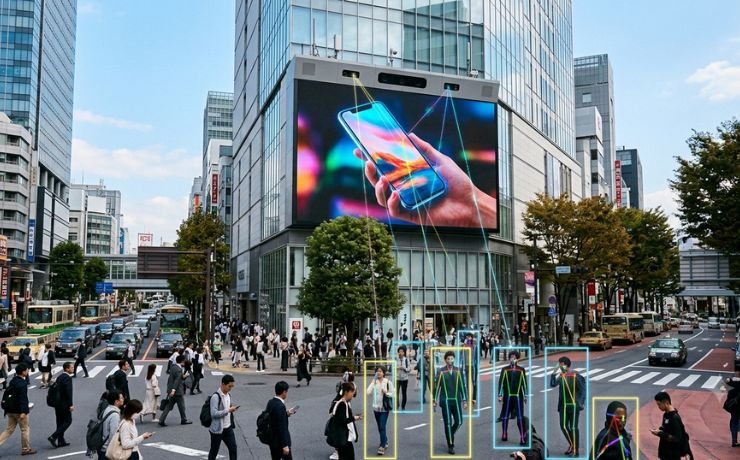
For the better part of a century, the billboard has been advertising’s most confident liar. It has promised reach without proof, impact without evidence, and impressions that existed largely in the imagination of a media planner armed with traffic-count data from a municipal survey conducted years earlier. Out-of-home was sold on faith. Digital, by contrast, was sold on data — click-through rates, view-through conversions, dwell time, the entire apparatus of accountability that made performance marketers fall in love with a rectangle on a screen. That gap, between the medium advertisers trusted emotionally and the medium they trusted empirically, is now closing faster than most people in the industry realise. The instrument closing it is computer vision.
A new generation of AdTech startups — some India-born, others global with aggressive India rollouts — has begun bolting cameras, edge processors and machine learning models onto digital out-of-home screens and even static hoardings, quietly converting the country’s billboards into something that behaves suspiciously like a website. Impressions are no longer estimated; they are counted. Audiences are no longer assumed; they are classified, in real time, by age band, gender and even attention direction, all without ever storing an identifiable image of a single passerby. The billboard, long dismissed by performance marketers as a blunt-force brand instrument, is quietly acquiring the analytical vocabulary of programmatic display.
“We didn’t set out to make OOH more digital,” said the founder of one Bengaluru-based measurement startup at a recent industry roundtable. “We set out to make it accountable. Digital just happened to be the easiest way to get there.”
From footfall estimates to verified impressions
The traditional OOH measurement stack in India has relied on a patchwork of methods that would make a performance marketer wince: traffic studies conducted by third-party research agencies, GRP-style audience estimates modelled off census and mobility data, and a fair amount of extrapolation dressed up as science. It has worked well enough to sustain a multi-thousand-crore industry, but it has never survived close scrutiny from a CMO trained on Google Analytics dashboards. The fundamental complaint has always been the same: nobody can prove, with any granularity, who actually saw the ad, when, and for how long.
Computer vision changes the unit of measurement itself. Instead of modelling a static “opportunity to see” based on historical traffic patterns, camera-equipped sensors mounted on or near a screen capture live footfall and vehicular flow, run it through on-device detection models, and output anonymised counts of actual passersby within the effective viewing cone of the asset — filtered further by dwell time, gaze direction and even estimated viewing distance. The output isn’t a modelled reach number handed down once a quarter. It’s a live, timestamped, queryable dataset that can be sliced by hour, weather condition, or day of week, much the way a digital publisher would slice pageviews.
Several Indian DOOH measurement players have built their entire pitch around this shift. Their sales decks no longer lead with screen inventory or prime locations — the traditional currency of OOH sales conversations — but with dashboards that look uncannily like a Google Ads reporting interface, complete with impression graphs, audience composition charts and creative-level performance comparisons. For media buyers used to justifying every rupee of digital spend to finance teams that demand attribution, this is not a nice-to-have. It is the price of entry to a larger share of the marketing budget.
The demographic layer, and its discomforts
Where the technology gets genuinely interesting — and where it starts to attract regulatory and ethical attention — is in audience classification. Modern computer vision models can estimate, from a passing glance captured at a public intersection, a reasonably confident age bracket and gender split of the people who looked at a screen. Some vendors go further, inferring vehicle type for roadside inventory, distinguishing between pedestrian and vehicular audiences, or even estimating group size around a mall entrance. None of this requires facial recognition in the sense of identifying a specific individual; the models are typically trained to output aggregated, anonymised classifications and are architected to discard raw imagery within milliseconds, processing everything at the edge rather than transmitting faces to a server.
That distinction — aggregated inference versus individual identification — is the load-bearing wall on which the entire industry’s privacy defence rests, and it is a distinction regulators are only beginning to interrogate seriously. India’s Digital Personal Data Protection Act casts a wide net around what constitutes personal data, and while anonymised, aggregated demographic counts sit in comparatively safer territory than biometric identification, the operational reality of running cameras in public spaces at scale is likely to invite scrutiny as the technology proliferates beyond early adopters. Startups building in this space have generally been proactive about this, publishing data-handling documentation and, in several cases, seeking third-party audits of their on-device processing claims — aware that one high-profile controversy could set the entire measurement category back years.
For brand marketers, though, the appeal is difficult to overstate. A skincare brand can now, in principle, confirm that a billboard on a specific arterial road is actually being seen predominantly by the working-age female demographic it was bought for — rather than trusting a syndicated traffic study that treats every vehicle and pedestrian as an undifferentiated unit. A quick-commerce app can validate that its metro-station domination buy is reaching the urban millennial commuter it modelled in its media plan, and can compare that composition across a dozen stations to reallocate spend toward the ones actually delivering the right eyeballs.
Attention, not just presence
Perhaps the more consequential shift, though, is the move from measuring presence to measuring attention. Being in front of a screen and looking at a screen are entirely different events, and OOH has historically conflated the two because it had no way to distinguish them. Computer vision closes that gap by tracking gaze direction and dwell duration, generating what several vendors now market as an “attention score” — a weighted metric that discounts raw footfall by the proportion of that footfall that demonstrably looked toward the creative, and for how long.
This matters enormously for how OOH gets bought and sold going forward. The industry has spent years debating whether it should move from a footfall-based CPM to something closer to a viewability standard, mirroring the conversation digital display had roughly a decade ago when the Media Rating Council introduced viewability thresholds for online banners. Attention-based measurement gives that debate a concrete technical foundation for the first time. A handful of Indian programmatic DOOH platforms have already begun experimenting with attention-weighted pricing on a subset of premium digital screens, effectively letting advertisers pay a premium for verified high-attention slots and a discount for locations where footfall is high but engagement is thin — a mall food-court screen that people walk past quickly, say, versus one positioned at a queue point where dwell time runs into minutes.
The knock-on effect is a more honest conversation between media owners and buyers about inventory quality. Screen owners who have long relied on prime location alone to command premium rates are now being asked to prove that location translates into attention, and the ones who can back that claim with sensor data are beginning to command a real pricing advantage over those who cannot.
Closing the loop with dynamic creative
Measurement is only half the story startups in this space are chasing. The more ambitious ones are using the same computer vision pipeline to trigger dynamic creative — swapping out billboard content in real time based on who or what the sensors detect. A cold beverage brand’s screen might automatically prioritise a particular creative variant when temperature and footfall density cross a certain threshold; an automobile OOH placement near a signal might shift creative based on the mix of two-wheelers versus four-wheelers detected in the queue. This is, in effect, programmatic creative optimisation applied to a physical medium, borrowing directly from the contextual and dynamic creative optimisation playbooks that display and CTV advertising perfected over the last decade.
When measurement and dynamic triggering sit on the same infrastructure, DOOH starts to resemble a closed loop rather than a one-way broadcast — the same audience data that proves a screen worked is also the data that decided what the screen showed in the first place. For a category that has spent decades being bought on instinct and relationship rather than data, that is a genuinely structural shift, not a cosmetic one.
The scepticism worth holding onto
None of this should be read as computer vision having fully solved OOH measurement, and the more credible voices building in this space are careful not to oversell it. Camera coverage remains patchy — most deployments so far cover a minority of premium digital screens in metro markets, leaving the vast bulk of static and rural inventory as measurement-dark as it has always been. Standardisation is nonexistent; every vendor currently defines “impression,” “attention” and “dwell time” slightly differently, which makes cross-platform comparison for a media planner running a multi-vendor OOH campaign genuinely difficult, echoing the early, fragmented years of digital ad verification before the IAB and MRC imposed common definitions. And the accuracy of demographic inference, while improving, still carries real error margins that vendors are not always transparent about in client-facing decks.
What is not in doubt is the direction of travel. Advertisers who have spent a decade demanding digital-grade accountability from every channel they touch were always going to eventually turn that demand toward out-of-home, and computer vision has arrived at precisely the moment infrastructure, camera hardware and edge computing costs have fallen enough to make it commercially viable at scale. The billboard is not becoming digital in the sense of screens replacing paper and vinyl — plenty of static inventory will remain, and profitably so. It is becoming digital in the sense that matters most to the people who write the cheques: it is finally, verifiably, measurable.
