













Why The Trade Desk and Global DSPs Are Suddenly Investing in Agency Education Programs in India

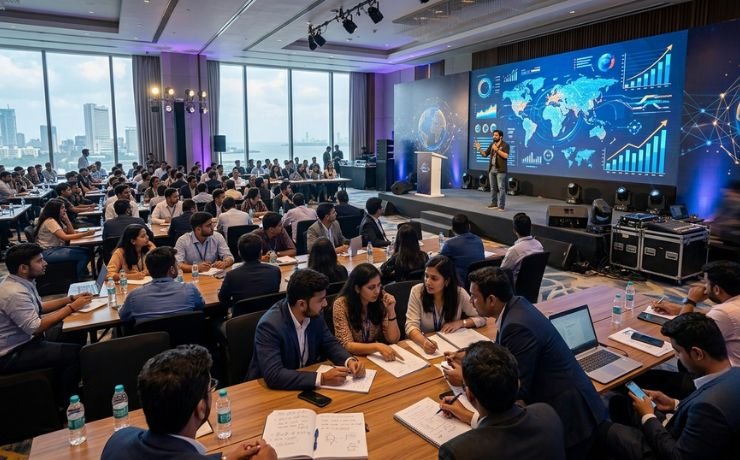
Walk into any programmatic conference in Mumbai or Bengaluru this year and you will notice something that would have seemed faintly absurd five years ago: representatives from The Trade Desk, Google’s DV360, Amazon DSP and a growing list of global demand-side platforms running full-day training workshops, certification tracks and hands-on trading academies, entirely free of charge, for agency planners who are often two or three years into their careers. This is not a sponsorship booth handing out branded notebooks. It is a structured, resourced, increasingly strategic investment in teaching India’s agency workforce how to actually use programmatic technology well. And the question worth asking is not whether this is generous. It is why a set of publicly listed, margin-conscious global platforms suddenly decided that agency education was worth this level of spend.
The answer, once you follow the thread, has less to do with goodwill and everything to do with a structural problem that has been quietly capping DSP growth in one of the fastest-growing digital ad markets in the world.
The Talent Bottleneck Nobody Wanted to Name
India’s programmatic spend has grown at a pace that has consistently outstripped the market’s supply of people who genuinely know how to run a DSP well. Media buying in India expanded rapidly through the D2C boom, the quick commerce wave and the post-pandemic digitisation of even fairly traditional advertisers, and agency headcount grew alongside it. But headcount growth and skill depth are not the same thing. A significant share of the planners and buyers actually logging into DSP consoles day to day are early-career hires, often less than two years out of business school, trained largely on the job, rotating between accounts, and expected to become proficient in platforms that carry the complexity of a small enterprise software suite within a matter of weeks.
The consequence, which DSPs have been watching play out in their own performance data for years, is chronic underutilisation of the platform’s actual capability. Advanced bidding strategies, custom algorithm configuration, cross-channel frequency management, incrementality testing, first-party data onboarding, all the features that differentiate a premium DSP from a commoditised trading tool, routinely go unused because the person operating the console simply was never trained on them. Campaigns get run on default settings and safe, familiar presets rather than the sophisticated configurations the platform was built to support. From the DSP’s perspective, this is a genuinely painful problem, not because clients complain, but because it makes the platform look interchangeable. If the average trader in an Indian agency is using perhaps a fifth of what a DSP can actually do, then the perceived difference between one platform and another shrinks to almost nothing, and the entire pitch for platform superiority collapses into a conversation about price.
That is the crux of it. Education, in this context, is not philanthropy. It is a direct intervention against commoditisation.
Why India, and Why Now
Several forces have converged to make this the moment for that intervention. The most obvious is scale. India’s digital ad market has crossed the size threshold where it now shows up meaningfully in global platform revenue conversations, not as an emerging-market footnote but as a genuine growth engine, particularly as spend in mature Western markets plateaus. Global DSPs facing slower growth in the US and Europe are increasingly dependent on markets like India, Southeast Asia and Latin America to sustain the growth narrative that public markets expect from them. A platform cannot extract premium value from a market it entered primarily on price.
The second force is competitive pressure from within the market itself. Retail media networks built by Indian quick commerce and e-commerce players have expanded aggressively over the past two years, absorbing a growing share of performance budgets that might otherwise have flowed through open programmatic channels. At the same time, walled gardens continue to capture the lion’s share of digital spend by default, simply because they are easier to plan and buy against without specialised expertise. For independent DSPs, the agency trading desk has become the single most important battleground for defending open-web programmatic spend against both retail media and walled-garden gravity. Winning that battleground requires agency traders who are skilled enough to make the case, internally and to clients, for why sophisticated open-programmatic buying outperforms the easy default of dumping budget into a single retail or social platform. That case is very hard to make when the trader making it barely knows the tool.
The third and perhaps most India-specific force is the sheer velocity of career movement within agency trading desks. Attrition among junior and mid-level programmatic talent in Indian agencies runs considerably higher than in more mature markets, with planners frequently moving between agencies, in-house brand teams and adtech vendors within their first three to four years. This churn means DSPs cannot rely on institutional knowledge accumulating naturally within a handful of agency partners over time, the way it might in a more stable market like the UK or Australia. Instead, they are effectively training a rotating workforce, and have had to build education programs robust and repeatable enough to withstand that churn rather than depend on a small number of long-tenured platform experts at each agency.
What These Programs Actually Look Like
The shape these initiatives take has matured considerably from the generic webinar format of a few years ago. The Trade Desk’s Edge Academy, for instance, has moved toward structured certification tracks with genuine curriculum depth, covering everything from foundational programmatic concepts through to advanced topics like Unified ID 2.0 adoption, supply path optimisation and connected TV buying strategy, specifically calibrated for the realities of the Indian media landscape rather than a generic global deck. DV360 and Amazon’s DSP training arms have similarly built out India-specific certification paths, often working directly with agency leadership to embed structured onboarding for new trading hires rather than relying on ad hoc account manager support.
What distinguishes the current wave from earlier vendor training efforts is the seriousness with which these programs are being resourced and measured. Platforms are dedicating full-time regional education leads, building India-specific case studies using local campaign data rather than adapted US examples, and in several cases tying certification completion to co-branded credibility that agency employees can genuinely use to advance their own careers, turning platform expertise into a portable professional asset rather than a vendor-specific skill. That last point matters more than it might initially appear. When a junior trader knows that becoming genuinely proficient on a given DSP will make them more valuable in their next role, the incentive to actually engage with training rather than treat it as a checkbox exercise changes considerably.
There is also a growing trend of these programs extending beyond individual contributor training into agency leadership education, helping media directors and heads of programmatic understand platform capability well enough to make informed decisions about tech stack investment, rather than defaulting to whichever platform their trading desk happens to be most comfortable with. This is a subtler but arguably more consequential shift, since leadership buy-in is what ultimately determines whether a platform gets meaningfully prioritised in an agency’s broader programmatic strategy or simply used as a fallback option.
The Agency Side of the Bargain
Agencies, for their part, have largely welcomed this investment, and the reasons go beyond simply appreciating free training. Structured DSP education solves a genuine internal problem: the cost and time burden of onboarding new programmatic hires has historically fallen entirely on the agency, competing for time and attention against the relentless pressure of live campaign delivery. Outsourcing a meaningful chunk of that technical training to platform partners who have both the resources and the incentive to do it well is, from an agency operations standpoint, a fairly straightforward win. Several agency leaders have also noted that certification programs give them a useful, externally validated benchmark for assessing trading talent during hiring, something that was previously difficult to standardise given how inconsistent programmatic training had historically been across the industry.
There is a reasonable note of caution worth sounding here too. Vendor-funded education inevitably comes with a degree of platform-specific framing, and agencies benefit from treating these programs as a foundation for skill-building rather than a substitute for independent, platform-agnostic strategic judgement. The best agency trading desks are already treating DSP certifications the way they would treat any single vendor’s product training: valuable, worth pursuing, but not a replacement for developing traders who understand programmatic principles deeply enough to evaluate any platform on its merits, not just the one that happened to train them first.
What is clear, regardless, is that this investment marks a maturing of how global platforms think about the Indian market. Education, once treated as a peripheral marketing expense, has become a genuine growth lever, one that platforms are now willing to fund at scale because the alternative, a market full of underutilised technology and commoditised platform perception, is far more expensive in the long run. For India’s next generation of programmatic talent, that shift, whatever its underlying commercial logic, is proving to be a genuinely useful one.
