











The Multi-Platform Creator — Why Betting on One Channel Is Becoming a Career Risk

For a long time, being a creator meant finding your platform.
YouTube belonged to long-form video. Instagram belonged to lifestyle, fashion and visual storytelling. X rewarded commentary. LinkedIn became a home for professional voices. Podcasts created another lane altogether. The logic was simple: choose the platform that suits your content, understand its algorithm, build an audience and keep publishing.
That logic is becoming harder to sustain.
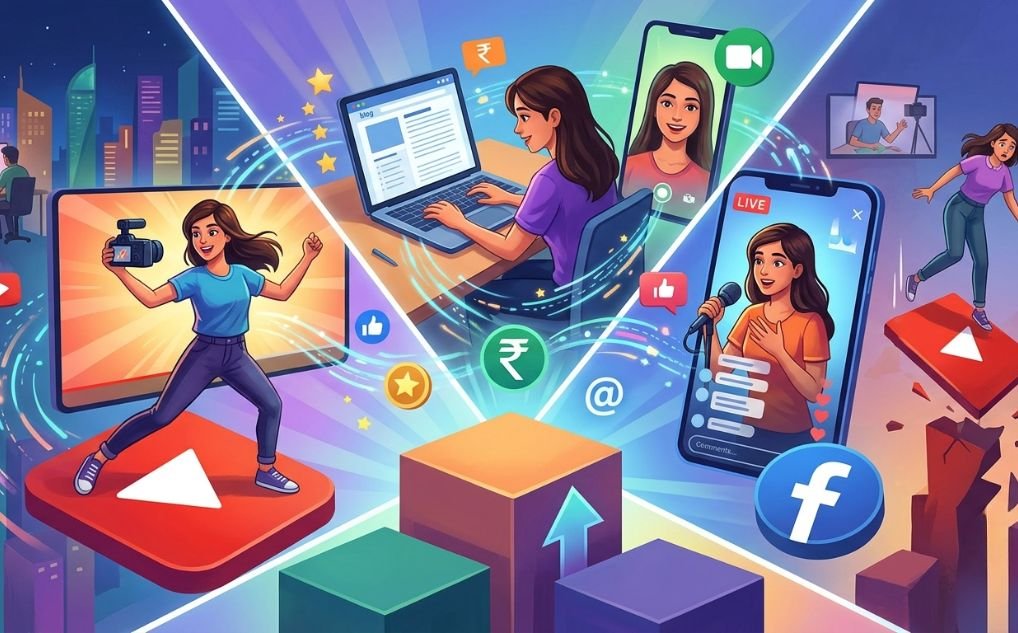
Creators today are building careers in an internet where platforms can change distribution rules overnight, algorithms can alter the economics of reach, and audience behaviour is increasingly fragmented across formats. A creator who depends almost entirely on one platform is not just building an audience. They are also building a business around someone else’s infrastructure.
“The creator economy is becoming less about owning a platform and more about owning a relationship with an audience.”
This is why the multi-platform creator is emerging as a more resilient model.
The idea is not to publish the exact same piece of content everywhere. Nor is it to chase every new platform simply because it is growing. The more sophisticated approach is to build an ecosystem in which one core idea can travel across multiple formats, while each platform plays a different role in discovery, engagement, community or monetisation.
For creators, this is increasingly becoming a business decision rather than a content strategy.
The Platform Was Never Really Yours
The uncomfortable truth about creator businesses is that the creator may own the content, but they do not control the distribution system.
Algorithms decide what gets surfaced. Platforms determine monetisation policies. Recommendation systems influence discovery. Changes in content formats can suddenly make an established production model less effective.
None of this means platforms are inherently unreliable. They are essential infrastructure for the creator economy. But dependence on a single platform introduces concentration risk.
A creator with 500,000 followers on one platform may appear to have a significant business. But follower count does not guarantee consistent reach, engagement or income. If distribution declines, monetisation rules change or audience behaviour moves elsewhere, the creator can find themselves rebuilding from a much weaker position.
“A large following is an asset. A single-platform following is also a dependency.”
The same principle applies to brands working with creators. A creator’s headline follower count can obscure how diversified their audience actually is.
The question is increasingly shifting from “How many followers do you have?” to “How many meaningful audience touchpoints do you control?”
Why One Platform Is No Longer Enough
Audience behaviour has become inherently multi-platform.
A person may discover a creator through a short video, watch a longer explanation on YouTube, listen to a podcast while commuting and eventually subscribe to a newsletter or join a community.
These are not necessarily competing behaviours. They can form a single audience journey.
For creators, this creates an opportunity to design content ecosystems rather than platform-specific identities.
A filmmaker can use short-form video for discovery, long-form content for deeper storytelling and a newsletter for direct communication. A finance creator can use Instagram for bite-sized explainers, YouTube for detailed analysis and a podcast for recurring conversations. A professional creator can use LinkedIn to establish expertise, YouTube to demonstrate depth and an owned newsletter to maintain a direct relationship with followers.
The format changes. The underlying intellectual property does not.
One Idea, Many Formats
The strongest multi-platform strategies often begin with an idea rather than a platform.
Take a creator who wants to explain how artificial intelligence is changing advertising.
The core idea could become a 60-second video for discovery, a 10-minute YouTube explainer for depth, a podcast conversation with an industry expert, a LinkedIn post with a professional point of view and a newsletter analysing the implications.
None of these pieces needs to be identical.
In fact, copying and pasting the same content everywhere can weaken the strategy because every platform has different audience expectations.
“The multi-platform creator does not duplicate content. They translate ideas.”
This distinction is increasingly important as creators try to scale without turning their entire operation into a content factory.
One strong idea can generate several pieces of content, but each should feel native to its environment.
Discovery and Loyalty Are Different Jobs
Another reason multi-platform strategies are becoming important is that discovery and loyalty rarely happen in exactly the same place.
Short-form video platforms can be powerful discovery engines. They allow creators to reach people who have never encountered them before.
Long-form video can then provide a deeper relationship. A viewer who spends 20 minutes with a creator is giving a very different kind of attention from someone who watches a 20-second clip.
Newsletters, memberships, communities and direct channels can go one step further by creating recurring communication that does not depend entirely on algorithmic distribution.
This creates a funnel of sorts:
Discovery → Engagement → Habit → Community → Monetisation.
The important point is that no single platform has to perform every role.
Instead, creators can assign different jobs to different channels.
The Rise of the Creator as a Media Property
As creators become more sophisticated, the distinction between an individual influencer and a media property is becoming less obvious.
A creator with a podcast, YouTube channel, newsletter, social presence, community and events is effectively operating a small media business.
That changes how commercial partnerships can be structured.
Instead of a brand buying one sponsored post, the creator can potentially offer a campaign ecosystem: a short-form teaser, a long-form integration, a podcast conversation, newsletter placement and community activation.
The creator becomes not just a distribution channel but a media environment.
“The next generation of creator partnerships may be sold as ecosystems, not posts.”
For advertisers, this can offer more opportunities to tell a story across different stages of the consumer journey.
For creators, it can reduce dependence on a single format or platform and create more meaningful commercial relationships.
Monetisation Is Becoming More Diversified
Platform advertising revenue remains an important source of income for many creators, but it is only one part of the emerging creator business model.
Brand partnerships, affiliate commerce, subscriptions, memberships, digital products, courses, consulting, events and merchandise can all contribute to creator revenue.
Multi-platform distribution can support this diversification.
A creator might use social content to attract an audience, YouTube to establish authority, a newsletter to nurture that audience and a paid product to monetise the relationship.
The key is that monetisation does not have to happen where discovery happens.
In fact, separating the two can make the business more resilient.
“The audience may discover you on a platform. That does not mean the platform has to own the entire business relationship.”
Brands Are Also Changing What They Look For
The rise of multi-platform creators is likely to influence influencer marketing itself.
Brands have traditionally evaluated creators through metrics such as followers, engagement rates, views and campaign performance. These remain relevant, but they do not capture the entire value of a diversified creator business.
A creator with a smaller following but a strong presence across YouTube, Instagram, LinkedIn and a newsletter may offer a different commercial proposition from a creator with a much larger audience concentrated on one platform.
The former may provide multiple formats, deeper engagement and more opportunities for storytelling.
That does not automatically make one model better than the other. The right structure depends on the campaign objective, audience and category.
But it does suggest that creator evaluation is becoming more nuanced.
Data Becomes More Important
Multi-platform presence also creates a measurement challenge.
Creators and brands need to understand whether audiences are genuinely distinct across channels or simply following the same creator in multiple places.
Cross-platform measurement can help answer questions such as where discovery is happening, which channels drive deeper engagement and which formats contribute to conversion.
However, the data is rarely perfectly comparable.
A view on one platform may not mean the same thing as a view on another. Engagement definitions vary. Attribution windows differ. Audience overlap can be difficult to establish.
“Being everywhere is not diversification if the same audience is being counted five different ways.”
The goal, therefore, should not be to maximise the number of platforms. It should be to understand the role each platform plays in the overall audience relationship.
The Cost of Being Everywhere
There is an obvious counterargument to the multi-platform strategy: it can become exhausting.
Creating consistently for multiple channels requires planning, editing, community management, analytics and often additional production resources.
A creator who attempts to be equally active everywhere can quickly find themselves producing more content and creating less value.
This is where content architecture becomes important.
Creators need a central content engine from which multiple outputs can be developed. A long-form interview, for example, can become short clips, quotes, a written article, a newsletter discussion and social posts.
This approach allows creators to expand their presence without multiplying their workload at the same rate.
Automation and AI are also entering this workflow, particularly for transcription, clipping, summarisation, research and content repurposing.
But technology does not solve the strategic problem on its own.
If the original idea is weak, producing it in six formats simply creates six pieces of weak content.
Owned Audiences Become the Endgame
The strongest argument for multi-platform creation may ultimately have little to do with any particular social network.
It is about building channels that the creator can influence more directly.
Email newsletters, communities, websites, memberships and customer databases provide forms of audience access that are less dependent on algorithmic feeds.
They do not eliminate platform dependency. A creator still needs platforms to discover new audiences. But they can create a second layer of resilience.
“Borrowed distribution can build the audience. Owned channels can deepen the relationship.”
This distinction is becoming particularly relevant as creator businesses mature.
The first stage of the creator economy was largely about attention. The next stage is increasingly about infrastructure.
Creators Need a Portfolio, Not Just a Platform
The multi-platform creator model can be understood in much the same way as portfolio diversification in business.
The objective is not to eliminate risk. It is to avoid allowing one external variable to determine the fate of the entire business.
If one platform changes its algorithm, another channel can continue driving discovery. If advertising revenue weakens, direct subscriptions or brand partnerships can provide another revenue stream. If short-form reach declines, long-form content or community can deepen engagement.
None of these channels is guaranteed to work indefinitely.
That is precisely the point.
The creator economy is evolving too quickly for permanence to be the strategy. Adaptability is becoming the more valuable capability.
The Creator Career Is Becoming a Media Business
The creator who succeeds across platforms will not necessarily be the person who posts the most.
It may be the person who understands how audiences behave across environments and builds a system around those behaviours.
That requires thinking about content as intellectual property, platforms as distribution partners, audiences as communities and data as a source of learning.
It also requires accepting that platforms will continue to change.
The creator economy was never truly about a particular app. It was about individuals finding ways to turn expertise, entertainment, personality or creativity into an audience and, eventually, a business.
Platforms simply provided the infrastructure.
As those platforms become more powerful and more unpredictable, creators have a stronger reason to diversify where they publish, how they monetise and how they maintain relationships with their audiences.
“The creator with one platform has an audience. The creator with an ecosystem has a business.”
That may be the most important shift underway.
The future creator career is unlikely to be defined by one channel, one algorithm or one format. It will be defined by the ability to move an idea across platforms without losing the audience along the way.
In a creator economy where distribution can change overnight, building everywhere may no longer be about chasing reach.
It may simply be about making sure that when one door closes, the relationship does not disappear with it.
