












From Influencer to IP: How Indian Creators Are Building Owned Brands, Not Just Followings

For the better part of a decade, the Indian creator’s business model was disarmingly simple: build an audience, then rent it out to whoever paid the most per post. The follower count was the asset. The brand deal was the exit. And when the algorithm shifted, or the audience aged out, or a platform quietly throttled reach overnight, the creator was left holding nothing but a media kit and a shrinking inbox. That model hasn’t died — but in 2026, it has stopped being the ambition. The ambition now is to own the thing being sold, not just the shelf space it sits on.
Call it the shift from rented reach to owned IP, and it is showing up everywhere from cricket stadiums to Instagram Shops. Creators who once measured success in impressions are now measuring it in equity, cap tables and SKUs. It is, quietly, the most consequential structural change India’s creator economy has gone through since the influencer marketing industry itself was invented.
1. The numbers behind the mood shift
This isn’t just a vibe picked up from LinkedIn posts. Kofluence’s Decoding Influence 2026 report found that 15.7 percent of Indian creators have already launched their own brand or product line, with another 22 percent actively planning to. Put plainly, close to four in ten creators in India are either already owners or intend to be soon — a striking number for an industry that, a few years ago, treated the sponsored post as the ceiling rather than the floor. The report frames this as a shift from “renters to owners,” a phrase that captures exactly what has changed: for most of the creator economy’s first decade, creators built audiences on platforms they didn’t own, and earned fees on terms largely set by the brand on the other side of the negotiation table. That arrangement is now being renegotiated, deal by deal, brand by brand.
The infrastructure is catching up to the ambition, too. Bureau Media Ventures, which launched in New Delhi as India’s first creator-focused venture studio and fund, is built on a thesis blunt enough to work as a mission statement: the creator is the new company. Its founders point to a gap that is more structural than talent-related — India has produced no shortage of creators the world watches, but comparatively few creator-originated brands that have grown into lasting, ownable franchises. The problem, as they frame it, was never a talent gap. It was an infrastructure gap — the missing ownership structures, IP frameworks and institutional backing that let a creator’s work outlive any single platform’s algorithm.
2. Where the pattern is easiest to see: on the cricket field
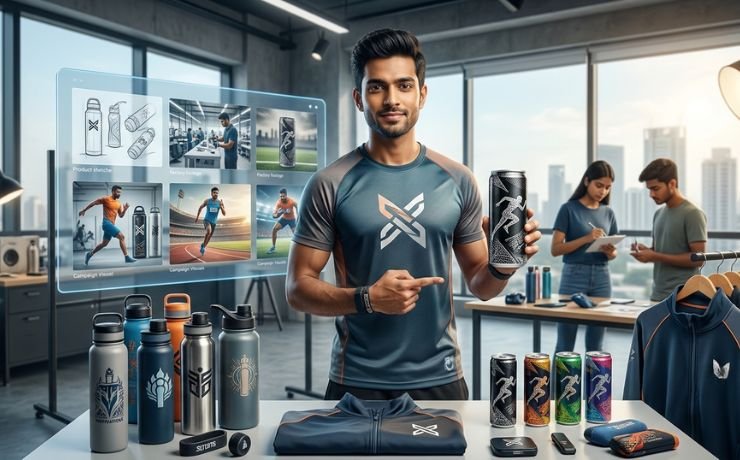
India’s athlete-entrepreneurs got a head start on this shift, mostly because their fame was never platform-dependent in the first place — you can’t demonetise a cover drive. Virat Kohli’s business portfolio is the clearest case study available. What began in 2014 as Wrogn, one of India’s first major athlete-backed fashion labels, has since evolved into a sprawling ownership structure rather than a string of endorsement cheques. One8, his lifestyle and performance sportswear label, now sits under Agilitas Sports, a Bengaluru-based sportswear company Kohli has invested in directly — a deliberate move, by his own account, toward building an Indian-owned performance sportswear company rather than continuing to lend his face to someone else’s. The label’s most recent sportswear and footwear line reportedly sold more than 1.5 lakh pairs of shoes in its first 24 hours. Kohli has also built out One8 Yoga alongside fellow investor Anushka Sharma, opened Vault, a fitness and recovery venture combining gym facilities with recovery technology, and picked up a 12 percent co-ownership stake in ISL football club FC Goa. Notably, he walked away from a reported Rs 300 crore extension offer from Puma to keep building equity in his own name instead.
He is not alone in that instinct. MS Dhoni has spent the years since retirement quietly assembling a diversified startup investment portfolio rather than simply collecting endorsement fees, and Hardik Pandya has increasingly blended his athlete identity with direct commercial partnerships rather than one-off sponsorships. The common thread across all three is a refusal to let fame remain a rented asset. Endorsement income disappears the moment the spotlight moves elsewhere. Equity does not.
3. The digital-first creators are running the same playbook
The athletes had a head start, but digital-first creators are closing the gap fast, and in some cases writing a more interesting version of the same story. Ranveer Allahbadia, better known as BeerBiceps, built one of India’s most loyal digital communities around fitness and self-improvement content — and rather than stopping at a personal brand, co-founded Monk Entertainment, now one of India’s leading creator management and digital media companies, turning his own audience-building expertise into infrastructure for other creators. Pranjal Kamra took a similar founder’s leap from a different starting point, converting his credibility as an investing educator into Finology Ventures, a financial education and investment platform offering research tools and structured learning for retail investors — proof that a creator’s expertise, not just their face, can become the product.
Fashion and lifestyle creators have quietly built the deepest bench here. Alicia Souza, known online as the “happiness illustrator,” turned her whimsical, pet-and-relationship-inspired artwork into The Alicia Store, a Bangalore-based lifestyle brand that has grown steadily since 2012 from a one-woman shop into stationery, apparel and home décor lines. Aashna Shroff extended her fashion and lifestyle content into Snob Home, a home décor line built around her personal aesthetic, running alongside her existing beauty and travel content under one connected brand ecosystem. Actress and lifestyle creator Nupur Sanon channelled her fashion sensibility into Label Nobo, a contemporary womenswear line. None of these are side hustles bolted onto a content calendar. They are, increasingly, the main event, with the content functioning as the marketing engine for the product rather than the other way around.
4. Why this is happening now, and not five years ago
Three things have converged to make 2026 the moment this became mainstream rather than exceptional. The first is simple financial survival. Talent managers working closely with creators have started comparing the sponsorship-only creator to a professional athlete at the tail end of their career — earning well while the spotlight is on them, then watching brand interest evaporate the moment attention shifts elsewhere. A creator whose entire income depends on daily content output is dangerously exposed to burnout, platform algorithm changes, or simply falling out of fashion. A product line, by contrast, keeps generating revenue on days the creator doesn’t post at all.
The second is a maturing toolkit. Print-on-demand platforms, D2C infrastructure and direct checkout inside Instagram and YouTube have made the operational side of launching a product line dramatically cheaper than it was even three years ago, lowering the barrier from “needs a factory and a distributor” to “needs a supplier and a storefront.” The third is capital finally showing up in a structured way — vehicles like Bureau Media Ventures are betting specifically on creators as founders, not just as talent to be booked, signalling to the market that creator-owned IP is now considered a fundable, scalable asset class rather than a vanity project.
None of this means the transition is easy. Industry estimates suggest that close to 90 percent of solo creator product ventures fail shortly after launch, largely because being excellent at making content does not automatically translate into knowing how to manage cash burn, manufacturing logistics, warehousing or fulfilment. That gap is precisely why talent management agencies have started building dedicated business divisions — some spending six months to a year on market research before ever pairing a creator with a product category — rather than leaving creators to improvise a supply chain on their own.
5. The policy backdrop is starting to notice
This shift has not gone unnoticed at the policy level either. Budget 2026 gave India’s creative industries — what officials are increasingly calling the “orange economy” — real attention for the first time, with proposals to build AVGC Content Creator Labs across 15,000 secondary schools and 500 colleges, aimed at growing a future-ready creative workforce beyond India’s metros. But industry observers have flagged the same tension the creator economy itself is wrestling with: skilling more people to make content is not the same as helping them own what they make. Without stronger IP monetisation frameworks and clearer commercialisation pathways, the risk is that India keeps producing brilliant creators who service demand from elsewhere, without ever owning the ideas, formats or characters they generate. The distinction the industry keeps circling back to is blunt — scaling labour is not the same as scaling power.
What this means for brands and agencies
For marketers, the practical implication is that the old fee-for-post negotiation is losing relevance with exactly the creators worth working with. The most commercially mature talent is no longer just asking for a higher rate card — they are asking for equity, co-creation credit, or a genuine stake in what gets built together, because they have watched enough of their peers turn a single successful product line into a business that outlasts any individual campaign. Brands that show up only with a one-off sponsorship offer are increasingly negotiating with creators who have a Wrogn, a Snob Home or a Finology Ventures already quietly proving they don’t need the deal as badly as they used to.
The bigger picture is a creator economy that is finally starting to look less like a media buying category and more like an entrepreneurship pipeline. India has never lacked for creators the world watches. What it has lacked, until very recently, is the ownership structure that lets a creator’s work compound into something that survives past the next algorithm update. That gap is closing — one product line, one equity stake, and one athlete-turned-founder at a time.
