













DTH’s Slow Fade: What shrinking pay-TV means for mass-reach planning

For decades, Direct-to-Home (DTH) television occupied a central place in India’s mass-media strategy. It brought television into homes beyond the reach of cable networks, expanded access to regional and national programming, and gave advertisers a relatively predictable way to reach millions of households through a single medium. For brands targeting families, smaller towns and price-sensitive consumers, DTH was not simply a distribution platform. It was a route to scale.
That position is changing.
As audiences move towards connected television, streaming services, mobile video and on-demand entertainment, traditional pay-TV is facing a gradual erosion of relevance. DTH subscriptions have come under pressure, viewing habits are fragmenting, and the television experience is no longer defined by a single screen or a fixed programming schedule. The shift is not happening overnight, nor does it signal the disappearance of linear television. But it is forcing advertisers to reconsider a long-standing assumption: that television reach can be planned through a relatively stable universe of pay-TV households.
For India’s advertising industry, the implications go beyond the fortunes of DTH operators. The changing pay-TV landscape raises questions about how mass reach is defined, how television budgets are allocated, and how brands maintain visibility across audiences that are increasingly divided between linear and digital environments.
The decline is gradual, but the shift is structural
DTH’s growth story was built on a clear consumer proposition. It offered access to a wide range of television channels, improved picture quality, and relatively straightforward subscription packages. In markets where cable infrastructure was inconsistent, satellite television provided a reliable alternative. Over time, DTH became an important part of India’s television distribution ecosystem.
However, the factors that once supported its expansion are no longer working in its favour to the same degree. The proliferation of affordable smartphones, lower mobile data costs, expanding broadband connectivity and the growth of streaming platforms have created alternative routes to entertainment. Consumers can now access films, series, live sports, news and regional content without relying entirely on a conventional television subscription.
The shift is particularly visible among younger viewers, who are more comfortable discovering content through apps and digital platforms than navigating fixed channel schedules. For them, entertainment is increasingly organised around individual preferences, recommendations and convenience rather than a predetermined broadcast timetable.
Household behaviour is also changing. A family may continue to own a television but use it primarily for streaming applications. Another may retain a DTH connection for news and live sports while depending on mobile devices for films and entertainment. In some homes, the television set itself has become a connected device rather than a gateway to a traditional pay-TV subscription.
This distinction matters because television ownership and pay-TV subscription are no longer interchangeable measures of audience access. A household may still be watching video on a large screen without appearing in the conventional DTH subscriber universe.
Why the pay-TV model is under pressure
The pressure on DTH is not being driven by one competitor or a single technological development. It is the result of several changes converging across the entertainment market.
First, streaming has changed the economics of content consumption. Subscription video-on-demand services allow viewers to choose what they watch and when they watch it. Ad-supported streaming tiers have further widened access by offering entertainment at lower or no direct subscription costs. Consumers who once paid for a large television channel package may now prefer a combination of streaming subscriptions and free digital content.
Second, the growth of connected television has weakened the traditional distinction between television and digital video. Smart TVs, streaming sticks and broadband-enabled devices have made app-based viewing increasingly accessible. The television screen remains important, but the distribution model behind it has changed.
Third, the economics of pay-TV subscriptions have become more complicated. Consumers often evaluate the combined cost of channel packages, platform fees, broadband connections and streaming subscriptions. When budgets are constrained, households may reduce their television package, disconnect secondary connections or shift towards lower-cost entertainment options.
Finally, content availability is becoming more fragmented. Sports rights, films, original series and regional programming are distributed across different platforms. Instead of purchasing one comprehensive television package, viewers increasingly assemble their own mix of content services.
For DTH operators, this creates a difficult balancing act. They must retain existing subscribers, manage content costs and compete with digital platforms while investing in services that make their distribution infrastructure relevant to changing consumer expectations.
India’s television audience is not disappearing
It would be misleading to interpret DTH’s slowdown as evidence that television itself is losing its mass-market importance. India remains a large and diverse television market, with viewing patterns shaped by geography, language, household income, age and access to digital infrastructure.
Linear television continues to play a significant role in news, entertainment, regional programming and live events. For many households, especially outside major urban centres, scheduled television remains an accessible and familiar source of content. It also offers a shared viewing experience that individual mobile consumption does not always replicate.
Regional channels are particularly important in this context. Language-specific entertainment, local news and cultural programming maintain strong relevance among audiences whose content preferences may not be adequately served by national streaming catalogues.
Live sports also remain a powerful reason to retain television access. Cricket, in particular, has historically supported large-scale television viewing, although the growing presence of digital sports streaming has introduced a new layer of competition.
The more accurate interpretation, therefore, is that India’s television audience is being redistributed across platforms. Some viewers are moving away from pay-TV, others are shifting to free-to-air services, and many are combining linear television with connected and mobile video.
For advertisers, this means that the audience has not necessarily disappeared. It has become harder to reach through a single distribution channel.
The mass-reach planning problem
Traditional television planning was built around the ability to deliver broad exposure through established channels, programmes and time bands. Advertisers could use television ratings, audience profiles and historical viewing patterns to estimate campaign reach and frequency.
While the system was never entirely simple, it offered a relatively established framework for planning mass-market campaigns. A brand launching a new product could build a television plan around high-reach entertainment properties, regional channels and sports programming, with other media used to supplement exposure.
The fragmentation of viewing is challenging this approach.
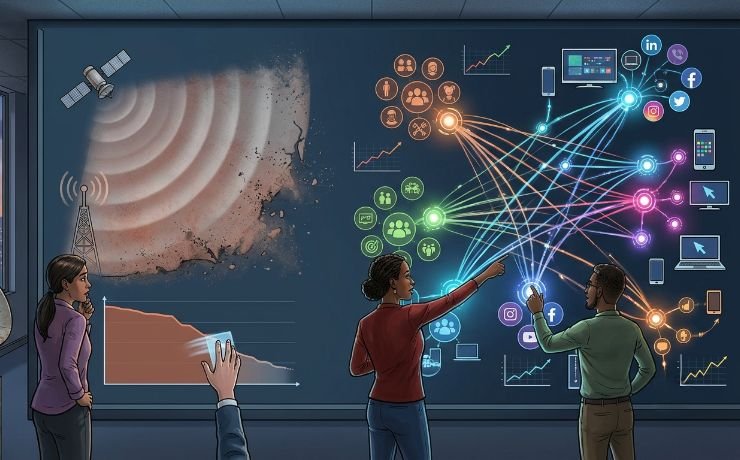
As households distribute their viewing across DTH, cable, free television, connected TV and mobile video, a campaign’s potential audience is spread across multiple measurement environments. A television plan may reach viewers who are not consuming content through streaming platforms, while a digital video campaign may reach audiences who have already seen the same advertisement on linear television.
This creates two related problems: incomplete reach and duplicated frequency.
Incomplete reach occurs when media planning overlooks audiences who have migrated to platforms outside the traditional television universe. Duplicated frequency happens when the same viewer encounters a campaign across multiple screens and platforms without the advertiser having a consolidated view of exposure.
For brands, the consequence can be inefficient media investment. A campaign may appear to have achieved significant reach within individual platform reports, but the combined number of unique people exposed could be considerably lower.
The challenge is especially relevant for categories such as FMCG, consumer durables, automobiles, financial services and telecommunications, where campaigns often depend on reaching a broad mix of consumers across cities, towns and smaller markets.
Mass reach is no longer a question of buying enough television inventory. It is increasingly a question of understanding where the audience has moved and how different media environments can work together.
Connected TV enters the planning conversation
Connected TV is emerging as an important part of this transition. It combines the large-screen viewing experience associated with television with the distribution and data capabilities of digital platforms.
Through connected devices and streaming applications, advertisers can access audiences watching video content on television screens while using digital advertising formats, audience targeting and campaign measurement capabilities.
This creates a different proposition from conventional DTH advertising. Instead of buying exposure primarily through a channel or programme, brands can increasingly plan around audience segments, content environments and digital inventory available on connected television platforms.
For advertisers, the attraction lies in the possibility of combining television’s visual impact with greater flexibility in targeting and measurement. Campaigns can be designed to reach particular audience groups, while digital delivery can provide additional information about impressions and exposure.
However, CTV should not be treated as a direct replacement for DTH. Its reach is distributed across devices, apps and services, and access depends on household connectivity, device ownership and platform availability. Its audience composition may also differ from that of conventional television.
There are further challenges around measurement consistency, inventory transparency, identity resolution and frequency management. Different streaming platforms may operate with different reporting standards, making it difficult to establish a unified picture of campaign delivery.
CTV is therefore best understood as an additional component of a changing television ecosystem, rather than a single solution to the decline of pay-TV.
Regional markets will require a different approach
One of the biggest risks in interpreting the DTH slowdown is assuming that the shift towards digital video is happening at the same pace across India.
Urban audiences with access to high-speed broadband and connected devices may have a wider choice of streaming services. In smaller towns and rural markets, the economics and availability of digital infrastructure can be different. For some households, conventional television remains a more accessible way to consume entertainment and news.
This creates a planning challenge for national brands. A media strategy that shifts too quickly towards connected television and mobile video may improve access to certain audience segments while reducing visibility among others.
Regional television remains important because it offers language relevance, local cultural context and established viewing relationships. For advertisers targeting consumers in markets such as Uttar Pradesh, Bihar, Maharashtra, West Bengal, Tamil Nadu and Andhra Pradesh, regional media can continue to deliver valuable reach.
At the same time, digital platforms are expanding their regional content offerings. Local-language creators, streaming catalogues and regional news services are bringing more audiences into digital video environments.
The result is not a clean transition from television to digital. It is an overlap between established and emerging media habits, with the balance varying from one market to another.
Advertisers will need market-level audience understanding rather than a uniform national assumption about platform adoption.
What happens to television advertising budgets?
As the pay-TV universe changes, advertisers will need to reconsider how they distribute television investments. The immediate response is unlikely to be a complete withdrawal from linear television. Instead, budgets may gradually become more selective, with spending aligned to audience availability, content relevance and campaign objectives.
For brands targeting older consumers, family audiences and regional markets, linear television may continue to deliver value. News, general entertainment and live sports can remain important environments for building awareness and maintaining visibility.
For campaigns seeking younger, digitally active audiences, connected TV and online video may receive greater consideration. These platforms offer access to viewing environments that conventional channel-based planning may not fully capture.
The opportunity lies in developing complementary roles for each medium. Linear television can provide broad exposure, while CTV can extend campaigns into streaming environments and digital video can offer additional reach across mobile screens.
However, this approach requires a shift in how budgets are evaluated. Instead of assessing each platform independently, advertisers need to examine the combined contribution of different channels to unique reach, effective frequency and business outcomes.
Media agencies will have an important role in this transition. Their responsibility will increasingly involve understanding audience overlap, identifying gaps in platform coverage and helping brands make decisions based on incremental reach rather than individual platform scale.
The measurement gap needs urgent attention
Audience fragmentation is only one part of the problem. The other is the difficulty of measuring that audience consistently across platforms.
Linear television has traditionally relied on established audience measurement systems, while digital video platforms provide their own impression, completion and audience reports. Connected TV introduces another layer, with data distributed across streaming services, device manufacturers and advertising technology providers.
These systems do not always use identical definitions of reach, impressions or completed views. A household-level television exposure cannot automatically be compared with an individual digital impression, particularly when multiple people share the same screen or device.
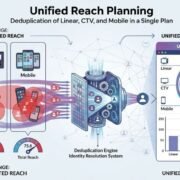
Advertisers therefore need a more integrated measurement approach. Cross-platform measurement, audience deduplication and consistent campaign reporting will become increasingly important as television budgets spread across different environments.
Reach and frequency management will also need greater attention. Without a consolidated view, a consumer could encounter the same advertisement repeatedly across linear television, CTV and mobile video, while another potential customer remains unreached.
The objective should be to increase incremental reach rather than simply increase the number of impressions purchased. This requires better collaboration between measurement partners, broadcasters, streaming platforms, agencies and advertisers.
DTH operators must rethink their value proposition
For DTH companies, the changing market presents a question of long-term relevance. Competing only on channel availability and subscription pricing may not be enough to retain consumers whose entertainment expectations have evolved.
Operators will need to strengthen their connected television offerings, improve user experiences and explore partnerships that bring streaming services into a more integrated entertainment environment. Content discovery, ease of access and bundled subscriptions could become important differentiators.
There is also an opportunity to build on their existing distribution relationships. Their understanding of television households, regional markets and consumer preferences remains valuable, particularly in markets where digital adoption is still developing.
For the advertising business, operators may need to explore more flexible inventory models and stronger data capabilities. A distribution platform that can connect traditional television viewing with digital content consumption could offer advertisers a more comprehensive proposition.
However, the transition requires investment, partnerships and a willingness to move beyond the traditional subscription-led model. The challenge is not simply to preserve the DTH business, but to identify its role in an entertainment ecosystem where consumers increasingly expect different content formats to coexist.
Mass reach will need a new definition
The slow fade of DTH is ultimately a reminder that media planning cannot remain tied to the distribution models that once defined audience behaviour. Television continues to matter, but the routes through which consumers access it are changing.
For advertisers, the next phase will require a more nuanced understanding of mass reach. It will mean recognising that linear television, connected TV, streaming platforms and mobile video are not necessarily competing for entirely separate audiences. They often reach the same consumers at different moments and through different screens.
The task is to understand those relationships and build plans around them.
Linear television will retain a role in India’s media mix, particularly for live programming, regional content and audiences that continue to depend on scheduled viewing. CTV and streaming will expand their contribution as connectivity and device adoption grow. Mobile video will remain important for audiences whose entertainment consumption is increasingly personalised and on demand.
What will change is the assumption that one platform can deliver the entirety of a brand’s mass-market audience.
The decline of DTH is not the end of television advertising. It is the end of an era in which television reach could be understood primarily through a single distribution ecosystem. For brands and agencies, the next competitive advantage will come from knowing how to connect these fragmented viewing environments without losing sight of the audience they are trying to reach.
