












The CTV App Store Opportunity: How Streaming Aggregators Are Changing Content Discovery and Advertising

The television screen is no longer defined by the channels it carries. As connected TV (CTV) adoption expands, the home screen is becoming a new battleground for streaming platforms, content aggregators, device manufacturers and advertisers. What was once a straightforward interface for accessing entertainment is evolving into a discovery-led environment where content visibility, platform partnerships and advertising opportunities increasingly intersect.
For viewers, the growing number of streaming services has created an unexpected challenge. Finding something to watch can involve moving between multiple applications, browsing different catalogues and navigating separate subscriptions. While the abundance of content has expanded choice, it has also made discovery more complicated. This is where CTV app stores and streaming aggregators are beginning to play a larger role.
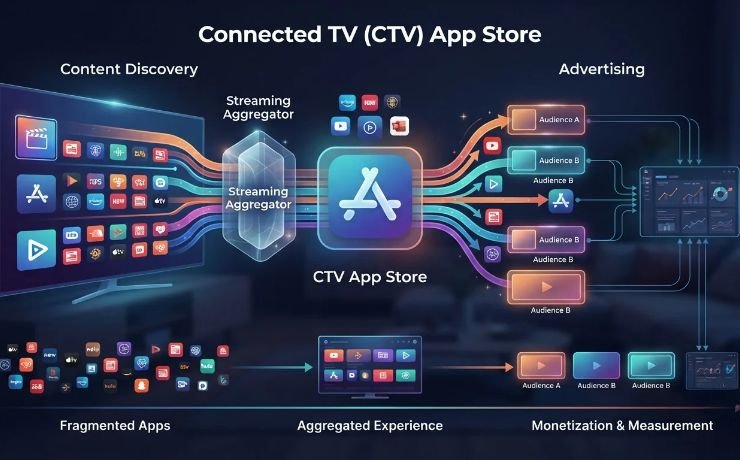
By bringing multiple streaming services, content libraries and viewing options into a unified interface, aggregators are changing how audiences find and consume entertainment. At the same time, they are creating new opportunities for advertisers to reach viewers beyond traditional television placements and individual streaming applications.
The shift is significant because the next phase of CTV growth may not be determined only by the amount of content available or the number of subscriptions households purchase. It could increasingly depend on who controls the discovery experience, how content is recommended and which brands secure visibility on the connected television home screen.
From App Access to Content Discovery
The first wave of smart television adoption was largely about bringing internet connectivity to the television set. Consumers could access streaming applications, browse content and move between services without requiring separate hardware. The app-based model established a familiar environment, allowing viewers to download individual platforms and access their respective libraries.
However, the proliferation of streaming services has changed the nature of the experience. A household may subscribe to several platforms, each offering exclusive programming, original series, films and live content. The challenge is no longer simply accessing entertainment. It is identifying what is available, where it can be watched and whether it is included in an existing subscription.
This fragmentation has created room for streaming aggregators. Instead of requiring viewers to navigate each application independently, these platforms bring content from different services into a consolidated discovery environment. Depending on the platform, users may be able to search across catalogues, receive personalised recommendations, compare viewing options and access content through integrated interfaces.
In this environment, the CTV app store is evolving beyond a digital marketplace for downloading applications. It is becoming an important distribution and discovery layer that influences what viewers see when they switch on their televisions.
The distinction matters. An application store primarily helps consumers find and install services. A content aggregator attempts to help them find something worth watching. As these functions increasingly overlap, the television interface itself becomes a strategic asset.
The Aggregation Economy: Bringing Streaming Together
Streaming aggregation is not an entirely new concept. Subscription bundles, electronic programme guides and digital content marketplaces have long attempted to simplify access to entertainment. What makes the current development different is the combination of connected devices, personalised interfaces, recommendation engines and multiple streaming partnerships.
Several global platforms illustrate how this model is developing. Roku, Amazon Fire TV, Google TV and Apple TV have established ecosystems that combine application access, content discovery and, in varying degrees, advertising-supported experiences.
Google TV, for instance, brings content recommendations from multiple streaming services into a unified interface. Amazon Fire TV combines applications, content discovery and advertising inventory within its television environment. Roku has developed a platform business that includes its operating system, content distribution and advertising capabilities. Apple TV offers a connected entertainment environment through its devices and services.
These platforms operate through different commercial and technical models, but they share a common strategic advantage: they occupy a position between the viewer and the content provider.
For streaming services, aggregation can offer another route to audience discovery. For consumers, it can reduce the effort involved in finding content. For device manufacturers and operating system providers, it creates opportunities to build stronger platform relationships, improve engagement and develop additional revenue streams.
However, aggregation also introduces questions around control. Streaming platforms want to retain direct relationships with their audiences, while aggregators want to become the preferred destination for content discovery. The balance between these interests will shape the next phase of the CTV ecosystem.
The Home Screen Becomes Valuable Advertising Real Estate
For advertisers, one of the most important developments is the growing commercial value of the CTV home screen.
Traditionally, television advertising was built around programmes, channels and scheduled viewing. Digital streaming introduced a different model, allowing advertisers to buy inventory within specific applications and content environments. Aggregation adds another layer by creating advertising opportunities before viewers even select a programme.
The television home screen is often the first point of interaction when a viewer switches on a connected device. It can feature promoted applications, sponsored content recommendations, branded placements, featured titles and other discovery-led formats. These positions offer brands an opportunity to influence viewing decisions at the point where audiences are deciding what to watch.
This is a meaningful change in the advertising journey. Instead of competing only for attention during a programme, brands can participate in the discovery process itself.
For example, a film release could be promoted through a featured content placement, while a consumer electronics brand could explore sponsorship opportunities around an entertainment category. A travel company might align with content associated with destinations, while a consumer brand could use a high-visibility home-screen placement to build awareness among connected television households.
The effectiveness of these formats will depend on how naturally they fit into the viewing experience. Advertising that feels relevant and useful can support discovery. Placements that interrupt navigation or overwhelm the interface risk weakening the experience for which audiences use these platforms.
Beyond Pre-Roll: New Advertising Formats Take Shape
As CTV advertising matures, the industry is moving beyond the conventional television commercial. Streaming aggregators and television operating systems can support a broader range of advertising formats, combining elements of digital display, native discovery and video advertising.
Some of the emerging opportunities include:
- Sponsored home-screen placements: Brands can secure visibility through promoted tiles, banners and featured positions within the television interface.
- Branded content discovery: Advertisers can associate themselves with selected content categories, entertainment collections or curated viewing experiences.
- Sponsored application placements: Promoted app positions can help streaming services and other digital platforms improve visibility among television users.
- Interactive advertising: QR codes, companion-device experiences and other response-led formats can connect television exposure with mobile engagement.
- Pause-screen advertising: Advertisers can use the moments when viewers pause content to introduce contextual brand messages, subject to platform capabilities.
- Addressable video advertising: Audience and household-level signals can help advertisers deliver different messages to relevant viewer groups.
These formats create a more varied advertising environment, but they also require a different approach to media planning. Advertisers must consider not only the programme or application but also the interface, placement, audience context and point of interaction.
The opportunity is to make CTV advertising more connected to consumer behaviour without losing the scale and impact associated with television.
Discovery Is Becoming a Data and Personalisation Play
Content discovery is increasingly influenced by data. Aggregators can use viewing behaviour, search activity, content preferences and engagement patterns to shape recommendations. When applied effectively, these signals can make the television experience more relevant and reduce the time viewers spend searching for entertainment.
For advertisers, this creates the possibility of moving from broad television audiences towards more defined audience segments. A platform may be able to identify households that frequently engage with particular genres or content categories and use these signals to inform advertising decisions.
However, the availability and use of these signals vary across platforms. Not every aggregator has access to the same level of viewing data, and not every platform shares its audience insights with external advertisers or measurement partners.
This is where the distinction between content recommendation and advertising targeting becomes important. A recommendation engine is designed to help viewers discover content. An advertising system is designed to help brands reach relevant audiences. Although both may use behavioural signals, their objectives and measurement requirements are different.
There is also a growing responsibility around transparency and privacy. As television interfaces become more personalised, consumers need clarity about how their data is collected, used and shared. Advertisers and platforms must ensure that targeting practices align with applicable privacy requirements and user expectations.
Personalisation should make the viewing experience more useful, not create a sense of constant surveillance.
What This Means for India’s CTV Advertising Market
India presents an important opportunity for the development of CTV aggregation. The country’s television ecosystem is undergoing a gradual transition, supported by affordable smart television devices, expanding broadband access, connected streaming hardware and the growing availability of digital content.
Unlike mature Western markets, India’s streaming environment is shaped by a combination of subscription services, advertising-supported platforms, broadcaster-led applications and regional content ecosystems. Consumers often move between linear television and digital streaming depending on language, genre, household preferences and affordability.
This creates a fragmented discovery environment, particularly for households accessing multiple services through the same television.
Platforms such as Google TV, Amazon Fire TV and other smart television operating systems can play an important role in simplifying access. Meanwhile, content services and device manufacturers have an opportunity to build partnerships that make content discovery more seamless.
For advertisers, the Indian opportunity extends beyond English-language premium content. Regional entertainment, sports, films and local programming can create relevant environments for brands seeking to connect with audiences across different markets.
Consider a consumer brand looking to reach households in Tamil Nadu, Maharashtra or West Bengal. A connected television environment that combines language preferences, content categories and contextual placements could offer a more relevant approach than a broad television buy alone.
However, the market also presents challenges. Device fragmentation, differences in operating systems, inconsistent measurement standards and varying levels of platform transparency can complicate media planning. The availability of advertising inventory and audience data is also not uniform across providers.
India’s CTV opportunity will therefore depend not just on the growth of connected television households, but on the ability of platforms to create consistent discovery and advertising experiences across devices and content services.
The Battle for the First Screen
As streaming aggregation develops, competition is likely to extend beyond content libraries and subscription pricing. The more important contest could be for control of the first screen viewers encounter when they switch on their television.
The home screen influences which applications receive attention, which titles are discovered and which services become part of everyday viewing habits. In this sense, it functions as a distribution channel in its own right.
For streaming services, visibility within an aggregator’s interface can influence content consumption and subscriber engagement. For device manufacturers, controlling the operating system and interface can create opportunities to monetise distribution and advertising inventory.
This also raises questions about platform neutrality. If certain streaming services receive preferential placement because of commercial arrangements, viewers may not always see the most relevant content. Similarly, smaller platforms and independent content providers may find it difficult to compete for visibility against larger services with greater distribution budgets.
Discovery algorithms and commercial placements will therefore need to balance platform monetisation with consumer relevance. A successful aggregation model must give viewers a reason to return, rather than simply presenting the services that pay the most for visibility.
Measurement: The Missing Link in CTV Growth
While the advertising potential of CTV app stores and aggregators is expanding, measurement remains a critical consideration.
Advertisers need to understand whether a home-screen placement generated meaningful engagement, whether a promoted application attracted new users and whether exposure contributed to downstream business outcomes. Simply reporting impressions or completed views may not provide a complete picture of effectiveness.
The challenge is that CTV measurement operates across several layers. An advertiser may buy inventory through an operating system, a demand-side platform, an advertising exchange or a streaming service. Each participant may have different reporting capabilities and attribution methodologies.
Without consistent measurement, comparing performance across these environments becomes difficult. Duplicate reach, fragmented reporting and differences in attribution windows can also affect the interpretation of campaign results.
There is a growing need for common measurement frameworks that connect exposure, reach, frequency, engagement and business outcomes. Independent verification, transparent reporting and stronger collaboration between platforms, advertisers and measurement providers will be important in building confidence.
For marketers, the objective should be to understand the role of each placement within the larger media plan. A home-screen campaign may be designed to generate awareness, while an interactive format may encourage consideration or action. Both should be evaluated against their intended objectives rather than measured using the same performance benchmarks.
What Brands and Agencies Should Prepare For
The rise of streaming aggregators requires brands and agencies to reconsider how they approach connected television. The television interface is no longer merely a technical entry point to entertainment. It is becoming part of the media environment.
There are several considerations that marketers should bring into their CTV strategies.
First, understand the platform ecosystem. Brands need to identify where their target audiences consume content and how different television operating systems organise discovery. Reach alone should not determine platform selection. Audience relevance, content availability and placement quality also matter.
Second, think beyond video inventory. Media plans should account for home-screen placements, sponsored discovery, application promotions and interactive formats wherever these are available. These opportunities can complement conventional in-stream advertising.
Third, prioritise contextual relevance. The value of a placement depends on how naturally it connects with the viewer’s experience. A relevant message within an appropriate content environment is more likely to contribute to brand recall than an intrusive placement.
Fourth, demand measurement transparency. Agencies should evaluate inventory based on clearly defined metrics, including reach, frequency, viewability where applicable, engagement and incremental outcomes. Measurement standards should be established before campaigns go live.
Finally, build for an integrated media environment. CTV should not operate in isolation. Connecting television exposure with mobile, digital video, search and other channels can help brands build more consistent consumer journeys. QR codes, second-screen interactions and cross-channel attribution can further strengthen this approach.
The Next Competitive Advantage Will Be Discovery
The evolution of CTV app stores and streaming aggregators reflects a larger shift in the digital entertainment economy. As content becomes more abundant, the ability to organise, recommend and distribute it becomes increasingly valuable.
For viewers, the promise is convenience: fewer steps between switching on the television and finding something worth watching. For streaming platforms, aggregation offers another route to visibility and audience engagement. For device manufacturers and operating system providers, it creates opportunities to strengthen their position within the connected entertainment ecosystem.
For advertisers, the implications are equally significant. The television home screen is emerging as a new point of influence, creating opportunities to reach consumers before they settle into a viewing experience. The next generation of CTV advertising may therefore be shaped as much by discovery-led placements and platform relationships as by traditional video commercials.
However, long-term success will depend on more than monetising screen space. Platforms will need to balance commercial interests with user experience, maintain transparency around data and deliver meaningful measurement. Advertisers, meanwhile, will need to look beyond impressions and understand how discovery environments contribute to brand and business outcomes.
As the CTV ecosystem matures, the most valuable position may not belong exclusively to the platform with the largest content library or the most popular streaming service. It may belong to the one that helps viewers make sense of the choices in front of them.
In the next phase of connected television, owning the content will matter. But owning the discovery experience could matter even more.
