





The Battle for the TV Operating System: Why Samsung, LG and Google Want to Own the Smart TV Experience

For years, the television industry competed on screen size, picture quality, sound systems and pricing. The arrival of smart TVs added another dimension to that competition: the operating system. What once functioned as the software layer connecting viewers to streaming applications has gradually become one of the most valuable parts of the television business. The home screen, content recommendations, app discovery, voice assistants and advertising placements are now central to how consumers experience television.
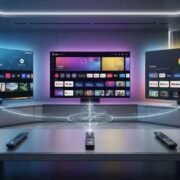
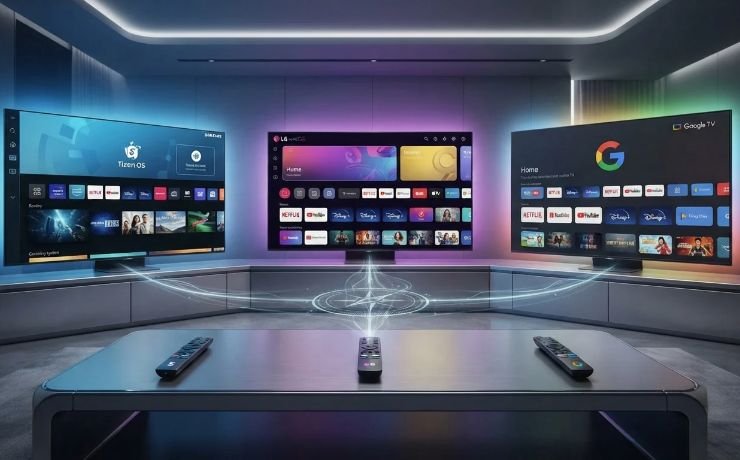
This shift has changed the strategic priorities of television manufacturers and technology companies. Samsung is building its connected entertainment ecosystem around Tizen, LG is expanding the reach of webOS, while Google is using Android TV OS and Google TV to establish a presence across television brands and streaming devices. Each is pursuing a different route, but the underlying objective is similar: to become the platform through which viewers access entertainment, discover content and interact with services.
The stakes extend well beyond the television itself. Control of the operating system creates opportunities to influence content discovery, establish relationships with streaming platforms, collect valuable viewing signals and develop advertising inventory. As Connected TV (CTV) becomes an increasingly important part of media planning, the operating system is emerging as a strategic asset in the advertising value chain.
The television is becoming a platform, not just a screen
The traditional television experience was largely controlled by broadcasters and distribution operators. Viewers switched between channels, followed scheduled programming and consumed advertisements within a largely linear environment. Smart TVs have introduced a different relationship between the viewer and the device.
Today, the television home screen acts as an entry point to multiple entertainment services. Consumers can move between streaming applications, live television, gaming, music, free ad-supported channels and connected devices without changing screens. Recommendations influence what they watch, while search and voice assistants help them navigate increasingly large content libraries.
The operating system sits at the centre of this experience. It determines how applications are displayed, how viewers discover content, which services receive prominence and how the television interacts with other devices.
For manufacturers, this creates a business opportunity that continues long after a television is sold. Instead of depending primarily on hardware sales, companies can build recurring revenue streams through advertising, content partnerships, subscriptions, platform services and data-driven offerings.
LG has made this transition particularly clear in its platform strategy. In January 2025, the company stated that its webOS-based content and advertising business had exceeded its revenue target of KRW 1 trillion in the previous year. It also outlined plans to expand webOS beyond televisions into additional devices and solutions, positioning it as a broader media platform.
The development reflects a wider industry change. The television is no longer simply the final destination for entertainment. It is becoming the interface through which entertainment businesses, advertisers and technology providers compete for consumer attention.
Samsung Tizen: Building an ecosystem around the television
Samsung’s strategy is closely connected to its position as a television manufacturer with control over both the hardware and software experience. Its proprietary Tizen operating system provides the foundation for its smart TV interface, allowing the company to develop services and advertising opportunities across its installed television base.
Unlike operating systems that primarily depend on licensing their software to other manufacturers, Samsung’s approach is centred on its own hardware ecosystem. This gives the company greater control over how its television interface is designed, how services are integrated and how commercial opportunities are developed.
One of the most important components of this strategy is Samsung TV Plus, its free ad-supported streaming television (FAST) service. Available on compatible Samsung devices, the platform offers viewers access to live channels and on-demand entertainment without requiring a separate paid subscription.
FAST is strategically important because it allows Samsung to participate in the content business without operating entirely like a traditional broadcaster or subscription streaming service. Advertising supports the viewing experience, while the manufacturer gains another opportunity to monetise its television audience.
Samsung Ads has also expanded the advertising possibilities beyond conventional in-stream video. Home screen placements, content sponsorships, audience-based targeting and interactive formats are becoming part of its advertising proposition.
In June 2026, Samsung Ads announced integrations that would make its smart TV home screen inventory available for programmatic buying through The Trade Desk and Google’s Display & Video 360, supported by Magnite’s SpringServe technology. The development allows advertisers to access high-visibility placements through platforms they already use for digital media buying.
This is an important step in the evolution of CTV advertising. The home screen is often the first interface a viewer encounters when switching on a television. By opening this inventory to programmatic activation, Samsung is turning a traditionally manufacturer-controlled interface into a more accessible advertising environment.
Samsung’s competitive advantage therefore extends across multiple layers: the television hardware, operating system, entertainment services and advertising technology. The more of these components it controls, the greater its ability to build a connected commercial ecosystem.
LG webOS: Turning software into a platform business
LG’s webOS strategy follows a similar ambition but places particular emphasis on expanding the operating system’s presence beyond its own television portfolio.
webOS serves as the interface for LG smart TVs, bringing together streaming applications, live channels, connected devices and personalised recommendations. Its role is not limited to launching applications. It influences how consumers navigate entertainment and interact with the television every time they switch it on.
One of LG’s important initiatives is the webOS Re:New programme, which focuses on extending software updates and platform upgrades to eligible television models. This approach allows older television hardware to receive newer software experiences, helping the company maintain its relationship with consumers beyond the original purchase.
For a manufacturer, this has implications for both customer retention and platform economics. Software improvements can keep the interface relevant, encourage continued usage of built-in services and create additional opportunities for content and advertising partnerships.
LG has also been expanding the reach of webOS through partnerships and licensing opportunities. The objective is to establish the platform as a media and entertainment ecosystem rather than restrict its development to televisions manufactured by LG.
The company’s investment in LG Channels, its FAST offering, is another important part of this strategy. By providing free, ad-supported channels, LG can increase engagement with its platform while creating advertising opportunities across its television audience.
In July 2026, LG announced that LG Channels had crossed 5,000 channels globally and was available in 37 countries. The company also reported that monthly active users had increased by 30% year-on-year in 2025, while annual viewing time had grown by 45%.
These developments show why LG is investing in the operating system as a business in its own right. Hardware sales establish the initial relationship, but the software platform creates opportunities for recurring engagement and monetisation.
For advertisers, webOS represents another environment where content discovery, FAST viewing and home screen placements can become part of a connected TV media strategy.
Google TV: Winning through partnerships and distribution
Google’s approach differs from the hardware-led strategies of Samsung and LG. Rather than relying primarily on televisions manufactured under its own brand, Google has built its television ecosystem around Android TV OS and the Google TV experience.
An important distinction is that Android TV OS is the underlying operating system, while Google TV is the content-focused interface available on compatible devices. The two are connected, but they are not interchangeable terms. Google TV brings together content recommendations, applications, search and personalised entertainment discovery on top of Android TV OS.
This distinction is central to Google’s competitive strategy. The company can extend its software ecosystem through partnerships with television manufacturers and streaming device makers, including brands such as Sony, Hisense and TCL.
For manufacturers, using Google’s platform can provide access to an established application ecosystem, Google services and familiar development tools. For Google, every additional compatible television or streaming device expands the potential reach of its services.
The scale of this distribution strategy is significant. In May 2026, Google announced that Google TV and Android TV had crossed 300 million monthly active devices globally. This gives the company a substantial presence in the connected television market without requiring it to manufacture every device on which its software operates.
Google’s advertising business also benefits from this distribution model. The Google TV network allows advertisers to extend video campaigns into television environments, including in-feed and Masthead placements. Google has also introduced advertising opportunities across built-in channels and streaming experiences.
In June 2024, the company introduced its Google TV network, offering targeted in-stream video inventory across more than 125 built-in channels. The inventory was made available through Google Ads and Display & Video 360, allowing advertisers to incorporate Google TV into their existing video campaigns.
This integration is particularly relevant for agencies and brands already investing in Google’s advertising ecosystem. It provides a familiar buying environment for accessing television inventory and reduces the operational distance between digital video and CTV planning.
Google’s strength lies in distribution, application access, search, advertising infrastructure and integration with its broader digital ecosystem. Rather than controlling the entire television experience through hardware ownership, it aims to become the software and services layer that connects multiple manufacturers and audiences.
Three operating systems, three different business models
Although Samsung, LG and Google are competing for the same broad consumer attention, their strategies reflect different approaches to platform ownership and monetisation.
Samsung uses its television hardware base to build a connected ecosystem around Tizen, Samsung TV Plus and Samsung Ads. LG is expanding webOS into a platform business through software updates, FAST channels, partnerships and licensing. Google is using Android TV OS distribution and the Google TV interface to establish its presence across multiple manufacturers.
These differences matter because the operating system determines more than the television’s interface. It influences the commercial relationships that can be developed around the device.
For Samsung and LG, the ability to connect hardware ownership with software services provides opportunities to build direct relationships with viewers. Google, meanwhile, benefits from a wider network of manufacturing partners and the integration of its advertising and application ecosystem.
There is no single model that guarantees dominance. Hardware ownership offers control, licensing offers distribution and a strong application ecosystem can encourage adoption. The long-term competition will depend on how effectively each company balances these advantages.
Why the operating system matters to CTV advertisers
The growing importance of television operating systems has direct implications for advertising. As CTV viewing expands, advertisers are looking beyond conventional in-stream video placements to understand the full range of opportunities available across the television interface.
The operating system controls several important advertising surfaces. These include home screen placements, app discovery environments, promotional banners, FAST channels and content recommendation spaces. Each offers a different opportunity to reach viewers during their television experience.
For brands, this expands the definition of CTV advertising. A campaign does not necessarily have to appear during a programme or streaming video. It can also reach a viewer when they switch on the television, browse available content or explore an entertainment service.
Home screen advertising is particularly interesting because it operates outside the traditional structure of an in-stream commercial break. The placement can appear before the viewer selects a programme, giving brands access to a different moment of attention.
Programmatic access is also changing how these placements are purchased. Samsung’s 2026 integrations with The Trade Desk and Display & Video 360 demonstrate how manufacturer-controlled inventory can be brought into established digital media buying environments.
This creates new possibilities for media planners. They can consider home screen inventory alongside online video, streaming applications and other digital placements while working towards broader reach and frequency objectives.
However, advertisers will need to understand the differences between operating systems. Audience data, targeting capabilities, measurement standards, inventory access and advertising formats may vary across platforms. A campaign running across multiple smart TV environments cannot automatically be assumed to offer identical targeting or reporting capabilities.
For media agencies, platform-level understanding will become increasingly important when developing CTV investment strategies.
FAST is strengthening the business case for platform ownership
Free Ad-Supported Streaming Television is emerging as one of the most important components of the smart TV operating system business. Services such as Samsung TV Plus and LG Channels allow manufacturers to offer entertainment without depending entirely on subscription-based streaming platforms.
The appeal is straightforward. Consumers gain access to free programming, while manufacturers and content partners gain opportunities to generate advertising revenue. FAST also provides a way to increase the time viewers spend within the manufacturer’s own ecosystem.
For operating system providers, engagement is commercially valuable. The more frequently viewers return to built-in services, the greater the opportunity to develop advertising relationships and content partnerships.
FAST also introduces another layer of competition between television manufacturers and established streaming businesses. Instead of acting only as distributors of third-party applications, manufacturers can become content aggregators and advertising platforms in their own right.
For advertisers, this creates additional inventory beyond subscription streaming services. It also offers opportunities to reach audiences who may not be accessible through conventional subscription-based platforms.
However, the growth of FAST will depend on content quality, programming relevance, audience engagement and the ability to maintain a suitable balance between advertising and viewing experience. A large channel catalogue alone does not guarantee sustained usage.
India: A market where the operating system battle has commercial significance
India offers an important market for this competition because the connected television ecosystem is developing across multiple device and distribution models. Consumers access streaming content through smart TVs, streaming sticks, set-top boxes and other connected devices. Different operating systems coexist, creating a fragmented environment for content providers and advertisers.
Google’s Android TV OS has established a presence through partnerships with multiple television manufacturers. Samsung and LG, meanwhile, continue to develop their proprietary television ecosystems. This creates different routes to reach Indian households, each with its own interface, content services and advertising opportunities.
The market also presents an interesting opportunity for FAST. With a broad range of language preferences and viewing interests, free ad-supported channels can provide access to audiences looking for entertainment beyond paid subscriptions. Regional programming, news, movies, music and specialised content can all contribute to platform engagement.
For advertisers, the opportunity lies in combining the reach of television with the targeting and measurement capabilities associated with digital media. Brands can explore CTV as a channel for awareness, consideration and, increasingly, performance-led campaigns.
However, the Indian market also presents operational challenges. Inventory availability, audience measurement, device-level fragmentation and differences in platform capabilities can make campaign planning complex. Advertisers need to understand where their audiences are watching rather than assuming that all smart TV impressions offer the same value.
The operating system therefore becomes an important consideration in media selection. Knowing which platform powers a television can help advertisers understand the available inventory, data capabilities and opportunities for campaign activation.
The challenges: Privacy, discoverability and platform fragmentation
Greater control over the television interface also brings responsibilities. Smart TVs can collect information about device usage, content consumption and viewing behaviour, subject to applicable privacy policies, consent requirements and regulatory frameworks.
As advertising becomes more dependent on audience signals, transparency around data collection and usage will become increasingly important. Manufacturers and platform providers must establish clear privacy practices while ensuring that advertising experiences remain relevant to viewers.
Another challenge is content discoverability. As more streaming services compete for space on television home screens, platforms must decide how content is organised, recommended and promoted. These decisions can influence which services receive attention and which remain difficult to find.
For content providers, visibility within the operating system can become as important as distribution through the application itself. For advertisers, the same issue applies to promotional placements and sponsored discovery.
Fragmentation is another concern. Different operating systems have different technical requirements, commercial arrangements and measurement frameworks. This can make it difficult for advertisers to compare performance across platforms or establish a consistent view of audience reach.
Greater standardisation, improved interoperability and transparent measurement will be important if CTV is to develop into a more integrated advertising channel.
Who will own the future of the smart TV experience?
The competition between Samsung, LG and Google is ultimately about control of the television relationship. Hardware establishes the device in the household, but the operating system determines what happens every time the television is switched on.
Samsung is building on its integrated hardware, software and advertising ecosystem. LG is expanding webOS into a wider content and media platform. Google is using partnerships, application distribution and its advertising infrastructure to reach viewers across multiple television brands.
Each strategy has its advantages, and the market is unlikely to be controlled by a single operating system across every region and consumer segment. Different manufacturers, content preferences and distribution arrangements will continue to shape adoption.
What is becoming increasingly clear is that the television operating system is no longer a secondary feature in the hardware business. It is a commercial gateway connecting viewers, content providers, technology companies and advertisers.
For the advertising industry, this changes how the value of a television screen is understood. The competition is no longer limited to who delivers the best picture or the largest display. It is also about who controls the interface, owns the discovery experience and creates the most effective opportunities for monetisation.
As CTV becomes a more established part of media investment, the operating system may prove just as important as the content playing on the screen. The next phase of television competition will not simply be about winning the living room. It will be about owning the experience that begins the moment the television turns on.
