













The Brand Nostalgia Playbook: Why Indian Brands Are Revisiting Their Old Campaigns, Characters and Jingles

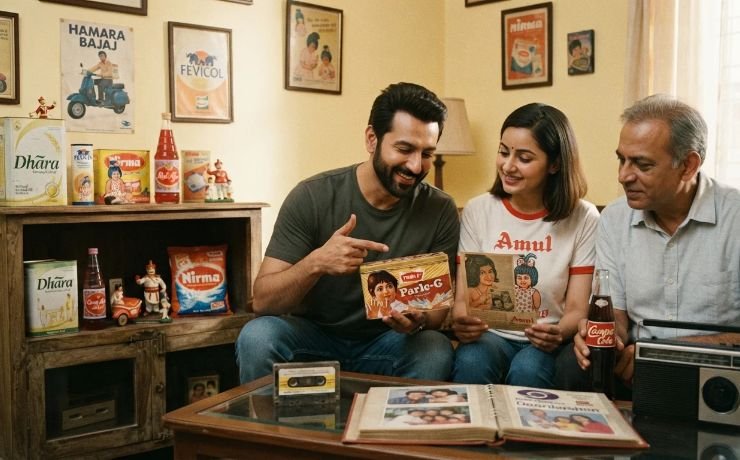
There is a familiar tune playing again in Indian advertising. A jingle that once accompanied television commercials during childhood is finding its way into digital campaigns. Characters that disappeared from television screens years ago are returning to endorse new products. Taglines that once defined entire brand identities are being rewritten for audiences who may have encountered them first through memes, reels or conversations at home. Across categories, Indian brands are increasingly looking backwards to make themselves relevant in the present.
Nostalgia has become an important part of the advertising playbook. From Tata Salt bringing back its familiar ‘Namak Ho Tata Ka’ jingle to Asian Paints revisiting ‘Har Ghar Kuch Kehta Hai’, brands are rediscovering the value of their established creative assets. The appeal is understandable. In a market where consumers encounter advertising across television, social media, streaming platforms and digital marketplaces, familiarity can offer something that a new campaign often takes considerable time to build: an immediate emotional connection.
However, this return to the past is not simply about recreating old advertisements or reminding consumers of a different era. It reflects a larger shift in how brands approach recognition, cultural relevance and long-term brand building. The question is no longer whether consumers remember an old campaign, but whether that memory can be translated into a meaningful contemporary brand experience.
Why nostalgia is finding its way back into advertising
Advertising has become an increasingly competitive attention economy. Consumers move between platforms, formats and content at considerable speed, leaving brands with limited opportunities to establish a connection. Campaigns are expected to attract attention quickly, communicate a proposition and generate recall, often within a few seconds.
In this environment, familiar brand assets offer a useful starting point. A recognisable melody, character, tagline or visual identity can communicate familiarity before the brand has even completed its message. Consumers do not necessarily need an introduction to the campaign because the emotional association already exists.
There is also a generational dimension to this trend. Millennials who grew up watching television advertising now influence household purchases, while Gen Z consumers are discovering older campaigns through digital platforms, short-form videos and internet culture. What was once a television memory for one generation can become a new cultural reference for another.
An Ipsos Global Trends report on India identified the enduring appeal of nostalgia, highlighting how older themes, jingles and products continue to create emotional connections. This suggests that the return of familiar advertising assets is not merely a creative preference but part of a wider consumer relationship with memory and familiarity.
For marketers, this creates an opportunity to build communication around an existing emotional foundation rather than starting from scratch. The challenge, however, is to ensure that the familiarity serves a clear brand purpose.
When an old jingle becomes a new marketing asset
Few elements of Indian advertising have enjoyed the cultural longevity of a memorable jingle. Before playlists, streaming platforms and algorithm-driven music discovery became part of everyday life, television and radio jingles frequently became household entertainment. Their repetition made them easy to remember, while their association with a product helped establish long-term brand recall.
Brands are now revisiting these musical identities to reconnect with consumers. Tata Salt’s return to its iconic ‘Namak Ho Tata Ka’ jingle through ‘The Unforgettable Salt’ campaign is one such example. Instead of treating the original tune as an outdated advertising asset, the brand brought it into a contemporary communication context. The campaign demonstrated how an established mnemonic could be used to address a category where differentiation and consumer recall remain important.
Similarly, Nirma’s familiar advertising identity and its recognisable musical association have continued to attract attention through newer interpretations. The brand’s legacy illustrates how a simple musical composition can become closely associated with a product over several decades.
Vicco’s ‘Vicco Turmeric, Nahi Cosmetic’ is another example of a jingle that has remained part of popular memory. Its continued presence in advertising demonstrates the value of consistency. Even as media consumption habits and creative formats have changed, the central musical identity has remained recognisable.
For brands, these jingles function as more than background music. They are distinctive brand assets that can reduce the distance between exposure and recognition. Their return also offers opportunities for reinterpretation through contemporary arrangements, regional versions, collaborations and short-form video formats.
However, the effectiveness of a revived jingle depends on more than its ability to make consumers sing along. It must reinforce the brand’s current positioning and product proposition. Otherwise, the music may become memorable while the brand message remains secondary.
Bringing back characters that consumers grew up with
Brand characters occupy a different place in the nostalgia conversation. Unlike jingles or taglines, they offer marketers an opportunity to revive an entire personality, complete with familiar behaviour, expressions and storytelling possibilities.
India’s advertising history is filled with characters that became recognisable beyond the products they represented. From the Amul Girl and the Vodafone ZooZoos to the iconic Onida Devil, these personalities helped brands establish distinctive identities in crowded categories. Their appeal was built through repeated exposure and a consistent connection with the brand’s communication.
Today, advertisers are exploring how familiar fictional characters and popular entertainment personalities can bring cultural memory into contemporary campaigns.
ACKO’s decision to bring back Munna Bhai and Circuit for its health insurance communication is an example of how established entertainment properties can be adapted for advertising. The characters’ familiar relationship and conversational style provided an accessible way to communicate insurance-related messages. The campaign also demonstrated how popular film characters can carry a brand message into digital conversations, particularly when their original cultural references remain relevant.
Similarly, campaigns featuring characters from television shows such as CID and Shaktimaan have used familiar personalities to connect with audiences through humour and recognition. These references work because they bring an existing narrative into a new advertising environment.
Yet character-led nostalgia requires careful handling. The character should have a natural relationship with the product or campaign idea. Simply bringing back a familiar face may generate initial attention, but it does not automatically establish brand relevance. When the character becomes more memorable than the product, the campaign risks becoming an entertainment property with a brand logo attached.
Old taglines, new contexts: The return of familiar brand language
Taglines have traditionally played an important role in establishing a brand’s identity. A well-developed line can communicate a product promise, emotional positioning or consumer insight in a few words. When repeated consistently over time, it can become part of everyday language.
Brands are revisiting these established lines because they offer continuity in a communication environment where campaigns are frequently replaced. Rather than abandoning familiar brand language, marketers are finding ways to give it a new interpretation.
Asian Paints’ return to ‘Har Ghar Kuch Kehta Hai’ reflects this approach. The line is rooted in the relationship between people and their homes, an association that continues to hold relevance even as the meaning of home ownership, interior design and personal spaces evolves. Revisiting the thought allows the brand to retain its emotional territory while communicating to consumers whose expectations of living spaces have changed.
Maybelline’s return to its recognisable ‘Maybe It’s Maybelline’ musical identity is another example of how a familiar brand asset can be introduced to a new generation. The line has an established place in global beauty advertising, but its contemporary use allows the brand to connect its heritage with current cultural conversations.
The strategic advantage is that consumers are not being introduced to an entirely unfamiliar brand promise. Instead, they are being reminded of an existing association while receiving a refreshed interpretation of what the brand represents today.
Digital platforms are giving old campaigns a second life
The resurgence of nostalgia is closely connected to the way audiences consume content today. Earlier, an advertising campaign largely depended on television, radio, print and outdoor media for visibility. Once the media campaign ended, its reach gradually declined, even if the creative continued to live in consumer memory.
Digital platforms have changed this relationship. Old advertisements can be rediscovered through YouTube archives, Instagram pages, creator content and online communities. A familiar jingle can become the audio for a reel, while an old television character can reappear as a meme or a reaction image.
This creates an additional distribution opportunity for brands. A revived campaign does not necessarily have to depend entirely on paid media. If the original reference carries enough cultural recognition, audiences may participate in the conversation by sharing clips, recreating scenes or discussing their memories of the advertisement.
Short-form video has been particularly useful in extending the life of familiar creative assets. Brands can introduce an old character through a short film, release different versions of a jingle, invite creators to reinterpret a campaign or build a series of social media posts around a recognisable tagline.
The format also allows brands to approach nostalgia differently across platforms. A television commercial may carry the central narrative, while Instagram can focus on recreations, YouTube can host longer-form storytelling and creators can introduce the campaign to audiences through their own interpretations.
However, digital distribution also changes the rules of engagement. Consumers are not passive recipients of a familiar campaign. They can question its relevance, compare it with the original and openly express whether the revival works. Nostalgia therefore brings both an opportunity for participation and a greater level of scrutiny.
Gen Z is discovering an advertising past it never experienced
One of the more interesting developments in nostalgia marketing is the participation of younger consumers. Not everyone engaging with an old advertisement necessarily remembers its original release. For Gen Z, some of these references are entirely new discoveries.
Social media has made older advertising accessible outside its original media environment. Vintage commercials circulate alongside contemporary entertainment, while creators use older jingles and characters to produce content that appeals to audiences who may not have watched the original advertisements.
This creates an interesting distinction between nostalgia and retro appeal. For older consumers, a familiar campaign can trigger an actual personal memory. For younger audiences, the same campaign may offer a glimpse into a period they did not experience. The attraction is less about remembering the past and more about discovering its cultural identity.
Brands can use this generational overlap to build communication that works across age groups. An older consumer may connect with the emotional memory behind a jingle, while a younger viewer may appreciate its music, humour or visual style.
But this requires more than simply putting an old advertisement on a new platform. The creative treatment must understand how younger audiences engage with culture. References need to be presented in a way that feels natural rather than forced, particularly when brands attempt to use internet humour or trending formats.
The business case: Familiarity can reduce the cost of building recognition
Beyond its emotional appeal, nostalgia offers a strategic advantage in brand building. Establishing a new brand identity requires repeated communication, consistent investment and time. Consumers need to recognise the brand, understand its proposition and develop associations with its products.
Established brands begin with a different advantage. Their existing creative assets may already carry years of recognition. A familiar tagline or character can provide an immediate point of identification, allowing the brand to build on an existing relationship rather than creating one entirely from the beginning.
This does not mean nostalgia automatically makes campaigns more cost-effective or commercially successful. Production, media investment and distribution remain important. However, a strong existing brand asset can provide a creative foundation that would be difficult for a new campaign to establish within a limited period.
There is also a role for nostalgia in brand differentiation. In categories where product features, pricing and functional claims are increasingly similar, an established emotional association can help a brand occupy a distinct position in the consumer’s mind.
For legacy brands facing competition from newer entrants, revisiting their advertising history can also be a way to reinforce their credentials. It reminds consumers that the brand has a place in their lives beyond a single purchase or product launch.
Where nostalgia marketing can go wrong
Despite its appeal, nostalgia is not a guaranteed creative solution. The familiarity of an old campaign can attract attention, but it cannot compensate for a weak idea or an outdated brand proposition.
The first risk is overdependence on the original creative. Reproducing an old advertisement without reconsidering its context can make a brand appear creatively stagnant. Consumer expectations, cultural attitudes and product categories evolve. An idea that worked several decades ago may not necessarily communicate the same message today.
The second challenge is the gap between memory and current brand positioning. A brand may be remembered for a particular product or promise but may have since expanded into new categories or changed its business strategy. If the revived campaign does not reflect this evolution, it can create confusion rather than strengthen recognition.
There is also the question of audience relevance. Not every consumer shares the same cultural references. A campaign built around a television show from the 1990s may connect with older audiences but leave younger consumers unfamiliar with the context. Brands need to consider whether the reference can work independently or requires additional storytelling.
Finally, there is the danger of nostalgia becoming a substitute for creativity. Familiarity may generate an initial response, but audiences eventually expect something new. If every campaign relies on the same character, tune or tagline without adding a fresh perspective, the asset can lose its impact through repetition.
How brands can revisit their past without getting stuck in it
Successful nostalgia marketing begins with understanding which elements of a brand’s history are worth bringing back. Not every old campaign deserves a revival. Marketers need to identify assets that have a clear connection with the brand’s identity and still hold meaning for contemporary consumers.
The first consideration should be brand ownership. A character, jingle or tagline must be strongly associated with the brand rather than simply being remembered as a popular advertisement. The objective is to strengthen brand recognition, not generate attention for an isolated creative reference.
Second, the revival needs a contemporary purpose. A familiar jingle can be reworked to communicate a new product benefit, while an established character can be placed in a situation that reflects changing consumer behaviour. The original asset should provide the foundation, not dictate every creative decision.
Third, brands need to understand the audience they are trying to reach. Nostalgia can mean different things to different generations. Campaigns should consider whether they are reconnecting with existing consumers, introducing a legacy asset to younger audiences or attempting to achieve both objectives.
Finally, success needs to be evaluated beyond views and engagement. While social shares, video completion rates and campaign reach can indicate audience interest, marketers must also examine brand recall, message association, consideration and changes in consumer perception. A campaign that generates conversation but fails to strengthen the brand has only achieved part of its objective.
The past is an asset, but the future remains the brief
Indian advertising has always drawn from popular culture, music, cinema and everyday experiences. What is changing is the way brands are using their own histories as a source of contemporary communication. Old campaigns are no longer restricted to television archives or occasional anniversary celebrations. They are becoming reusable creative assets that can travel across platforms, generations and formats.
For legacy brands, this presents an opportunity to revisit the ideas that helped build their identities. For newer audiences, it offers a way to discover the cultural references that shaped Indian advertising. And for the industry, it raises an important question about the relationship between familiarity and originality.
The strongest nostalgia-led campaigns are not those that recreate the past most accurately. They are the ones that understand why an old idea mattered in the first place and find a relevant reason to bring it back. A jingle must do more than make consumers hum along. A character must do more than trigger recognition. A tagline must communicate something that still holds true for the brand.
Ultimately, nostalgia works best when it creates a bridge between what consumers remember and what a brand wants them to believe today. The past may provide the emotional starting point, but the campaign still needs a contemporary idea, a clear brand purpose and a reason to exist.
Because while consumers may remember an advertisement from twenty years ago, they will only engage with its return if it has something meaningful to say today.
