










The Rise of Generative Engine Optimisation: Is GEO Becoming a New Service Line for Indian Agencies?

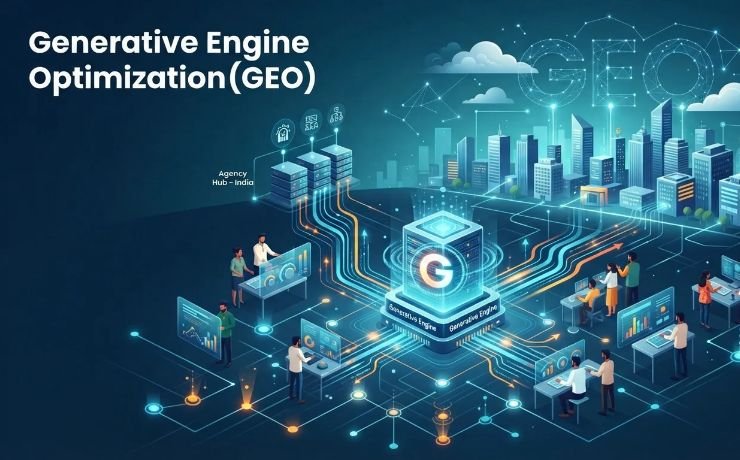
The way people discover brands, products and services online is undergoing a significant shift. For years, search engine optimisation (SEO) has been the foundation of digital visibility, helping businesses appear when consumers look for information through platforms such as Google and Bing. Rankings, keywords, backlinks and organic traffic shaped how brands approached discoverability. However, the emergence of generative AI platforms is beginning to change the rules of this relationship. Consumers are increasingly asking questions directly to tools such as ChatGPT, Gemini and Perplexity, expecting contextual recommendations, comparisons and summarised answers rather than a list of links.
This shift has brought Generative Engine Optimisation (GEO) into the marketing conversation. While SEO aims to improve a website’s visibility in traditional search results, GEO focuses on making a brand, its content and its expertise more discoverable within AI-generated responses. For agencies, this presents an interesting commercial opportunity. What was once considered an extension of SEO is increasingly being discussed as a potential standalone service line, combining content strategy, technical optimisation, digital PR, reputation management and data analytics.
In India, where digital consumption continues to expand across languages, platforms and consumer segments, the opportunity is particularly relevant. As brands reconsider how audiences find information, agencies are being pushed to rethink what visibility means and how it should be measured. The question is no longer limited to whether a brand appears on the first page of Google. It is increasingly about whether an AI-powered platform recognises, references and recommends that brand when a consumer asks a relevant question.
From Search Rankings to AI Recommendations
Traditional search behaviour is built around discovery. A consumer looking for the best smartphone under a particular price range would typically enter a query into Google, browse several results, compare product pages and visit review websites before making a decision. Generative AI is compressing parts of this journey. Instead of navigating multiple links, consumers can ask an AI assistant to compare devices, explain their differences and recommend an option based on specific requirements.
The distinction is important for marketers. In a conventional search environment, brands compete for positions on a results page. In a generative search environment, they compete to become part of an answer. A brand may have a well-optimised website and strong search rankings, but that does not automatically guarantee that an AI platform will mention it in a product comparison or category recommendation.
Generative engines typically draw information from multiple sources, interpret the context of a query and produce a consolidated response. Depending on the platform and search experience, these sources can include websites, product information, editorial coverage, reviews, forums and other publicly available information. The result is a more conversational discovery experience in which the credibility, relevance and consistency of information surrounding a brand can influence how it is represented.
Google’s AI Overviews and AI Mode have brought this change directly into the traditional search environment, while ChatGPT Search and Perplexity have introduced alternative ways of discovering information through conversational interfaces. Google has also highlighted that its generative search experiences use existing search and quality systems to identify relevant sources. This suggests that the foundations of SEO remain important, even as the presentation of search results evolves.
For agencies, the implication is clear: visibility needs to be considered across both traditional search results and AI-generated answers. The objective is gradually expanding from securing a click to establishing a brand as a credible source of information that AI systems can identify and reference.
What Exactly Does GEO Involve?
GEO is not simply about inserting keywords into content or adding technical instructions to a website. It involves improving the quality, structure, accessibility and credibility of information so that generative systems can understand a brand and identify relevant material when responding to user queries.
The concept gained academic attention through a 2024 research paper titled GEO: Generative Engine Optimization, published in the proceedings of the ACM SIGKDD conference. The researchers examined how content optimisation techniques could influence visibility in generative engine responses. Their work helped formalise GEO as an emerging area of search research and brought attention to the different ways content creators might approach AI-driven discovery.
In practical terms, GEO can involve several interconnected activities. These include developing authoritative content, improving website structure, establishing consistent brand information across digital platforms, strengthening editorial mentions and monitoring how frequently a brand appears in AI-generated answers.
For instance, a financial services company seeking visibility for queries around investment products may need more than a collection of keyword-led articles. It may need clearly explained product information, expert commentary, transparent disclosures, relevant third-party references and content that directly addresses consumer questions. The objective is to create a credible digital footprint that helps AI systems understand what the company does, what it offers and where its expertise lies.
This also makes GEO a multidisciplinary exercise. It sits at the intersection of search marketing, content development, public relations, brand communication and technology. Unlike conventional SEO, where technical and keyword optimisation often dominate agency conversations, GEO requires a broader understanding of how information about a brand is created, distributed and interpreted across the internet.
Why Indian Agencies Are Looking at GEO as a New Service Line
For Indian digital agencies, GEO represents an opportunity to expand existing service portfolios while responding to a changing media and technology environment. SEO has traditionally been a significant offering for performance marketing and digital marketing agencies. However, as AI interfaces become another point of consumer discovery, clients are likely to seek clarity on how their brands can maintain visibility in these environments.
One reason GEO is gaining attention is the growing importance of recommendation-led discovery. Consumers are no longer searching only for individual products or services. They are asking detailed questions about which brands are reliable, which products offer better value and which service providers are suitable for specific needs. These queries can influence consideration much earlier in the purchase journey.
For example, a consumer asking an AI assistant to recommend a health insurance provider for a young family is not necessarily looking for a list of websites. The consumer wants a contextual answer based on coverage, affordability, claim processes and other relevant factors. Brands that are consistently associated with accurate, useful information across credible sources may have a stronger opportunity to enter such conversations.
For agencies, this creates a new layer of brand visibility to address. Clients may want to understand whether their products are being mentioned, how competitors are represented and what information AI platforms are using when discussing their category. These questions can become the starting point for a dedicated GEO engagement.
Another factor is the potential to build on existing agency capabilities. Digital PR teams already work on improving brand credibility through media coverage and industry conversations. Content teams develop informational resources and expert-led articles. SEO specialists manage technical website health and organic visibility. Performance teams understand audience behaviour and conversion journeys. GEO brings these capabilities together under a more focused objective: improving a brand’s presence in AI-powered discovery.
For agencies looking to differentiate themselves in an increasingly competitive market, packaging these capabilities into a clearly defined offering could create an additional revenue stream. It also gives existing clients a reason to revisit their digital visibility strategies rather than treating AI search as an isolated technology development.
SEO Is Not Dead. Its Scope Is Expanding
One of the biggest misconceptions surrounding GEO is that it will replace SEO. In reality, the two are closely connected. Generative AI platforms still depend on information that is accessible, relevant and credible. A technically sound website, clear content hierarchy, useful pages and a strong reputation remain important components of digital discoverability.
Google’s guidance on optimising websites for AI search experiences reinforces this relationship. The company has stated that established SEO practices continue to apply to AI Overviews and AI Mode. It also emphasises the importance of original, useful content rather than tactics designed exclusively to manipulate AI responses.
This is an important distinction for agencies. GEO should not be sold as an entirely separate replacement for search optimisation, nor should it be positioned as a collection of shortcuts that guarantee AI recommendations. Instead, it can be developed as a specialised layer within a broader organic visibility strategy.
Traditional SEO focuses on technical accessibility, search intent, rankings, backlinks and organic traffic. GEO adds questions around how effectively information is interpreted, whether brand descriptions remain consistent across sources, how frequently a brand is referenced in relevant AI responses and whether those responses accurately represent its offerings.
The relationship is complementary. A strong SEO foundation can improve the accessibility and quality of information available to search systems, while GEO-oriented content and reputation strategies can help brands become more recognisable in conversational discovery environments. Agencies that understand this relationship are likely to be better positioned than those that treat GEO as an entirely disconnected discipline.
The New Service Stack: What Agencies Can Offer
If GEO is to become a structured agency service, it will need to move beyond broad promises of AI visibility. Clients will expect defined deliverables, clear processes and measurable outcomes. This creates scope for agencies to develop specialised service offerings around five key areas.
1. AI visibility audits: The starting point is understanding how a brand currently appears across generative platforms. Agencies can test relevant consumer queries across AI assistants, assess whether the brand is mentioned, identify the sources being cited and compare its visibility with competitors. These audits can establish a baseline for future optimisation.
2. Content and knowledge optimisation: Brands need content that answers real questions with clarity and depth. Agencies can review existing website content, identify information gaps and develop resources such as detailed explainers, product comparisons, expert interviews, FAQs and category guides. The emphasis should be on original information and genuine expertise rather than producing large volumes of repetitive, AI-generated copy.
3. Digital PR and authority building: Brand mentions across credible publications, industry websites and relevant platforms can contribute to the wider information environment in which AI systems encounter a brand. Agencies can use editorial relationships, expert commentary, research-led stories and thought leadership to strengthen a brand’s digital reputation. However, the objective should be genuine credibility, not artificial mentions or mass-produced backlinks.
4. Technical and entity optimisation: Agencies can review website architecture, internal linking, structured data, crawlability and the consistency of essential brand information. Clear descriptions of products, services, leadership teams and organisational expertise help establish a coherent digital identity. Technical optimisation also needs to account for the accessibility requirements of different AI search systems.
5. Monitoring and reporting: GEO requires continuous evaluation because AI-generated responses can change depending on the query, platform, location, time and available sources. Agencies can track brand mentions, citations, competitor visibility, response accuracy and referral traffic where measurable. These findings can then inform content and reputation strategies.
Together, these activities provide the foundation for a service line that is more substantial than a one-time AI search audit. They also create opportunities for ongoing retainers, consulting assignments and integrated digital marketing engagements.
The Measurement Challenge: Visibility Without the Click
While the commercial opportunity is becoming clearer, measurement remains one of GEO’s biggest challenges. Traditional digital marketing has relied on relatively familiar metrics such as impressions, rankings, click-through rates, sessions, leads and conversions. AI-generated answers complicate this model because a consumer may receive a recommendation without ever visiting the brand’s website.
This creates a visibility gap. A brand could be mentioned in an AI response and influence consumer consideration, but that interaction may not generate a measurable website visit. Conversely, a brand might receive traffic from an AI platform without knowing whether the visitor encountered it through a recommendation, comparison or informational answer.
Agencies will therefore need to develop a broader measurement framework. Share of AI visibility can indicate how frequently a brand appears across a defined set of relevant prompts. Citation frequency can show whether its website or other digital assets are being used as sources. Sentiment and accuracy analysis can reveal how the brand is described, while competitor comparisons can help establish its relative presence in a category.
Referral traffic and conversion data should remain part of the assessment wherever platforms provide identifiable sources. However, agencies must be careful not to present estimated AI visibility as confirmed business impact. A brand appearing in an AI-generated answer does not automatically mean that a purchase decision has been influenced.
Google’s evolving approach to reporting on generative search visibility also reflects the importance of measurement. In June 2026, the company announced new website-owner tools and reporting capabilities for its AI search experiences, including information about page appearances and impressions. Such developments could gradually give marketers more insight into how their content participates in AI-driven discovery.
For Indian agencies, the opportunity will lie in combining these emerging indicators with established business metrics. The ultimate objective should not be to maximise mentions for their own sake, but to understand whether improved discoverability contributes to consideration, trust and commercial outcomes.
India’s Market Presents a Distinct GEO Opportunity
India’s digital landscape brings its own set of considerations to the GEO conversation. Consumers engage with brands across multiple languages, regional platforms and varied levels of digital familiarity. Search behaviour can differ considerably between metropolitan audiences and consumers in smaller cities, while purchasing decisions are often influenced by local recommendations, vernacular content and community conversations.
This makes language and contextual relevance particularly important. A brand seeking to reach consumers in Tamil Nadu, Maharashtra or West Bengal cannot assume that English-language content alone will address every discovery requirement. As AI systems expand their ability to understand multilingual queries, brands will need to ensure that their information is accessible and accurate across the languages and contexts relevant to their audiences.
There is also an opportunity for agencies working in categories where consumer research is extensive. Financial services, healthcare, automobiles, consumer electronics, education, travel and real estate are all areas where people frequently compare options and seek detailed explanations before making decisions. AI assistants can become another layer in these consideration journeys.
For example, an automobile brand may want to appear when consumers ask about electric vehicles suitable for Indian roads, charging infrastructure, battery warranties or ownership costs. Achieving this requires more than a product page. It involves maintaining accurate specifications, publishing useful ownership information, building credible third-party coverage and ensuring that relevant details are available across the brand’s digital ecosystem.
Similarly, an education company may need to establish authority around course selection, career opportunities, eligibility and industry requirements. Agencies can help organise this information into useful content while strengthening the brand’s presence across relevant editorial and professional platforms.
However, India also presents challenges around content quality, misinformation and inconsistent brand information. As agencies begin offering GEO services, they will need to prioritise factual accuracy, transparent communication and responsible content practices, particularly in sensitive categories where inaccurate recommendations can have serious consequences.
Why GEO Cannot Be Built on AI-Generated Content Alone
As interest in GEO grows, there is a risk that agencies may approach it as another content production opportunity. AI tools make it easier to generate articles, FAQs, comparison pages and other informational assets at scale. But publishing more content does not necessarily make a brand more authoritative or improve its chances of appearing in AI-generated answers.
In fact, a large volume of similar, generic content could make it harder for brands to establish a distinctive point of view. Generative systems are designed to synthesise information from multiple sources. Content that simply repeats commonly available information may offer little reason for a platform or user to prefer one source over another.
Original research, first-hand experience, expert perspectives, proprietary data and clearly attributed insights can provide stronger reasons for content to stand out. For agencies, this means working more closely with clients to uncover information that cannot be easily replicated by competitors.
There is also a growing need for editorial judgement. AI-generated summaries can misrepresent products, combine outdated information or present claims without adequate context. Agencies will need to review how brands are described across different platforms, correct inaccurate information at its source wherever possible and maintain consistency in their own communications.
GEO, therefore, is not simply a technical exercise. It depends on the quality of the brand’s underlying information and the credibility of the people and platforms communicating it. Agencies that combine technology with strong editorial and strategic capabilities will have a more meaningful proposition to offer.
Who Will Own GEO Inside Agencies?
Another question emerging around GEO is where it should sit within the agency structure. Should it be managed by SEO teams, digital PR specialists, content strategists or a dedicated AI search division? The answer may depend on the agency’s existing capabilities and the nature of its client relationships.
SEO teams are naturally positioned to manage technical optimisation, content discoverability and search performance. Digital PR teams can contribute through earned media, authority building and reputation management. Content teams can develop the information architecture and editorial resources required to address complex consumer questions, while analytics specialists can build monitoring frameworks.
Rather than assigning GEO to a single department, agencies may benefit from establishing cross-functional teams that bring these capabilities together. Larger networks could eventually develop dedicated GEO practices, while independent agencies may initially integrate the service into their existing SEO and digital strategy offerings.
There is also a role for brand and communications teams. AI-generated recommendations can influence how a company, its products and its leadership are perceived. Ensuring that a brand is represented accurately is therefore not only a search marketing responsibility but also a wider reputation management concern.
For agency leaders, the immediate priority should be building the right expertise rather than rushing to introduce a new service label. Teams will need to understand how different AI platforms retrieve information, how their responses vary and what can realistically be influenced through optimisation.
The Risks of Selling GEO as a Guaranteed Outcome
As with every emerging digital marketing discipline, GEO is vulnerable to exaggerated promises. The idea of getting a brand recommended by ChatGPT or appearing in every relevant AI response is commercially attractive. However, generative systems do not offer the same degree of predictability as a conventional advertising placement or a defined search campaign.
AI-generated responses can vary between sessions and platforms. Their source selection processes are not entirely transparent, and a brand’s presence may depend on the wording of a query, the available information and the context in which the question is asked. No agency can credibly guarantee a permanent position in AI recommendations.
There is also a risk of over-optimisation. Tactics such as creating unnecessary AI-specific files, stuffing content with frequently asked questions or pursuing artificial brand mentions may be presented as GEO shortcuts. Yet Google’s guidance specifically cautions against several such practices and reinforces the importance of established quality and SEO principles.
Agencies will need to be transparent about what their services can deliver. Audits, content improvements, technical recommendations, authority-building programmes and visibility monitoring are tangible deliverables. Guaranteed AI rankings or assured recommendations are not.
Building trust with clients will depend on setting realistic expectations, explaining the limitations of measurement and connecting GEO activity to wider marketing objectives. This will be particularly important as more businesses begin allocating budgets to AI search optimisation without fully understanding how the ecosystem works.
From Emerging Capability to an Agency Business Opportunity
GEO is at an interesting stage in its development. It has moved beyond an academic concept and entered the conversations of marketers, publishers, technology platforms and digital agencies. However, the service category is still evolving, and its commercial structure has yet to settle into a universally accepted model.
For Indian agencies, this creates both an opportunity and a responsibility. Those that begin building capabilities early can develop a stronger understanding of AI-powered discovery, establish measurement practices and help clients adapt their digital strategies. But the long-term value will not come from simply adding GEO to a service portfolio or rebranding conventional SEO packages.
It will come from understanding how consumer discovery is changing and developing strategies that help brands remain relevant across these new environments. That requires a combination of technical knowledge, content quality, editorial credibility, digital reputation and business understanding.
SEO taught brands how to become discoverable when consumers searched for information. GEO is pushing agencies to consider what happens when consumers ask a question and expect an answer. The distinction may appear subtle, but it has significant implications for how brands build visibility, authority and consideration.
Whether GEO eventually becomes a fully independent agency service line or remains an integrated part of search and digital communications will depend on how quickly AI-driven discovery matures. What is already becoming clear, however, is that the definition of digital visibility is expanding. For agencies willing to look beyond rankings and traffic, the next opportunity may lie in helping brands become part of the answers consumers trust.
