














Tier-2/3 Creators Are Growing Fastest — But Can’t Get Paid: India’s Creator Discoverability Gap

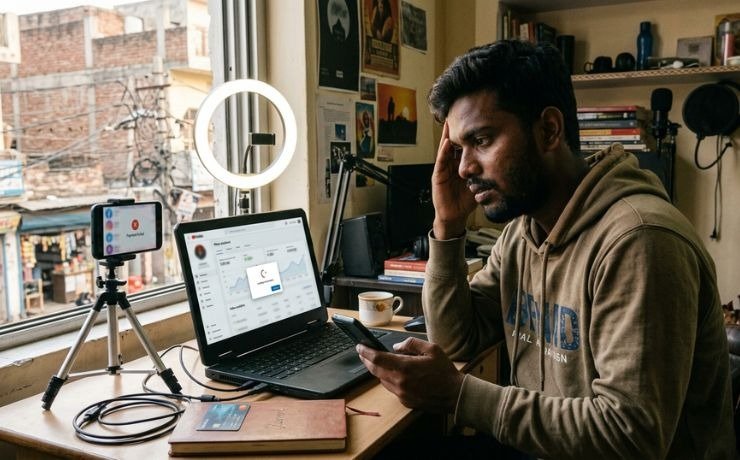
In a small town outside Indore, a homemaker with a smartphone and a talent for turning leftover vegetables into elaborate thalis has built an audience that most metro-based lifestyle creators would envy. Her videos rack up hundreds of thousands of views, her comment sections are dense with genuine, specific engagement, viewers asking for the exact masala ratio, tagging their mothers, requesting a Sunday special. By every organic metric that matters, she is a creator on the rise. What she is not, despite two years of consistent growth, is someone brands have found. Her inbox has no PR pitches, no brand collaboration requests, no invitations to the WhatsApp groups where Mumbai and Delhi-based creators swap notes on upcoming campaigns. She is, in the plainest sense of the phrase, growing fast and getting paid nothing, and her story is now common enough across India’s smaller towns to constitute a structural problem rather than an individual misfortune.
This is the creator discoverability gap, and it has quietly become one of the more consequential distortions in India’s influencer economy. The data on where growth is actually happening has been clear for some time. Platforms including Instagram and YouTube have repeatedly pointed to Tier-2 and Tier-3 cities as the fastest-growing source of new creator accounts and, increasingly, of high-engagement content, as smartphone penetration, falling data costs and vernacular content demand converge outside the metros that used to monopolise India’s digital creator economy. Yet brand spend, agency attention and campaign budgets remain stubbornly concentrated on a familiar roster of Mumbai, Delhi and Bengaluru-based creators, many of whom command premium rates less because their audiences convert better and more because they are, quite simply, easier to find, easier to negotiate with, and easier to feel confident about in a boardroom pitch.
A Market That Rewards Proximity Over Performance
The mechanics behind this gap are less about deliberate exclusion and more about how influencer discovery has evolved as an infrastructure problem that nobody has fully solved. Most brand and agency discovery still runs through a combination of manual scouting, personal networks and a handful of influencer marketing platforms whose databases skew heavily toward creators who have already been discovered once, creating a feedback loop where visibility begets more visibility. A creator based in Mumbai is statistically more likely to have attended an industry event, been scouted by an agency talent manager, or appeared on another brand’s campaign, each of which feeds the algorithms and human networks that determine who gets considered for the next brief. A creator in Indore, Bhopal or Coimbatore, no matter how strong her engagement numbers, simply is not inside those networks, and the platforms meant to surface talent on merit have not yet closed that gap at scale.
Language compounds the problem in ways that are easy for metro-centric marketing teams to underestimate. A significant share of the fastest-growing Tier-2 and Tier-3 creators build their audiences in Hindi, Tamil, Telugu, Bengali, Marathi and other regional languages, often blending dialects in ways that resonate deeply with local audiences but do not translate cleanly into the English-language briefs, decks and campaign frameworks that dominate agency workflows. A brand marketing team accustomed to evaluating creator content in English is poorly positioned to judge the quality, tone and brand safety of a Bhojpuli comedy skit or a Kannada beauty tutorial, and rather than investing in the regional expertise required to evaluate that content properly, many teams simply default to the safer, more legible option of a metro creator who already speaks their language, literally and culturally.
The Monetisation Machinery Was Built for a Different Creator
Even when a brand does want to work with a smaller-town creator, the transactional infrastructure often makes the process needlessly difficult. Brand deal contracts, invoicing systems and payment terms in the Indian creator economy have historically been built around the assumption of a creator with either an agency manager or, at minimum, comfort navigating GST registration, formal invoicing and net-60 payment terms that established production houses and larger creators can absorb. A creator earning modest but growing income from a smaller town frequently lacks access to a chartered accountant, struggles with the paperwork required to formalise a brand partnership, and cannot afford to wait two months for payment on a deal that might be worth a few thousand rupees, an amount that barely registers as a rounding error for the brand but represents meaningful income for the creator. The result is a quiet self-selection: many of the most promising Tier-2 and Tier-3 creators simply do not pursue brand deals at all, either because the process is opaque or because early, badly negotiated experiences left them wary.
There is also a credibility asymmetry that compounds every other barrier. Metro-based creators, and the talent management agencies that represent them, have spent years building the case studies, media kits and audience analytics dashboards that make a brand’s internal approval process straightforward. A regional creator, however strong her organic numbers, often has none of that packaging, no polished media kit translating raw engagement into the kind of audience demographic breakdown a brand’s finance team expects to see before approving spend. This is not a reflection of the creator’s actual value to a campaign; it is a reflection of who has been taught how to package themselves for a system built by and for metro talent. Closing that packaging gap has become, in effect, its own cottage industry, with a handful of regional creator collectives and vernacular-first talent agencies emerging specifically to translate Tier-2 and Tier-3 creator value into the language brand teams recognise.
Where the Fix Is Already Taking Shape
The most promising responses to this gap are not coming from goodwill or corporate social responsibility budgets, but from brands and platforms recognising a straightforward commercial opportunity being left on the table. Several D2C brands operating in categories with strong Tier-2 and Tier-3 demand, personal care, food and beverage, regional fashion, have begun building dedicated regional creator scouting functions, often staffed by people fluent in the specific languages and cultural contexts of the markets they are trying to reach, rather than relying on generalist agency talent pools. These functions operate less like traditional influencer marketing and more like local journalism, actively seeking out creators through regional social media trends, community recommendations and platform analytics filtered specifically for non-metro geographies, rather than waiting for creators to surface themselves through conventional agency channels.
Platforms themselves are also beginning to respond, if unevenly. Instagram and YouTube have both introduced creator marketplace and discovery tools intended to surface talent based on audience engagement metrics rather than existing brand relationships, and while these tools remain imperfect, heavily favouring creators who already understand how to optimise for platform-native discovery algorithms, they represent a meaningful improvement over the purely network-based discovery that dominated the previous decade. A handful of homegrown Indian influencer marketing platforms have gone further, building databases specifically weighted toward regional and vernacular creators, with verification and rate-card standardisation designed to solve the exact monetisation friction that keeps smaller-town creators out of formal brand deals. These platforms are still early, and their reach remains a fraction of the market’s overall creator economy activity, but the direction of the infrastructure they are building points toward where the gap eventually closes.
The deeper opportunity here, for brands willing to move early, is a genuine efficiency advantage rather than a compliance exercise. Regional creators, precisely because they are undiscovered by the broader market, tend to command significantly lower rates relative to their actual engagement and conversion potential than their metro counterparts, whose pricing already reflects years of competitive bidding among brands chasing the same familiar names. A brand willing to invest in the scouting, language capability and payment infrastructure needed to work with Tier-2 and Tier-3 talent is not just addressing an equity gap in the creator economy; it is accessing a segment of the market that is, for now, still meaningfully underpriced relative to its actual commercial value. That arbitrage will not last indefinitely. As platform tools improve and more brands build regional scouting capability, the discoverability gap will narrow, rates will adjust, and today’s underpriced opportunity will look, in retrospect, exactly like the kind of advantage the fastest-moving brands got to first.
