














The Subscription Creator — Is Patreon-Style Recurring Revenue Finally Working in India

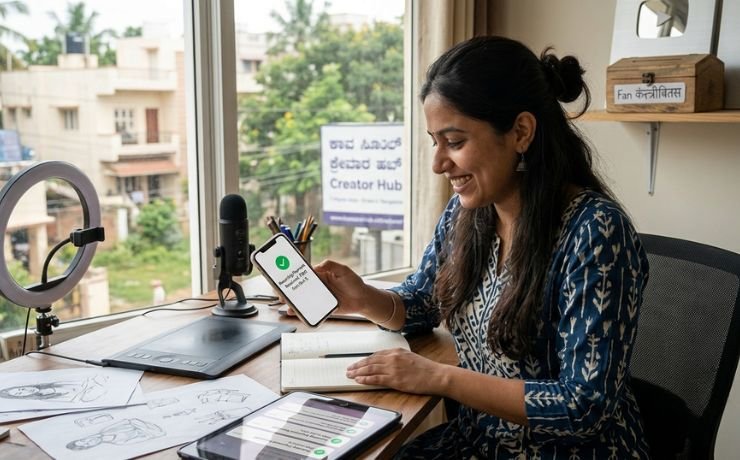
For years, the creator economy has operated on a deceptively simple promise: build an audience, attract brands and turn attention into income. But as the creator market matures, that model is beginning to look less complete.
Brand partnerships remain important. So do advertising revenue, affiliate commerce, live events and merchandise. Yet all of them share one weakness: they can fluctuate from month to month. A creator can have a million followers and still have very little certainty about what next month’s income will look like.
That is where subscriptions enter the picture.
The Patreon model has long offered creators a different proposition: instead of repeatedly selling access to an audience, build a smaller group of people willing to pay regularly for access to the creator, their expertise, their community or their work. It turns followers into members and attention into recurring revenue.
In India, however, that proposition has historically faced a difficult question: will consumers actually pay for creator content when so much of the internet has trained them to expect it for free?
The answer is beginning to become more nuanced.
India’s creator economy is becoming more professional, platforms are introducing more native fan-funding tools, and audiences are becoming accustomed to paying for specialised communities, knowledge and experiences. YouTube, for example, allows eligible creators to offer monthly channel memberships with members-only content and perks, while its wider monetisation ecosystem includes Super Thanks, Super Chat, Shopping and advertising revenue.
The subscription creator is therefore no longer an imported Patreon idea waiting for an Indian audience. It is becoming one of several monetisation models that creators can combine into a broader business.
The Creator Is Becoming a Business, Not Just a Media Property
The biggest change may not be technological at all. It is behavioural.
India’s most established creators are increasingly operating like small media companies. They have editors, managers, production teams, brand partnerships, merchandise operations, podcasts, courses, newsletters, events and increasingly, products of their own.
That evolution changes the economics of the creator business.
When content becomes a business, unpredictable income becomes a structural problem. Advertising revenue depends on algorithms and platform economics. Brand partnerships depend on campaign cycles and marketing budgets. Affiliate income depends on commerce activity. Viral reach can create enormous visibility without necessarily creating predictable cash flow.
A recurring membership offers something different: visibility into the revenue base.
Even a relatively small community can become commercially meaningful if enough members stay subscribed over time. A creator with 1,000 paying members at a modest monthly price has something that a large but passive follower base does not provide: recurring revenue tied directly to audience loyalty.
The important word, however, is loyalty.
Subscriptions do not monetise reach particularly well. They monetise attachment.
India’s Free-Content Habit Is Not the Whole Story
The argument against creator subscriptions in India has always been straightforward. Why would audiences pay for something when Instagram, YouTube and other platforms provide an enormous amount of free entertainment every day?
But that question assumes that people are paying for content itself.
They often are not.
Consumers pay for convenience, expertise, access, identity and community. They pay when the value proposition is sufficiently specific that the free version no longer feels equivalent.
A finance creator might offer portfolio discussions or structured research to paying members. A fitness creator could build a personalised training community. A filmmaker might provide behind-the-scenes material and workshops. A comedian could create members-only live sessions. A business creator could turn an audience into a professional network.
The successful subscription proposition is therefore unlikely to be, “Pay me because I make videos.”
It is closer to, “Pay me because being part of this community gives you something you cannot get from my public feed.”
The Rise of the Superfan Economy
This creates an important distinction between followers and fans.
A follower may watch a Reel, like a post or occasionally share a video. A fan may follow the creator across platforms, buy something they recommend, attend an event, subscribe to a newsletter and eventually pay for membership.
The creator economy’s next phase could therefore be less obsessed with follower counts and more interested in the depth of the relationship.
That is a meaningful shift for advertisers as well.
Brands have traditionally evaluated creators through reach, engagement, audience demographics and campaign performance. A creator’s paid community introduces another signal: willingness to pay.
It does not automatically make a creator more valuable to every advertiser, but it can indicate a level of audience commitment that conventional social metrics do not capture.
For brands, this could eventually create a new layer of creator intelligence. Instead of asking only how many people follow a creator, marketers could begin asking how many people actively invest in that relationship.
Why Platform-Native Memberships Matter
The most significant development in India may be that recurring revenue is increasingly being built into the platforms where audiences already spend their time.
YouTube’s channel memberships allow eligible creators to offer monthly memberships with perks such as members-only content, badges, emojis and other benefits. YouTube’s current India pricing structure includes multiple membership levels, beginning at ₹59 and extending into higher-priced tiers.
That range matters because price is one of the biggest barriers to experimentation.
A creator does not necessarily need to convince an audience to make a large financial commitment. A low-priced membership can function as a form of digital patronage, while higher tiers can offer more substantial benefits.
The platform also handles much of the infrastructure around billing, membership status and access. For creators, that lowers the operational burden compared with building a subscription business entirely from scratch.
It also changes consumer behaviour. The audience does not have to leave YouTube, discover a separate payment platform and create another account. The transaction happens closer to the content itself.
That reduction in friction can be crucial in a market where convenience heavily influences digital behaviour.
But Patreon-Style Does Not Necessarily Mean Patreon
There is an important distinction between the subscription model and the Patreon platform.
The former is increasingly relevant to India. The latter faces a more complicated market fit.
Patreon was designed around the idea of supporting creators through memberships and exclusive content, but Indian creators serving primarily domestic audiences have historically faced practical considerations around payment methods, currency and payout infrastructure. That has created space for alternatives and platform-native solutions.
The Indian version of the subscription creator may therefore look very different from the American Patreon creator.
Instead of one platform hosting the entire relationship, the ecosystem may be distributed. YouTube can handle memberships. A newsletter platform can handle paid writing. A creator’s own website can sell courses or products. WhatsApp or community platforms can support smaller groups. UPI-enabled commerce infrastructure can handle transactions.
The creator becomes the operating system connecting all of these pieces.
The Subscription Is Only as Strong as the Habit Behind It
There is a reason subscription businesses are attractive, but there is also a reason they are difficult.
Recurring revenue sounds stable until subscribers start cancelling.
A one-time purchase asks the customer for a decision once. A subscription asks the customer to repeatedly justify the decision.
That means creators have to think differently about content.
A public feed can survive on occasional virality. A paid community cannot. Members need a reason to return every week or every month. The creator has to establish a rhythm, not simply publish when inspiration arrives.
This is where many creator subscription experiments are likely to face their biggest challenge.
Exclusive content alone may not be enough. If the premium material feels like leftover content, the membership becomes difficult to sustain. If the creator promises too much, the workload becomes unsustainable. And if the community is not actively managed, members can begin to feel that they are paying for access to an empty room.
The economics therefore work best when the creator can create something repeatable.
Weekly analysis. Monthly live sessions. Exclusive research. Structured learning. Community discussions. Early access. Member-only events. Personal feedback.
The product is not content.
The product is a recurring experience.
From Influencer to Subscription Brand
This could also change the way creators think about their own brands.
Influencer marketing has historically rewarded visibility. Subscription businesses reward consistency.
That distinction may gradually create a new class of creator brands built less around celebrity and more around utility.
A creator with 200,000 followers who specialises in personal finance may have a stronger subscription opportunity than a creator with two million followers whose audience has little reason to pay for additional access.
Likewise, a niche creator addressing photographers, founders, gamers, designers, fitness enthusiasts or working professionals may be able to create a more durable paid community than a broad entertainment creator with considerably greater reach.
In that sense, the subscription economy could actually make the creator market more niche.
That is significant for advertisers because niche audiences have always been commercially valuable. The difference is that creators can now potentially monetise the same niche audience directly while continuing to monetise it through brands.
What It Means for Brands
Brands should not automatically interpret creator subscriptions as competition.
In many cases, they could become another layer of creator-brand collaboration.
A brand could sponsor a members-only workshop. A financial services company could collaborate with a business creator on a premium knowledge series. A consumer brand could support an exclusive community experience. A technology company could work with a specialist creator to develop educational content for a professional audience.
The opportunity is to move beyond the traditional sponsored post.
However, the relationship has to be handled carefully. A paid community exists because members trust the creator’s value proposition. Excessive commercialisation could weaken the very relationship that makes the subscription valuable.
For marketers, this means understanding the difference between buying exposure and entering a community.
India’s Payment Infrastructure Could Be the Missing Piece
The broader Indian digital economy has spent years reducing friction around online payments. UPI has normalised instant digital transactions for everyday purchases, while consumers have become increasingly comfortable with app-based financial behaviour.
But recurring payments are a different proposition from one-off payments.
A consumer may be perfectly comfortable scanning a QR code for a ₹200 purchase without necessarily wanting another monthly subscription appearing on their account. The challenge for creators is therefore not simply enabling payment. It is making the recurring charge feel continuously worthwhile.
This is where pricing strategy becomes important.
Low-cost memberships can reduce the psychological barrier to entry. Higher tiers can be built around tangible utility. Annual plans can reward longer commitment. Free communities can act as a funnel into premium ones.
But there is no universal subscription price for Indian audiences.
The right price depends on the creator, category, frequency of engagement and perceived value of the community. A ₹99 entertainment membership and a ₹999 professional community are not competing for the same consumer decision.
The Bigger Shift Is From Audience to Ownership
Perhaps the most important strategic implication of subscriptions is that they encourage creators to think beyond rented audiences.
Social platforms provide enormous distribution, but creators ultimately operate within someone else’s ecosystem. Algorithms change. Monetisation rules evolve. Reach can fall without warning.
A membership business does not eliminate that dependence, but it can deepen the direct relationship between creator and audience.
The creator knows who the paying members are. They know what those members value. They can communicate with them more directly and design products around their needs.
That data and relationship can become the foundation for a much larger creator business.
A newsletter can become a paid research product. A community can become an event business. A podcast audience can become a membership club. A creator’s expertise can become a course, consultancy or software product.
Subscription revenue is therefore potentially less about creating another income stream and more about creating the first layer of a creator-owned business.
So, Is Recurring Revenue Finally Working in India?
The more useful answer is that the market is moving from experimentation towards infrastructure.
India now has a much larger creator ecosystem, more sophisticated monetisation tools and platforms that allow audiences to financially support creators in recurring ways. YouTube’s membership infrastructure is one example, while other creator platforms are building models around paid newsletters, communities, digital products and memberships.
But the existence of the payment button does not make a subscription business.
The real test is whether a creator can repeatedly deliver something that an audience considers valuable enough to pay for, month after month.
That makes the future of subscriptions less about the size of the creator economy and more about the maturity of creator businesses.
The first generation of Indian creators learned how to build audiences.
The next generation is learning how to build businesses around them.
And that may be where the Patreon-style model finally finds its Indian form: not as a copy of a Western membership platform, but as a broader creator-business architecture in which free content drives discovery, brands provide scale, commerce provides transaction revenue and subscriptions provide a recurring relationship with the most committed part of the audience.
The creator who can make that ecosystem work will no longer be dependent on one viral video, one brand deal or one algorithm.
They will have something considerably harder to build, but potentially more valuable: a business with customers who choose to come back.
