














India’s Influencer Economy Crosses ₹5,000 Crore — And Tier 2/3 Cities Are Driving It

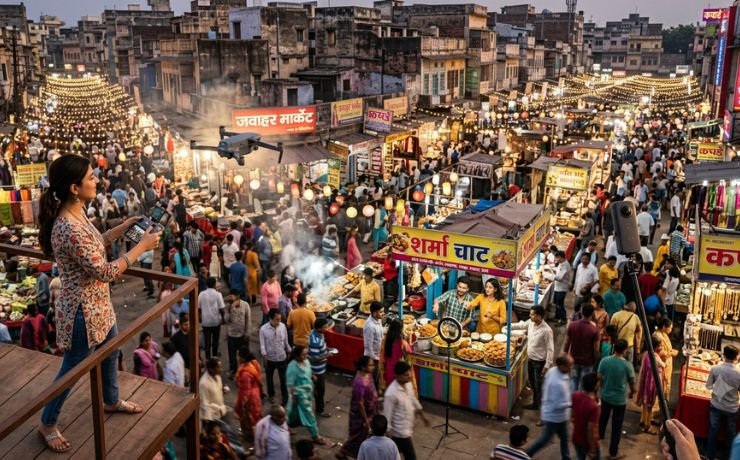
For most of its history, India’s influencer economy told a fairly predictable story. It was a Mumbai and Delhi phenomenon first, a Bangalore and Hyderabad phenomenon second, built around a small, recognisable cast of English-speaking lifestyle, beauty, and comedy creators who looked, sounded, and lived remarkably like the brand managers deciding whether to work with them. That story is no longer accurate, and the numbers make the shift hard to ignore. India’s influencer marketing industry has now crossed Rs 5,000 crore in size, and the growth curve driving that figure isn’t coming from the metros anymore. It’s coming from Indore and Jaipur, from Coimbatore and Lucknow, from small-town kitchens, tuition centres, and two-room apartments where a smartphone and a ring light have quietly become more effective marketing infrastructure than most agencies’ media plans.
This isn’t a minor footnote to an otherwise metro-led story. Tier 2 and Tier 3 creators now represent one of the fastest-growing segments of the entire influencer economy, and brands that have been slow to recognise it are increasingly finding themselves outperformed by competitors who moved earlier. Understanding why this shift happened — and why it’s likely to accelerate rather than plateau — requires looking past the surface-level explanation of “cheaper CPMs in smaller markets” and into something more structural about how trust, language, and cultural proximity actually function in Indian advertising.
Why the Metro Creator Model Hit a Ceiling
To understand the Tier 2/3 shift, it’s worth first understanding why the metro-centric influencer model, which served brands well for the better part of a decade, began running into structural limits. Metro creators, particularly in the beauty, fashion, and lifestyle categories, had by the early 2020s become expensive, saturated, and — critically — increasingly interchangeable in the eyes of the audiences that mattered most to growth-stage brands. A brand launching a new D2C skincare line could pay a premium for a well-known Mumbai-based creator, but that creator’s audience had likely already been pitched a near-identical product by three other brands in the same category that quarter. Audience fatigue, rising rates, and a growing sense among marketers that engagement numbers in metro creator content were increasingly padded by bot activity and pod-based engagement rings all combined to erode the value proposition that had made metro influencer marketing so attractive in the first place.
At the same time, something else was happening that had little to do with influencer marketing directly: India’s smartphone and data cost curve kept falling, and internet penetration in smaller towns kept climbing, well past the point most media planners had modelled for. By the time affordable 4G, and increasingly 5G, had genuinely saturated Tier 2 and Tier 3 India, those markets weren’t just consuming content — they were producing it, in regional languages, with a cultural specificity and comfort with the camera that metro creators, for all their polish, often couldn’t replicate.
Trust Travels Differently in Smaller Markets
The single most important thing brands have had to relearn about Tier 2 and Tier 3 influencer marketing is that trust in these markets operates on a fundamentally different logic than it does in metro India. A creator in Jaipur with eighty thousand followers, most of whom live within a hundred-kilometre radius and speak the same dialect of Hindi with the same regional inflections, commands a kind of credibility that a Mumbai-based creator with two million followers simply cannot replicate for that specific audience. The relationship isn’t parasocial in the abstract, aspirational sense that metro influencer marketing has traditionally relied on — it’s closer to the trust extended to a knowledgeable neighbour or a familiar shopkeeper. When that creator recommends a skincare product, a kitchen appliance, or a local finance app, the audience isn’t evaluating the recommendation the way they’d evaluate a celebrity endorsement. They’re evaluating it the way they’d evaluate advice from someone whose life genuinely resembles their own.
“Engagement rates in Tier 2 and Tier 3 markets routinely run two to three times higher than what the same brand sees from metro creators,” is a data point that has become almost boilerplate in agency pitch decks over the last two years — and while the exact multiple varies by category and platform, the direction of that gap is consistent enough that most performance marketers have stopped questioning it and started building media plans around it. Lower follower counts, in this context, aren’t a limitation to work around. They’re often the very mechanism producing the outsized trust and conversion that makes these creators valuable in the first place.
Language compounds this effect significantly. A creator producing content in Bhojpuri, Marathi, Tamil, or Bengali isn’t simply translating metro-style content into a regional language — they’re operating within a cultural register, a set of references, jokes, and social norms that a dubbed or subtitled metro campaign can never fully access. Brands that have tried to shortcut this by simply running Hindi or English influencer content with regional subtitles into Tier 2/3 markets have generally found the results underwhelming compared to working with creators who are genuinely native to both the language and the place.
The Categories Leading the Shift
Certain categories have moved into Tier 2/3 influencer marketing faster and more decisively than others, and the pattern is instructive. Fintech and financial services brands — insurance, lending apps, investment platforms — have been among the most aggressive adopters, largely because trust is the single biggest barrier to conversion in these categories, and a locally credible creator explaining a financial product in familiar terms overcomes that barrier far more effectively than a polished metro campaign ever could. Quick commerce and D2C food brands expanding beyond their metro launch markets have followed a similar logic, using local creators to build the kind of grounded credibility that a national ad campaign, however well produced, struggles to establish in an unfamiliar market.
Beauty and personal care brands present a more nuanced picture. The category was arguably the earliest and most enthusiastic adopter of metro influencer marketing, and its move into Tier 2/3 has been correspondingly significant — but it’s also a category where brands have had to genuinely rethink product positioning, not just media spend, since beauty standards, price sensitivity, and product usage patterns can differ meaningfully between a South Delhi audience and a Tier 3 audience in eastern Uttar Pradesh. The brands succeeding here are the ones treating Tier 2/3 influencer marketing as a genuine market entry strategy rather than simply a cheaper media buy layered onto an unchanged metro playbook.
The Infrastructure Still Catching Up
None of this growth has happened without friction, and the friction points reveal where the ecosystem still has real maturing to do. Discovery remains a genuine challenge — the influencer marketing platforms and agencies built to identify and vet metro creators were largely designed around English-language content analysis and metro-centric follower demographics, and many are still catching up to the task of reliably discovering, vetting, and rate-benchmarking creators across dozens of regional languages and hundreds of smaller markets. Brands report spending considerably more manual effort identifying credible Tier 2/3 creators than they do for metro campaigns, precisely because the tooling hasn’t fully matured to make that discovery process as efficient.
Payment and contracting infrastructure lags as well. Many Tier 2/3 creators operate without formal business registration, GST compliance, or the kind of professional management that metro creators, particularly those represented by talent agencies, have long taken for granted. This creates real friction for brand compliance and finance teams trying to formalise payments at scale, and it has opened space for a new layer of regional creator management agencies and MCNs specifically built to bridge that gap — aggregating smaller creators, handling compliance and invoicing, and giving brands a single point of contact instead of dozens of individual negotiations.
Measurement, too, remains less standardised than marketers would like. Engagement and conversion tracking for Tier 2/3 campaigns often relies more heavily on platform-native analytics and creator-reported numbers than the kind of third-party verification metro campaigns increasingly demand, leaving brands to make judgment calls about data reliability that more mature markets have largely moved past.
What This Means for the Next Phase of Growth
The Rs 5,000 crore figure is unlikely to be a ceiling — most signs point to continued, possibly accelerating growth as smartphone penetration, regional content consumption, and creator professionalisation all continue moving in the same direction simultaneously. But the brands that will benefit most from that growth are unlikely to be the ones simply reallocating a slice of their existing metro influencer budget toward smaller creators at lower rates. They’re more likely to be the ones treating Tier 2/3 influencer marketing as what it actually is: a distinct discipline requiring genuine investment in regional creator discovery, culturally specific creative strategy, and the compliance and measurement infrastructure to scale it responsibly.
The metro-first influencer economy that defined the last decade of Indian digital marketing was built on aspiration — audiences watching creators who represented a life slightly out of reach, and brands selling into that aspiration gap. What’s emerging from Tier 2 and Tier 3 India runs on a different logic entirely, closer to proximity than aspiration, closer to a trusted local voice than a distant influencer. Brands that understand the difference, and build their creator strategies around it rather than simply importing the metro playbook at a discount, are the ones most likely to be writing the next chapter of this Rs 5,000 crore story — and the one after that.
